
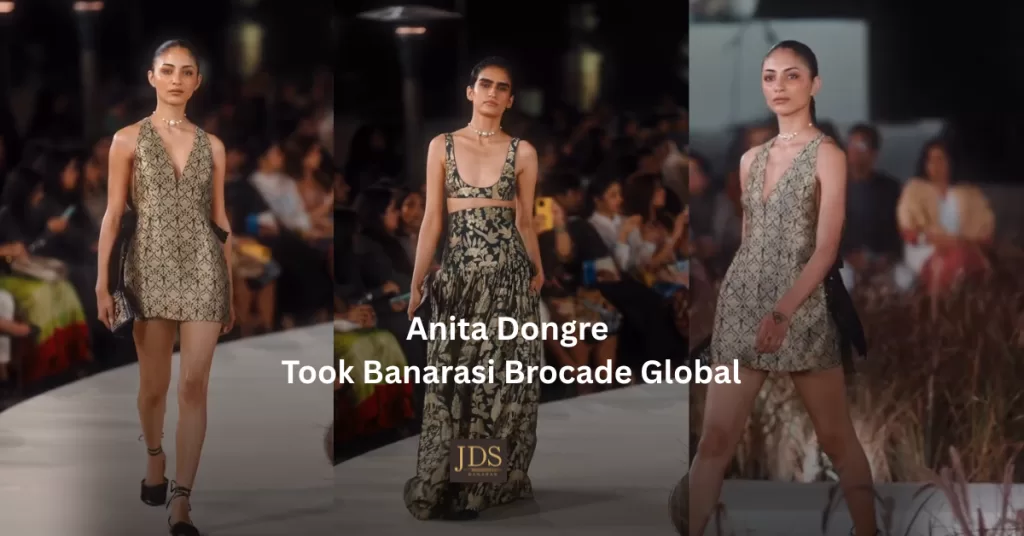
India’s fashion landscape is witnessing a powerful cultural shift. Designers are no longer looking outward for inspiration alone. Instead, they are returning to the country’s roots, reviving indigenous textiles and repositioning them for the modern world. At the forefront of this movement stands Anita Dongre, whose recent creative narrative built entirely around Banaras brocade fabric signals a deeper transformation in Indian luxury fashion.
This is not merely a design choice. It is a statement. A cultural redirection. And it is unfolding right now.
The Enduring Legacy of Banarasi Brocade
Banaras, or Varanasi, has long been celebrated as one of the world’s most important textile centers. Its brocade fabrics, distinguished by intricate zari work, luxurious silk, and detailed motifs, have been woven by hand for centuries. Traditionally worn during weddings, ceremonies, and significant milestones, Banarasi textiles have always carried emotional, cultural, and artistic value.
Today, this legacy is being sustained not only by designers but also by heritage-focused platforms and curators such as JDS Banaras, which continue to spotlight the authenticity and craftsmanship of Banarasi textiles. Their work reinforces the idea that Banarasi brocade is not just fabric, but a living tradition that deserves global recognition.
Anita Dongre’s Vision: Reimagining Heritage for the Modern World
Anita Dongre’s recent showcase of garments crafted entirely from Banarasi brocade reflects a bold and thoughtful design philosophy. Rather than presenting the fabric in traditional forms alone, she has reinterpreted it through a contemporary lens.
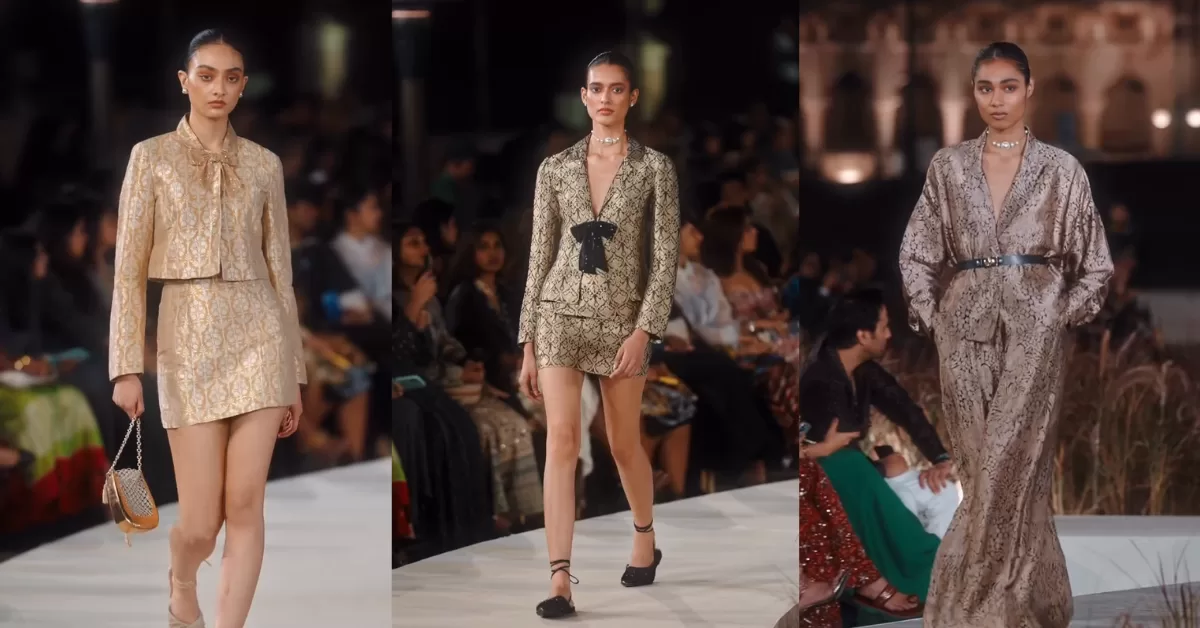
The brocades appear in modern silhouettes, fluid contemporary garments, and globally styled compositions that feel relevant to today’s fashion audience. The styling is editorial and international in spirit, yet deeply rooted in Indian craftsmanship. This approach sends a clear message: heritage is not outdated. It is adaptable, versatile, and capable of evolving without losing its identity.
By using Banarasi brocade in such a modern context, Anita Dongre is redefining how both Indian and international audiences perceive traditional textiles.
The Rise of Banaras in Contemporary and Western Cuts
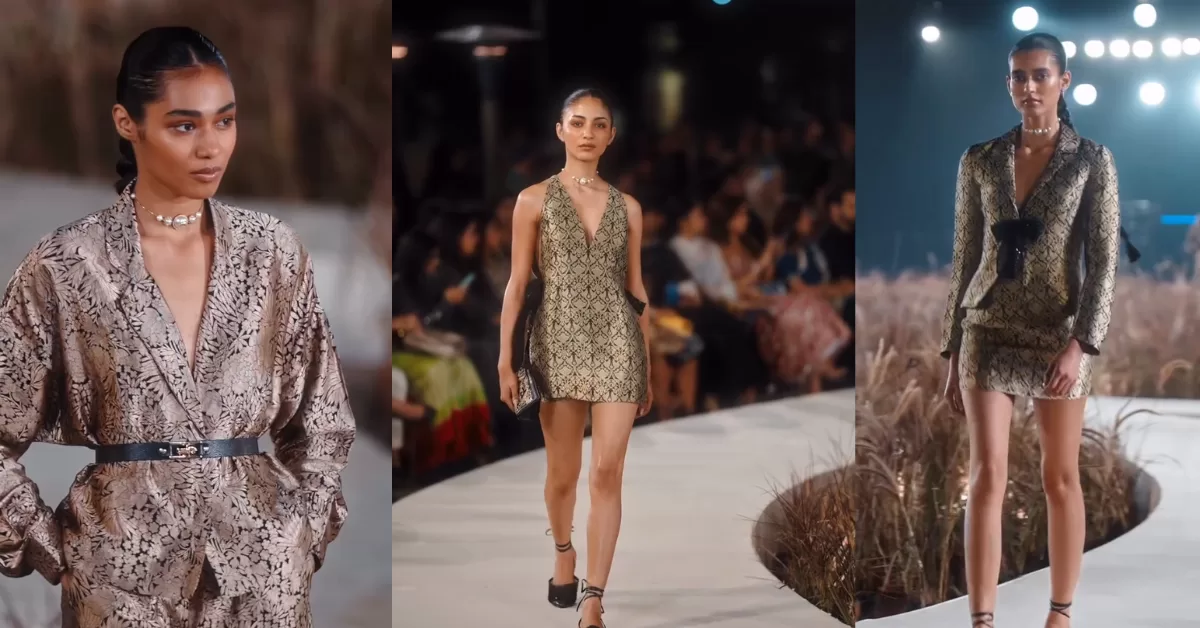
One of the most significant developments in this movement is the growing use of Banarasi brocade in western and contemporary silhouettes. Designers are increasingly crafting dresses, jackets, structured tops, gowns, and modern separates using fabrics once reserved almost exclusively for sarees and lehengas.
This evolution marks an important cultural shift. When a centuries-old textile appears in modern forms, it becomes accessible to younger audiences and global consumers who may not traditionally wear Indian ethnic attire. It bridges the gap between heritage and lifestyle.
Brands and platforms such as JDS Banaras have been instrumental in encouraging this shift by showcasing how traditional brocades can seamlessly adapt to evolving tastes without losing their authenticity.
A Broader Shift Among India’s Leading Designers
Anita Dongre’s approach reflects a larger movement within Indian fashion. Across the industry, designers are consciously choosing to work with indigenous textiles such as Banarasi brocade, handloom silks, Chanderi, Jamdani, Ikat, and other regional crafts.
This shift represents a redefinition of luxury. Modern consumers are increasingly drawn to authenticity, sustainability, and story-driven fashion. Handwoven textiles naturally embody these values. Institutions and curators like JDS Banaras play a key role in preserving these narratives by connecting craftsmanship with contemporary relevance.
Why This Movement Matters Today
The timing of this resurgence is deeply significant. Artisan communities across India have faced years of declining demand, industrial competition, and fading generational interest. When influential designers and heritage-focused platforms collectively champion traditional fabrics, they create renewed relevance and economic opportunity for these crafts.
This movement helps ensure that ancient techniques survive and thrive. It supports weaver livelihoods, encourages younger generations to continue their family traditions, and protects cultural knowledge that might otherwise be lost.
Fashion, in this context, becomes more than aesthetic expression. It becomes a powerful tool for cultural preservation and social impact.
Indian Heritage Is Finding Its Place in Global Fashion
As designers like Anita Dongre present Banarasi brocade in contemporary forms, international audiences begin to see Indian textiles differently. No longer viewed only as ceremonial or ethnic, these fabrics are being recognized as luxury materials with global appeal.
With organizations such as JDS Banaras actively preserving authenticity while supporting modern storytelling, Banarasi brocade is no longer confined to geography. It is evolving into a global fashion language.
A Defining Moment for Indian Fashion
What we are witnessing is not a passing trend but a defining moment in the evolution of Indian fashion. Designers are reclaiming indigenous crafts and placing them at the heart of contemporary creativity. Through thoughtful reinterpretation, heritage is no longer static. It is living, evolving, and reaching new audiences.
With her continued focus on Banaras brocade and Indian craftsmanship, Anita Dongre exemplifies how tradition can move forward without losing its essence. And with platforms like JDS Banaras safeguarding and promoting the authenticity of this legacy, India’s textile heritage is not only surviving — it is rising, globally.
Image source: https://www.instagram.com/p/DTfwiy3DI0C/
Frequently Asked Questions (FAQs)
- Who is Anita Dongre and why is she important in Indian fashion?
Anita Dongre is one of India’s most influential fashion designers, known for integrating Indian craftsmanship with contemporary global fashion. Her work has helped position Indian textiles as modern luxury on international platforms. - What is Banarasi brocade?
Banarasi brocade is a handwoven textile from Varanasi, crafted using silk and intricate zari work. It is renowned for its rich motifs, luxurious texture, and centuries-old weaving traditions. - Why is Banarasi brocade gaining global attention now?
Designers are reinterpreting Banarasi brocade in modern silhouettes, making it relevant to contemporary and international audiences who value authenticity, craftsmanship, and sustainability. - How has Anita Dongre reimagined Banarasi brocade?
Anita Dongre has used Banarasi brocade in modern cuts, contemporary garments, and editorial styling, transforming it from traditional ceremonial wear into globally appealing fashion. - What role do platforms like JDS Banaras play in this movement?
Platforms like JDS Banaras preserve, promote, and curate authentic Banarasi textiles while supporting their adaptation into modern and global fashion contexts. - Is Banarasi brocade limited to sarees and lehengas?
No. Today, Banarasi brocade is being used in dresses, jackets, gowns, tops, and western silhouettes, expanding its appeal beyond traditional Indian wear. - Why is this shift important for Indian artisans and weavers?
This movement increases demand for handwoven textiles, supports artisan livelihoods, preserves cultural knowledge, and encourages younger generations to continue weaving traditions. - How does Banarasi brocade align with sustainable fashion?
Handwoven Banarasi brocade is slow-made, artisanal, and rooted in sustainable practices, aligning naturally with the values of ethical and conscious fashion. - Are other Indian designers embracing indigenous textiles?
Yes. Many leading designers are working with Banarasi, Chanderi, Jamdani, Ikat, and other regional crafts to redefine Indian luxury fashion. - Is Banarasi brocade becoming a global luxury fabric?
Yes. Through modern design interpretations and global storytelling, Banarasi brocade is increasingly recognized as a luxury textile with international relevance.