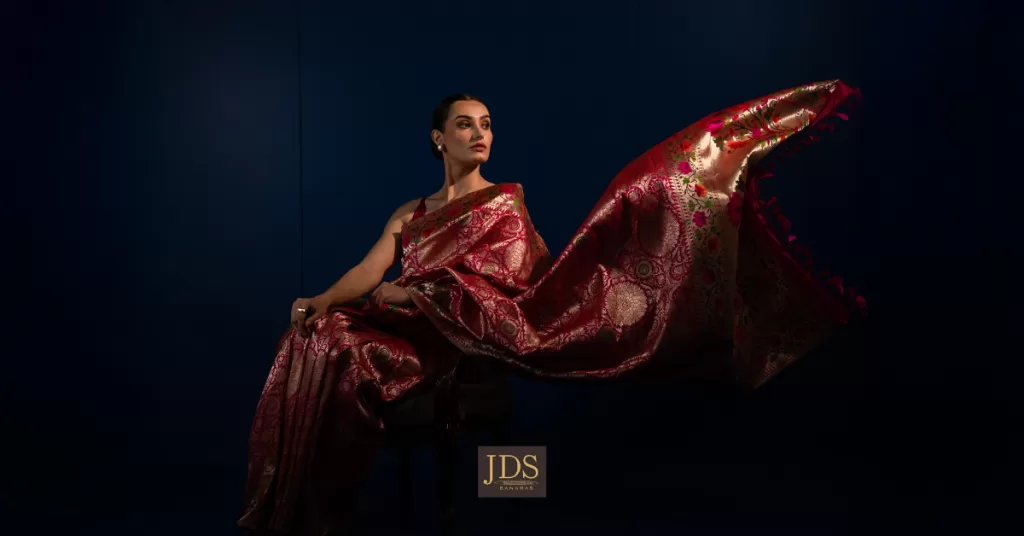
Pure silk Banarasi sarees are more than traditional garments—they are symbols of heritage, craftsmanship, and timeless luxury. For centuries, these sarees have been associated with royalty, grand celebrations, and premium Indian fashion. From intricate zari weaving to the use of pure silk threads, every Banarasi saree reflects unmatched artistry that elevates it into the world of luxury fashion.
Today, pure silk Banarasi sarees are admired not only in India but also across global fashion markets. Their elegance, durability, and handcrafted beauty make them one of the most prestigious traditional textiles in the world.
What Is a Pure Silk Banarasi Saree?
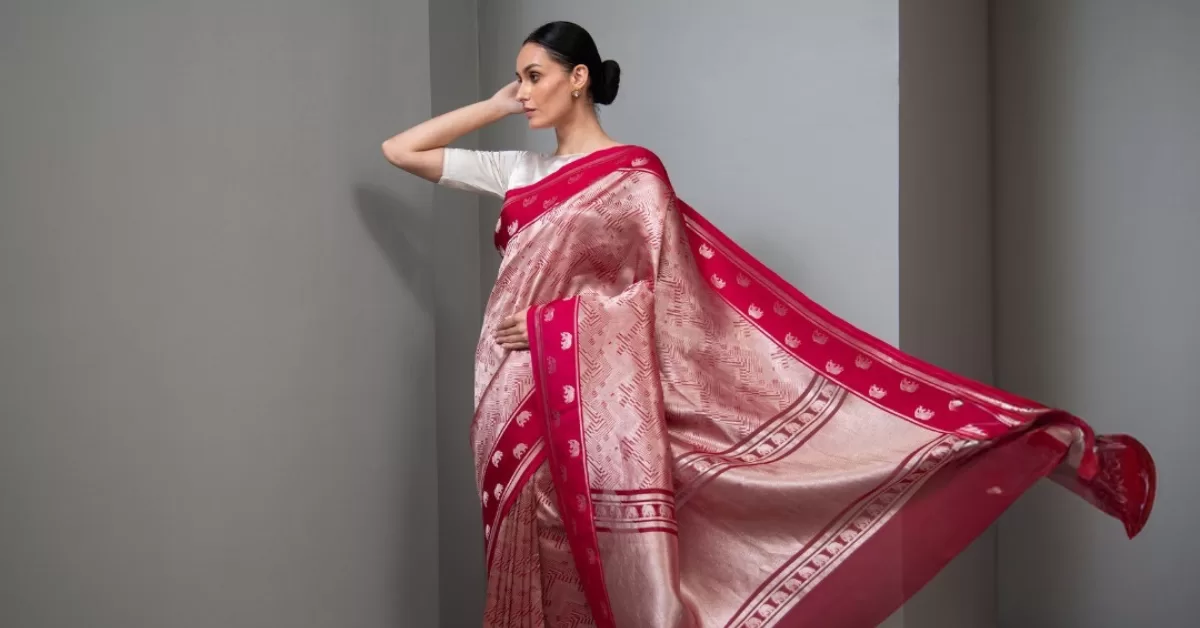
A pure silk Banarasi saree is a handwoven saree crafted in Varanasi (Banaras), one of India’s most historic textile hubs. These sarees are made using premium silk threads and decorated with intricate motifs woven with zari—fine gold or silver threads.
Unlike machine-made sarees, authentic Banarasi sarees are woven by skilled artisans who often spend weeks or even months completing a single piece.
Key characteristics include:
- Pure mulberry silk fabric
- Handwoven zari work
- Traditional Mughal-inspired motifs
- Rich texture and luxurious drape
- Long-lasting durability
Because of this detailed craftsmanship, Banarasi sarees are widely regarded as heirloom garments that can be passed down for generations.
The Royal History Behind Banarasi Sarees
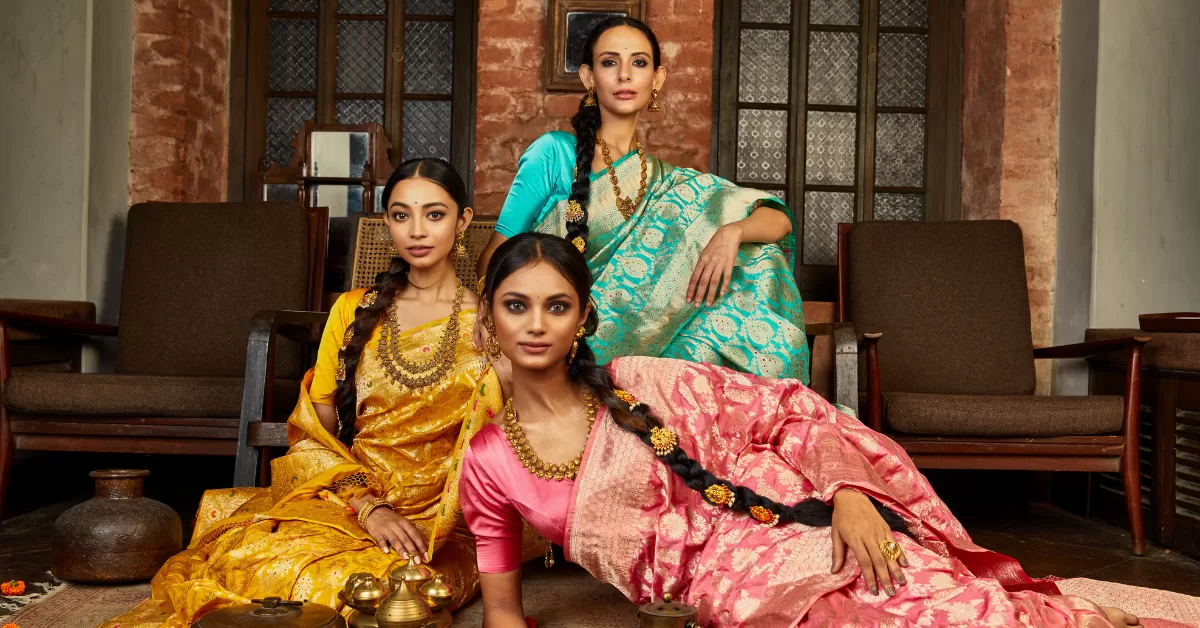
The legacy of Banarasi sarees dates back to the Mughal era when Persian artistic influences blended with Indian textile traditions. Royal courts encouraged the creation of luxurious fabrics, leading to the development of the iconic Banarasi weaving style.
Historical records show that Banarasi silk was once worn by queens, aristocrats, and noble families. The luxurious fabric and detailed brocade designs made these sarees a symbol of wealth and prestige. Over time, Banarasi weaving evolved into one of the most respected textile traditions in India, with skilled artisans passing down their techniques through generations.
Today, heritage brands like JDS Banaras continue to preserve this royal legacy by offering authentic handwoven Banarasi sarees that reflect the rich cultural heritage of Varanasi. By supporting traditional craftsmanship and working closely with skilled weavers, JDS Banaras helps keep the centuries-old Banarasi weaving tradition alive.
Even today, Banarasi sarees remain a staple for Indian weddings and grand cultural celebrations, admired for their elegance, craftsmanship, and timeless appeal.
Handcrafted Artistry That Defines Luxury
One of the biggest reasons Banarasi sarees are considered luxury fashion is the level of craftsmanship involved in their creation.
Each saree requires multiple stages of work:
- Designing intricate motifs
- Dyeing pure silk threads
- Preparing traditional handlooms
- Hand weaving the saree with zari work
- Final finishing and detailing
Some complex Banarasi sarees can take 15 to 30 days to weave, while heavily embroidered bridal pieces may take several months.
This slow, handcrafted process makes every saree unique, which is a defining feature of luxury fashion.
Premium Silk Fabric and Zari Work
The quality of materials used in pure silk Banarasi sarees also contributes to their luxury status.
Pure Silk
Authentic Banarasi sarees use high-quality mulberry silk, known for its smooth texture, natural sheen, and durability. The fabric drapes beautifully and retains its elegance even after years of use.
Zari Embellishments
Zari is a metallic thread traditionally made using gold or silver plating over silk threads. These shimmering threads are woven into intricate designs such as:
- Floral patterns
- Paisley motifs
- Mughal-inspired vines
- Geometric brocade designs
The presence of real zari significantly enhances the value of the saree.
Iconic Banarasi Saree Designs
Banarasi sarees feature distinctive weaving styles that are recognized worldwide.
Katan Silk Banarasi
Katan silk is a pure silk fabric created by twisting silk threads together. It is known for its durability and luxurious finish.
Organza Banarasi (Kora)
These sarees are lightweight yet elegant, featuring delicate zari work on sheer fabric.
Georgette Banarasi
A softer variation that combines silk with lightweight weaving, making it easier to drape for modern occasions.
Shattir Banarasi
A contemporary weaving style used to create experimental patterns and modern designs.
Each style reflects a unique combination of tradition and fashion innovation.
Banarasi Sarees in Modern Luxury Fashion
While Banarasi sarees have deep cultural roots, they have also become a key element of modern luxury fashion.
International designers and luxury fashion houses frequently incorporate Banarasi textiles into:
- Bridal couture
- Luxury lehengas
- Designer gowns
- Fusion ethnic wear
Global celebrities and fashion influencers have also showcased Banarasi fabrics on international runways, bringing global attention to this traditional Indian textile.
Why Banarasi Sarees Are Highly Valuable
Several factors contribute to the premium value of pure silk Banarasi sarees.
Skilled Artisan Labor
Handloom weaving requires years of training and expertise. Many Banarasi weavers inherit the craft through generations.
Limited Production
Unlike machine-made fabrics, handcrafted Banarasi sarees take time to produce, which naturally limits their availability.
Cultural Heritage
Banarasi weaving is recognized as a cultural treasure of India and holds Geographical Indication (GI) status.
Long-Term Durability
A genuine Banarasi saree can last for decades if maintained properly, making it a valuable investment piece.
How to Identify an Authentic Pure Silk Banarasi Saree
Due to their popularity, many imitation Banarasi sarees are available in the market. To identify an authentic piece, consider these factors:
- Check for a Silk Mark certification
- Inspect the reverse side of the weave for floating threads
- Look for detailed and symmetrical motifs
- Ensure the saree has a rich silk texture and natural shine
- Verify the zari quality
Buying from trusted saree stores ensures authenticity and quality.
The Global Demand for Banarasi Silk
Banarasi sarees are no longer limited to Indian markets. They are now highly sought after by international buyers across countries like:
- United States
- United Kingdom
- Canada
- Australia
- UAE
The growing global interest in sustainable fashion and handcrafted textiles has further increased demand for authentic Banarasi silk sarees.
Why Pure Silk Banarasi Sarees Remain Timeless
Fashion trends may change, but Banarasi sarees have remained relevant for centuries. Their ability to combine tradition with elegance makes them a timeless choice.
From weddings and festivals to luxury fashion events, Banarasi sarees continue to represent grace, prestige, and cultural heritage.
Their intricate craftsmanship and rich silk fabric ensure that they remain one of the most admired forms of luxury ethnic fashion.
FAQs: Pure Silk Banarasi Sarees
1. What makes pure silk Banarasi sarees a luxury fashion item?
Pure silk Banarasi sarees are considered luxury fashion because they are handcrafted using high-quality mulberry silk and intricate zari weaving. These sarees require skilled artisans and can take weeks or even months to weave, making them rare and valuable.
2. Why are Banarasi sarees famous in India?
Banarasi sarees are famous for their rich silk fabric, Mughal-inspired motifs, and intricate gold and silver brocade work. They originated in Varanasi and are considered one of the most prestigious traditional textiles in India.
3. How long does it take to make a Banarasi saree?
Depending on the complexity of the design and weaving technique, a Banarasi saree can take anywhere from 15 days to several months to complete.
4. What types of Banarasi sarees are available?
Some of the most popular types of Banarasi sarees include Katan Silk Banarasi, Organza (Kora) Banarasi, Georgette Banarasi, and Shattir Banarasi, each known for its unique weaving style and texture.
5. How can you identify an authentic Banarasi silk saree?
An authentic Banarasi saree can be identified through Silk Mark certification, detailed handwoven motifs, floating threads on the reverse side of the fabric, and the natural sheen of pure silk.
6. Why are Banarasi sarees popular for weddings?
Banarasi sarees are popular for weddings because of their luxurious silk fabric, rich zari designs, and royal heritage. They are often chosen as bridal sarees in many Indian cultures.
7. Are Banarasi sarees durable?
Yes, pure silk Banarasi sarees are highly durable when properly maintained. Their strong silk fabric and detailed weaving allow them to last for decades.
8. Why are Banarasi sarees considered heirloom pieces?
Banarasi sarees are considered heirloom pieces because they are handcrafted with high-quality silk and intricate designs that remain timeless, allowing them to be passed down through generations.
9. What motifs are commonly used in Banarasi sarees?
Common Banarasi saree motifs include floral patterns, paisley designs, Mughal-inspired vines, kalga and bel patterns, and traditional brocade motifs.
10. Are Banarasi sarees popular outside India?
Yes, Banarasi sarees are admired globally and are increasingly popular in countries like the United States, United Kingdom, Canada, Australia, and the UAE, where buyers appreciate handcrafted luxury textiles.