Travelling to Varanasi? Planning to buy a Banarasi saree as a heritage keepsake or a family heirloom? That’s wonderful — but you must tread carefully. There is an increasing trend of shops selling semi-silk or blended sarees, marketed as “pure Banarasi silk,” especially to tourists. These sarees are almost impossible to distinguish from real silk for untrained eyes. The salespeople often offer heavy discounts, claiming “once-in-a-lifetime prices.” The result: you pay high for cheap cloth.
At Best Banarasi Saree Shop in Varanasi, we believe in transparency, authenticity, and heritage — and we want you to stay safe and informed. Below is a complete guide on:
- How the scam works.
- What you should check before buying.
- Why we at JDS Banaras are genuinely different.
- A full checklist to help you buy pure Banarasi silk.
The Scam You Should Be Aware Of
Tourists come to Varanasi expecting to buy traditional Banarasi silk — known worldwide for its craftsmanship. Unfortunately, some unscrupulous sellers exploit that trust. Here’s how the scam typically works:
- A local guide, driver, or hotel-supplier (often paid 20–40% commission) refers tourists to a shop.
- The shop presents sarees made from art silk or blended synthetic silk which look remarkably like real Banarasi silk.
- Because silk is expensive, they mark price high — then offer “discounts” to make it seem like a steal.
- Unaware tourists, taken aback by the “offer,” buy the saree believing they got a good deal.
- When they return home and wash or examine closely, they realize the fabric lacks the sheen, drape, and longevity of true silk.
This practice cheats you — and harms the reputation of genuine handloom weavers who have upheld the heritage for generations.
What You Should Do to Avoid Getting Cheated
Before buying any saree, especially when you’re travelling, spend a few minutes doing these simple checks. It will help you distinguish between real heritage silk and cheap imitations:
- Check the HSN Code 5007 on the Bill + Verify Silk Mark Certificate:
One of the most reliable ways to confirm that you’re buying pure silk is by checking the HSN Code on the bill. The Government of India uses HSN Code 5007 specifically for pure silk fabrics. If the store is selling genuine pure silk, this code should clearly appear on your invoice.
Additionally, ask the seller to provide a Silk Mark Certificate – this includes the official Silk Mark logo issued by the Silk Mark Organisation of India. This certificate is one of the strongest proofs that the saree is made from real, approved pure silk. If a shop hesitates to provide Silk Mark or avoids showing the HSN code, consider it a major red flag.
You can also watch this video for more clarity: https://www.instagram.com/reels/DHdXodWzOdE/
- Check the shop’s online presence:
- Look up Google Maps reviews. Genuine stores often have many reviews over several years.
- Check their social media presence — recent posts, tagged photos of real weavers, customer feedback, and social proof from satisfied buyers.
- Look up Google Maps reviews. Genuine stores often have many reviews over several years.
- Explore their website (if they have one):
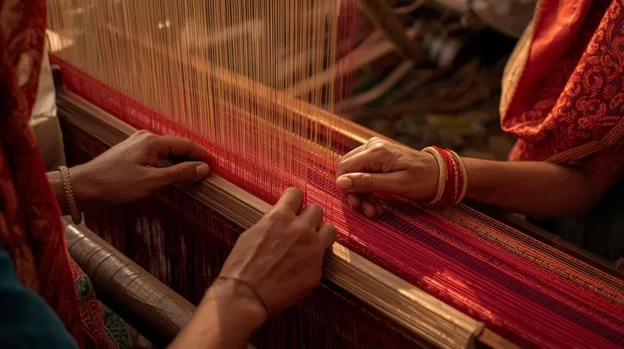
- Real weaver-based stores often show manufacturing units, craftsmanship photos, weaving process details, or certifications.
- Look for transparency about how fabrics are made, who makes them, and customer testimonials.
- Real weaver-based stores often show manufacturing units, craftsmanship photos, weaving process details, or certifications.
- Ask for provenance details:
- Who wove the saree?
- How many hours went into weaving it?
- Is there a certificate (like Silkmark)?
- Real handloom sarees have irregularities and minor uniqueness — that’s part of their charm. Blended silk often looks too “perfect.”
- Who wove the saree?
- Compare price with market norm:
If a so-called “pure silk” saree is being offered at a suspiciously low price, it’s almost always a red flag. Quality handloom silk requires time, skilled labor, and quality yarn — it should cost accordingly. - If possible, feel the fabric and check under good light:
- Real Banarasi silk has a distinct sheen, smoothness, and weight — blends or artificial silk often feel “light,” plasticky, or limp.
- Ask how the saree behaves — if it creases too easily, or if the zari looks dull, it may be imitation.
- Real Banarasi silk has a distinct sheen, smoothness, and weight — blends or artificial silk often feel “light,” plasticky, or limp.
- Check official brand credibility:
- How long has the brand been around?
- Are there past customers who can vouch for them?
- Do they maintain consistency in quality?
- How long has the brand been around?
A long-standing heritage store is more likely to honor its name over quick profits.
Why We Believe in True Heritage — And Why JDS Banaras Is Different
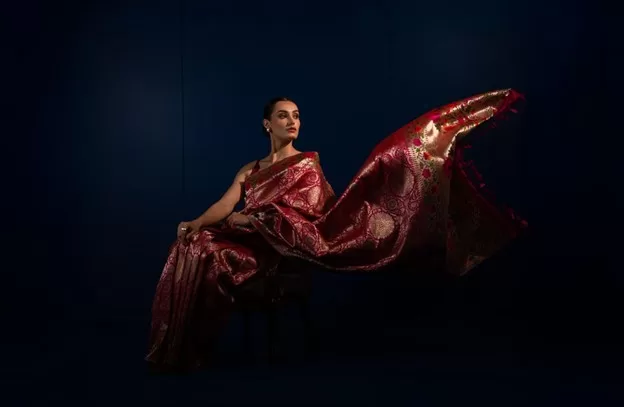
At JDS Banaras, we are not just a shop — we are a legacy. Here’s why you can trust us:
- Over a century of legacy: Our store has been operating for more than a hundred years — a true testament to trust, commitment, and heritage passed through generations.
- Own manufacturing unit + 2000+ weavers: We don’t source sarees from an unknown middleman — we produce them ourselves, weaving each saree with care and craftsmanship.
- Certified Quality (Silkmark certification): We carry recognized certification ensuring that what you purchase is genuine silk.
- Transparency & accountability: We are always ready to show you who wove the saree, how many man-hours went into it, and how it was crafted.
- Trusted by connoisseurs, celebrities, and loyal customers: Many of our customers come from their own experience or recommendation — which stands as our best advertisement.
- Visitor-friendly & honest: We don’t do commission-based referrals or shady discounts. We offer real silk, real quality — and believe in real value.
When you buy from us, you’re not just buying a saree — you’re bringing home a piece of heritage, craftsmanship, and trust that will last decades.
Want to Know How to Identify Real Silk?
We’ve already prepared a detailed guide — Real Silk Versus the Fake: How to Identify — that explains exactly how to spot genuine silk vs imitation. For anyone serious about buying an authentic Banarasi saree, that article is a must-read.
What to Do If You’re Already in Varanasi — Step-by-Step Guide
- Search online for the store on Google Maps — check reviews and photos.
- Visit their website / social handles. Look for heritage, weaving units, real images.
- Ask the shop directly: “Who wove this?”, “Can you show how it was made?”, “Do you have certification?”
- Feel the fabric in daylight — check drape, weight, and zari quality.
- Compare price with market norms — “cheap pure silk” is usually not real.
- Cross-check with our checklist above.
- If possible, avoid shops brought to you by strangers (drivers, guides, hotel staff) offering “special discount.” Be wary of referrals offering commissions.
- Visit a heritage store like JDS Banaras — if you have time, demand authenticity, documentation, and real feel.
Why Raising Awareness Matters — Not Just for You, But for the Craft
When tourists unknowingly buy imitation sarees:
- They feel cheated — their trust in Banarasi heritage gets damaged.
- Genuine weavers and heritage sellers lose value as imitation floods the market.
- The integrity and prestige of truly handloom Banarasi sarees diminish over time.
By staying informed, asking the right questions, and supporting authentic craftsmanship, you help preserve a centuries-old tradition. You support hundreds of real artisans whose livelihood depends on honest trade.
Choose Heritage, Honesty & Quality — Choose JDS Banaras
If you genuinely want a Banarasi saree that:
- is pure handloom silk,
- is woven with skill and time,
- will last decades,
- is backed by real heritage and certification —
Then do visit Best Banarasi Saree Shop in Varanasi. We don’t believe in flashy discounts — we believe in real value, trust, and legacy.
Buy from us with confidence. Make your Varanasi souvenir a piece of heritage, not a regret.
FAQs
Q: How can I be sure a Banarasi saree is 100% pure silk?
A: Use the checklist table above — check feel, weight, sheen, zari quality, certification, and shop history. Real silk has a distinctive drape, smoothness, and subtle glow. If possible, inspect under daylight and ask for provenance.
Q: Why are blended silk sarees offered much cheaper than pure silk ones?
A: Blended or art silk uses synthetic yarn or mixed threads — which are far cheaper and faster to produce. Real silk requires high-quality yarn and manual weaving, which takes more time and costs more. So if the price is unusually low, it’s usually not genuine silk.
Q: Why should I trust JDS Banaras over other shops?
A: JDS Banaras has a century-long legacy, its own weaving unit with more than 2000 skilled weavers, Silkmark certification, and transparent provenance. We do not engage in shady discounting or commission-based referrals. Our reputation stands on real quality and decades of trust.
Q: What if I already bought a saree and suspect it’s fake?
A: Compare it using the checklist above — feel, drape, zari, and weave quality. If it fails key checks, treat it with caution. Wash, store, or use it carefully. When in Varanasi again, consider buying from a trusted heritage store like JDS Banaras.
Q: Is there a quick test for silk authenticity?
A: Some traditional tests (like the burning test) exist — but it’s best avoided on expensive sarees. Instead, rely on feel, weave quality, certification, and transparent provenance. Always buy from reputable stores.
At the end of the day, what stays with you is not just a saree — but a memory, a story, and a piece of art crafted with care. Make sure that memory is real.
JDS Banaras wishes you a safe, joyful, and informed shopping experience in Varanasi.