
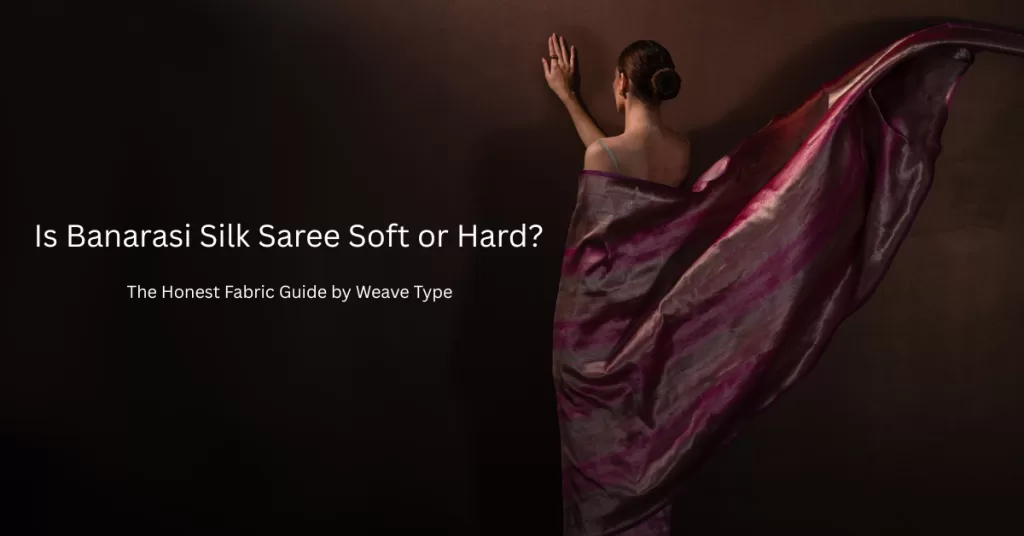
A Banarasi silk saree is neither uniformly soft nor uniformly hard — it depends entirely on the weave type. Pure Katan silk Banarasi is slightly stiff and structured when new, but softens naturally with wear and careful washing. Georgette Banarasi is soft, flowy, and lightweight from the moment you hold it. Organza Banarasi is crisp and airy with a transparent quality. Tanchui brocade is heavy and structured due to dense Zari work. Satin Banarasi is smooth and fluid with a mirror-like sheen. If you are asking “is Banarasi silk saree soft or hard?” — the honest answer is that there are at least seven different Banarasi weave types, each with a distinctly different hand-feel, and you need to know which one you are buying before you can answer that question.
Why “Is Banarasi Silk Saree Soft or Hard?” Is the Wrong Question
This is one of the most searched questions about Banarasi sarees online — and it is the wrong question. Not because it is foolish to ask, but because asking “is Banarasi silk soft or hard” is like asking “is Indian food spicy or mild.” The answer is: it depends entirely on what you order.
“Banarasi silk” is not one fabric. It is a family of at least seven distinct weave types, all produced in Varanasi’s GI-tagged handloom zone, each with dramatically different hand-feel, weight, drape, and stiffness. A Georgette Banarasi feels nothing like a Katan silk Banarasi. An Organza Banarasi feels nothing like a Tanchui brocade. They are all “Banarasi silk” — and they are all completely different in how they feel against your skin.
This guide answers the question honestly — not with one generic answer, but with a fabric-by-fabric breakdown based on over 110 years of handling these textiles at JDS Banaras, Varanasi’s oldest Silk Mark-certified Banarasi saree showroom.
Is Katan Silk Soft or Hard? The Most Asked Fabric Question
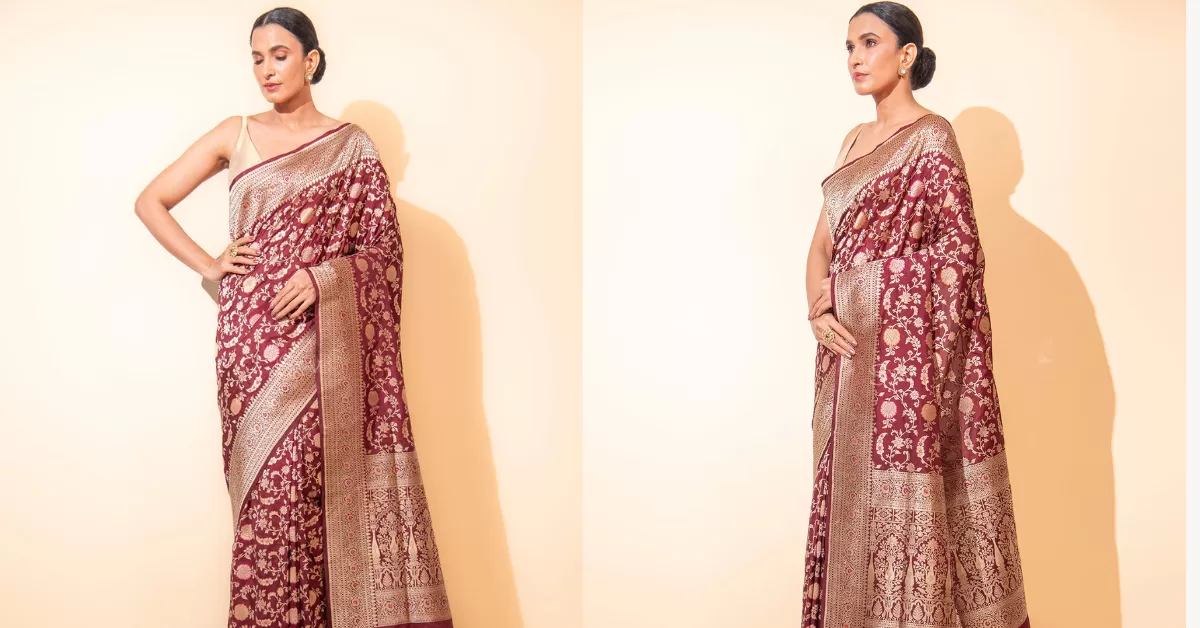
Katan silk is slightly stiff and structured when brand new, but softens naturally with wear. This is the single most important thing to understand about premium Banarasi sarees — and the source of most confusion among first-time buyers.
Katan silk is woven from pure Mulberry silk in both warp and weft, with both threads tightly twisted before weaving. That tight twist is what gives Katan its characteristic crispness. When you hold a new Katan silk saree in your hands, it feels firm, smooth, and substantial — not limp or floppy. It makes a soft whispering “scrunch” sound when crushed in the palm. The drape is structured — the pleats hold shape cleanly, which is why Katan silk photographs so well on brides.
Within the first 3 to 5 wearings, pure Katan silk begins to soften. The tight twist of the silk threads relaxes with body heat, gentle movement, and natural moisture from the skin. A Katan silk saree that has been worn 10 times is noticeably softer than the same saree on its first day. After years of careful use, a well-maintained Katan silk saree develops a buttery softness that no new saree — regardless of price — can replicate. This is why families pass Katan silk sarees across generations: the fabric literally improves over time.
If you want the structured drape of new Katan for a wedding ceremony, buy a new piece. If you want the softer, more relaxed feel, ask to see aged or pre-softened pieces — or know that the saree you are buying will become softer with time.
Stiffness rating: 7/10 when new → 3/10 after several wearings.
Related guide: What Is Katan Silk and Is It Pure?
Is Banarasi Georgette Saree Soft? The Most Comfortable Banarasi
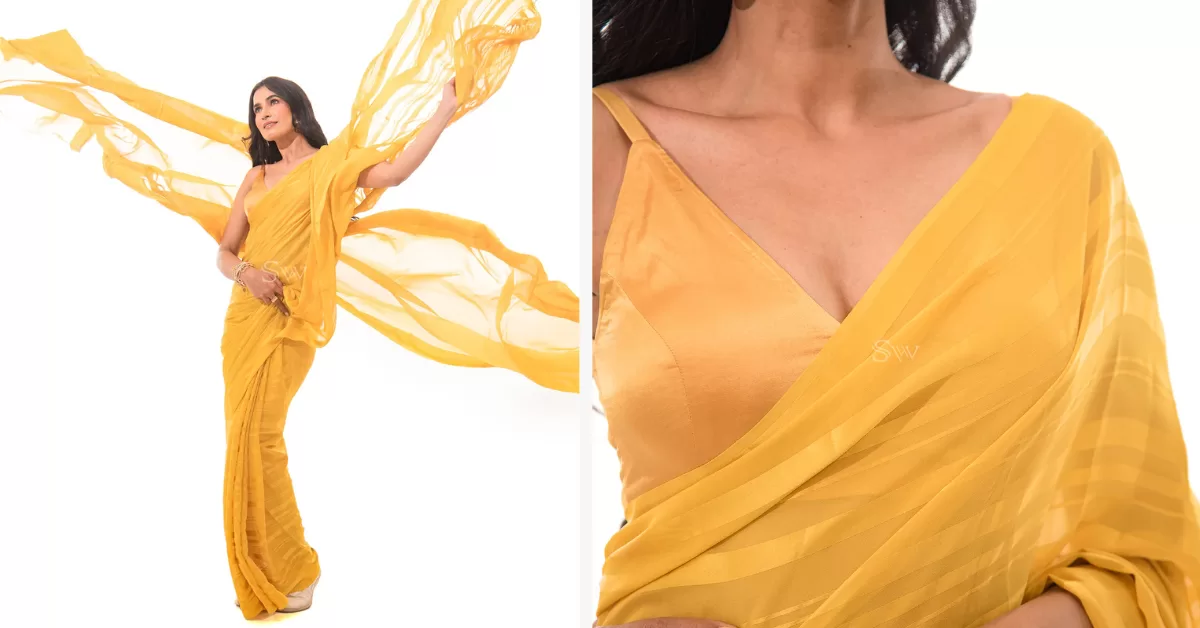
Yes — Georgette Banarasi is the softest and most comfortable Banarasi saree type. It is the answer for anyone who asks “is Banarasi silk comfortable to wear all day” — because Georgette is specifically designed for extended wear.
Banarasi Georgette is woven from tightly twisted, alternating S-twist and Z-twist silk threads that create a naturally textured, slightly crinkled surface. This twist structure makes the fabric inherently soft, breathable, and resistant to creasing. Unlike Katan, Georgette does not need to be “broken in” — it is soft from day one.
The drape of Georgette Banarasi is flowing and fluid — it moves with the body rather than holding a rigid shape. This makes it the preferred choice for mothers at weddings (who need to be comfortable for 8 to 10 hours), for women who are not accustomed to wearing sarees regularly (the lightweight drape is more forgiving), and for anyone attending a summer wedding where heavier fabrics would be uncomfortable.
At JDS Banaras, the Georgette collection is consistently the most popular category for family wedding shopping — because when a mother, a sister-in-law, and three aunts all need a saree for the same event, Georgette is the one that every body type and comfort preference can agree on.
Stiffness rating: 2/10 — soft, flowy, comfortable from first wear.
Related guide : Best Place to Buy Pure Banarasi Khaddi Georgette Sarees in Varanasi
Is Banarasi Organza Saree Stiff or Soft? The Crisp-Light Paradox
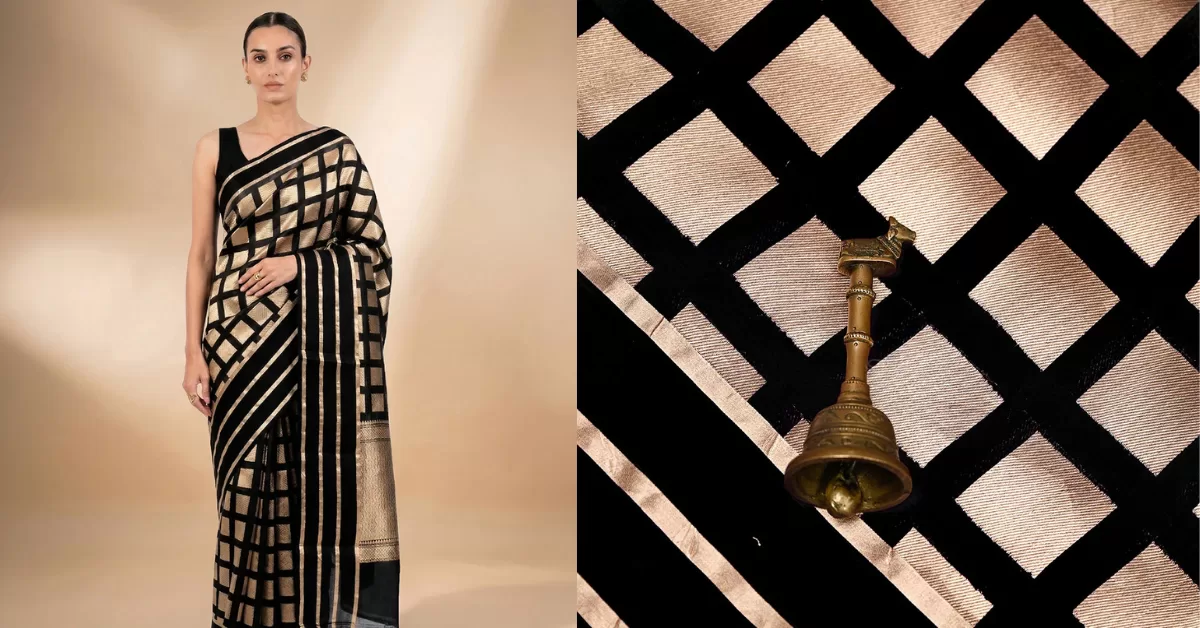
Organza Banarasi is crisp rather than soft — but surprisingly lightweight. It sits in an interesting middle ground: it has a structured, almost papery hand-feel, yet it weighs less than almost any other Banarasi weave.
Banarasi Organza (also called Kora silk) is woven from tightly twisted pure silk threads that create a semi-transparent fabric with a distinct natural sheen. The transparency and crispness together produce a saree that looks ethereal and airy when draped but does not feel limp or clingy against the body. Organza holds its pleats firmly without needing starch or ironing, which is part of its appeal for formal occasions.
The crispness of Organza does not soften significantly over time — it is an inherent characteristic of the weave, not a temporary stiffness like new Katan. What you feel in the showroom is essentially what you will feel years later. Some women love this characteristic; others find it less comfortable than Georgette for extended wear.
Organza Banarasi is ideal for summer weddings and outdoor receptions where the semi-transparent quality catches light beautifully. It is less suited for long, all-day wedding ceremonies where body comfort over 8+ hours is the priority — for those, Georgette is the better choice.
Stiffness rating: 6/10 — crisp and structured, very lightweight, does not soften much over time.
Related guide : Why Organza Sarees Are Trending in 2026
Is Banarasi Saree Heavy or Light? Weight by Fabric Type
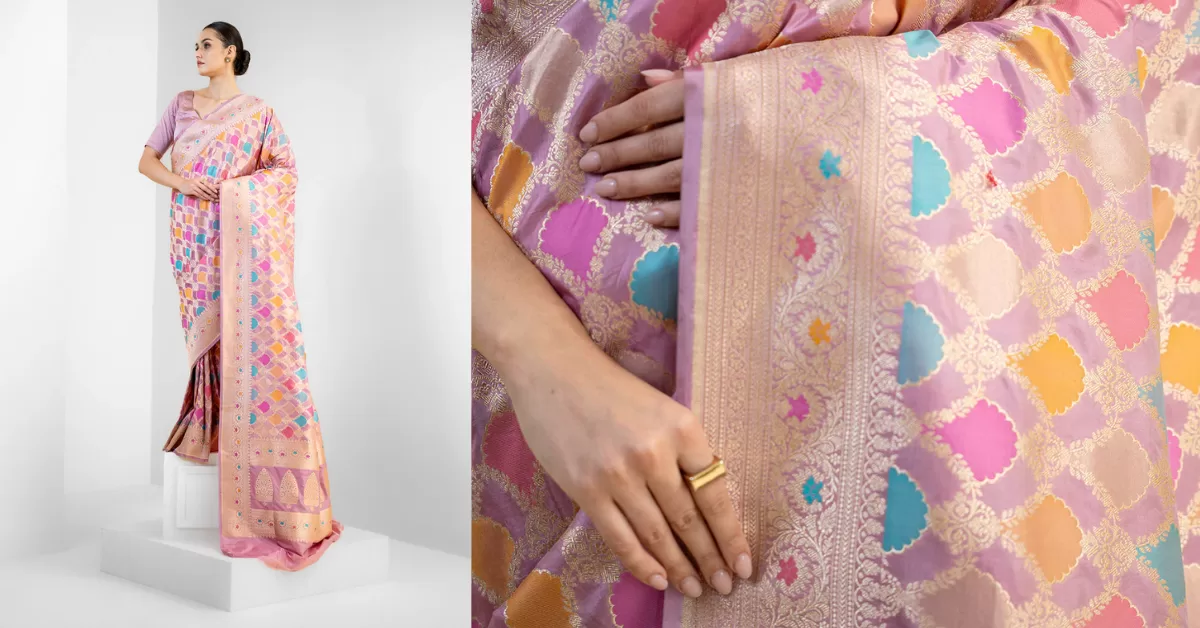
Banarasi sarees range from approximately 350 grams (Organza) to over 900 grams (heavy Tanchui brocade with real Zari). Weight is one of the biggest factors in how a saree feels — and a frequent source of surprise for first-time Banarasi buyers who expect all silk sarees to feel the same.
| Banarasi Fabric | Approximate Weight (6 yards) | How It Feels | Best For |
|---|---|---|---|
| Organza (Kora) | 350–500g | Crisp, airy, almost weightless on the body | Summer weddings, daytime ceremonies, receptions |
| Georgette | 400–600g | Soft, flowing, comfortable for extended wear | All-day weddings, mothers, festive daily wear |
| Tissue Silk | 450–600g | Light with a metallic shimmer, slightly crisp | Festivals, engagement, semi-formal events |
| Satin Silk (Shattir) | 500–700g | Smooth, fluid, mirror-like surface | Evening receptions, parties, sangeet |
| Katan Silk | 550–750g | Structured, slightly stiff when new, substantial | Bridal, wedding ceremony, formal occasions |
| Tanchui Brocade | 700–900g+ | Heavy, dense, richly textured from brocade work | Grand bridal, principal ceremony only |
| Heavy Kadwa with Real Zari | 800–1000g+ | The heaviest — structured, opulent, commands attention | Bride’s main wedding saree, trousseau centrepiece |
Understanding weight is critical because it directly affects comfort, drape, and how long you can comfortably wear the saree. A bride wearing a heavy Kadwa Katan silk for a 2-hour ceremony will be fine. A mother wearing the same saree for an 8-hour wedding will be uncomfortable by lunchtime. Match the weight to the duration of the event, not just the visual appeal.
Is Banarasi Silk Comfortable to Wear for a Full Day?
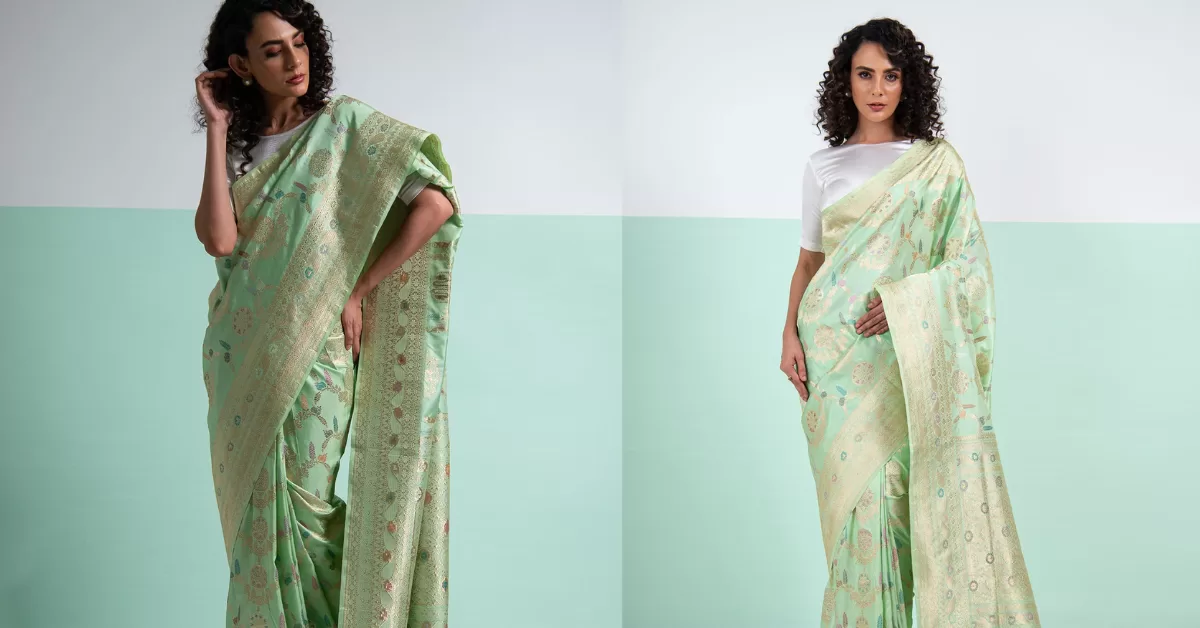
Yes — if you choose the right weave type for the duration of the event. The mistake most first-time Banarasi buyers make is buying based on appearance alone without considering how many hours they will be wearing the saree.
Here is the practical guide based on what we observe every wedding season at JDS Banaras:
For 2 to 3 hours (ceremony only): Any fabric works. Even a heavy Kadwa Katan silk or Tanchui brocade is comfortable for a short ceremony. Choose based purely on visual preference and occasion significance.
For 4 to 6 hours (ceremony + reception): Pure Katan silk (without heavy brocade) or Satin silk are the best balance of visual impact and comfort. Avoid very heavy Tanchui brocade unless the wearer is accustomed to saree draping.
For 8+ hours (the full wedding day — morning through dinner): Georgette Banarasi or lightweight Organza. These fabrics will not cause fatigue, will not wrinkle noticeably, and will maintain their drape through hours of sitting, standing, walking, and socialising. This is exactly why mothers, sisters-in-law, and wedding guests consistently choose Georgette — the event is long, and comfort matters more than maximum opulence.
Does Banarasi Silk Saree Become Soft After Washing?
Yes — pure silk Banarasi sarees, especially Katan silk, become noticeably softer after each gentle wash or dry clean. This is one of the most beautiful characteristics of genuine silk and one of the clearest distinctions between pure silk and synthetic imitation.
The softening happens because pure Mulberry silk is a protein fibre — structurally similar to human hair. The tight twist applied to the silk threads during weaving gives the fabric its initial stiffness. With gentle washing, body heat during wear, and natural moisture exposure, the protein fibres relax and the fabric becomes progressively softer, more supple, and more luxurious in hand-feel.
This process takes time — it is not a one-wash transformation. The typical progression:
- New (unwashed): Maximum crispness. Pleats hold sharply. Best for photographs where structured drape is wanted.
- After 1st dry clean or gentle hand wash: Slightly softer. The crispness eases by approximately 15–20%.
- After 3 to 5 wearings + washes: Noticeably softer. The fabric begins to feel fluid rather than structured. Many wearers prefer the saree at this stage.
- After years of careful use: The fabric reaches its most beautiful state — soft, warm, and deeply lustrous. Heirloom Katan silk sarees that have been worn and cared for across decades develop a quality that no new fabric can replicate.
Important: Synthetic or blended sarees sold as “Banarasi” do not soften with washing — they remain stiff or become limp and lose their shape entirely. If your “Banarasi silk” saree has not softened at all after multiple wearings and washes, it may not be pure silk. The burn test or Silk Mark certification are the definitive verification methods.
How to Soften a New Banarasi Silk Saree Before Wearing
If you have purchased a new Katan silk or brocade Banarasi saree and find it too stiff for your comfort, there are three safe methods to soften it before the occasion:
Method 1: Pre-Wear Draping (Safest — No Water)
Drape the saree over a clean, padded hanger and let it hang in a well-ventilated room for 48 to 72 hours before the event. Gravity naturally relaxes the silk threads and softens the drape. This is the method JDS Banaras recommends for bridal sarees — it preserves the Zari and colour integrity while allowing the fabric to adjust.
Method 2: Steam (Moderate — Quick Results)
Hold a garment steamer approximately 15 centimetres from the fabric surface and pass steam across the saree gently. Do not press the steamer directly against the silk or Zari. The heat and moisture relax the silk fibres without wetting the fabric. One pass is usually sufficient. Allow the saree to air-dry for 30 minutes before draping.
Method 3: Gentle Hand Wash (Most Effective — For Non-Heavy-Zari Sarees Only)
If the saree does not have heavy real Zari work (real Zari can tarnish with water exposure), a gentle hand wash in cold water with a mild silk detergent softens the fabric significantly. Submerge the saree for 10 minutes, agitate gently, rinse in cold water, and lay flat to dry in shade. This method works best for Georgette and lighter Katan pieces.
Never: Use hot water, bleach, strong detergent, or a washing machine on any Banarasi silk saree. Never wring the fabric. Never dry in direct sunlight — UV exposure degrades silk protein fibres and fades natural dyes.
Banarasi Silk vs Soft Silk Saree — What Is the Difference?
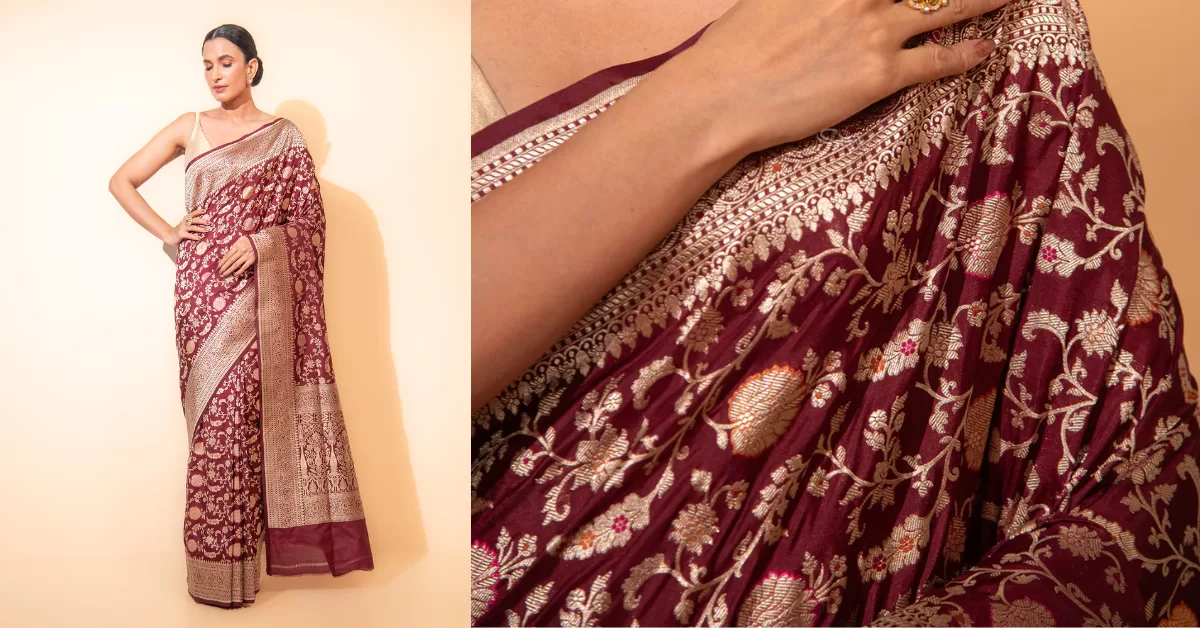
“Soft silk” is a marketing term used in the Indian saree market to describe sarees that are typically machine-made using Mulberry silk or silk-blend yarns, woven in a plain or basic pattern without heavy brocade or Zari work. They are lightweight, affordable, and comfortable — but they are not Banarasi.
A Banarasi silk saree is defined by its geographic origin (woven in Varanasi’s GI zone), its handloom production, and its traditional weaving techniques (brocade, Kadwa, Jangla, etc.). Some Banarasi fabrics — like Georgette Banarasi — are as soft as any “soft silk” on the market. Others — like heavy Katan or Tanchui — are deliberately structured and crisp.
The key difference is not softness vs stiffness. It is craftsmanship, provenance, and longevity. A “soft silk” saree may cost ₹2,000 to ₹5,000 and last 5 to 10 years with care. A pure Georgette Banarasi may cost ₹8,000 to ₹25,000 and last 30 to 50 years, softening and improving over time. A pure Katan Banarasi may last generations. The price difference reflects the difference in what you are buying — not just for today, but for decades.
Which Banarasi Saree Is Best for a Summer Wedding?
For a summer wedding where heat and humidity are factors, choose Georgette Banarasi or Organza Banarasi. Both are the lightest weaves in the Banarasi family and are specifically suited for warm-weather events.
Georgette Banarasi is the safer choice for all-day summer events because its breathable texture and soft drape will not trap heat against the body. The slight crinkle of the fabric creates micro-ventilation that heavier weaves do not offer.
Organza Banarasi is ideal for evening summer events — its semi-transparent quality looks luminous under evening light, and its crisp drape holds shape without feeling heavy. For a daytime outdoor ceremony in summer heat, however, Organza’s crispness can feel slightly rigid compared to the fluid comfort of Georgette.
For the bride at a summer wedding who still wants the visual richness of Katan silk, the recommendation is a lighter-weight Katan with minimal body brocade — the Zari work concentrated on the border and pallu rather than across the entire body. This reduces weight by approximately 20–30% while maintaining the bridal impact for photographs.
Related guide : Light Banarasi Sarees for Day Functions & Summer Weddings
Which Banarasi Saree Is the Softest? The Complete Softness Ranking
From softest to most structured — every Banarasi weave type ranked:
| Rank | Fabric | Softness Level | Hand-Feel Description | Stiffness Score |
|---|---|---|---|---|
| #1 Softest | Georgette Banarasi | Very soft | Flowy, breathable, slight crinkle texture, zero stiffness | 2/10 |
| #2 | Chiffon (Khaddi) Banarasi | Very soft | Feather-light, almost transparent, romantic drape | 2/10 |
| #3 | Satin Silk (Shattir) Banarasi | Soft | Smooth, fluid, mirror-like surface, body-hugging drape | 3/10 |
| #4 | Cotton Silk Blend Banarasi | Medium-soft | Comfortable, breathable, slightly textured, casual feel | 3/10 |
| #5 | Tissue Silk Banarasi | Medium | Light but with a metallic crispness from Zari threads in base | 5/10 |
| #6 | Organza (Kora) Banarasi | Medium-crisp | Crisp, airy, structured, holds shape without effort | 6/10 |
| #7 | Katan Silk Banarasi (new) | Structured | Firm, smooth, substantial. Softens with wear over time. | 7/10 new → 3/10 aged |
| #8 | Tanchui Brocade | Stiff | Heavy, dense brocade, richly textured. Deliberately structured. | 8/10 |
| #9 Stiffest | Heavy Kadwa with Real Zari | Most structured | The most substantial Banarasi. Holds dramatic, sculptural drape. | 9/10 |
This ranking is based on how the fabric feels when you hold it in the showroom for the first time. Over time, fabrics ranked 7–9 will soften significantly — pure silk always does. Fabrics ranked 1–3 do not change much because they are already at their softest natural state.
At JDS Banaras at Rathyatra Crossing, Varanasi, every fabric type listed above is available in the showroom. The staff can show you the exact difference between a new Katan silk and an aged Katan silk side by side — the same fabric, the same weave, separated by a decade of wear. That comparison is the most honest answer to “is Banarasi silk soft or hard” that any showroom can offer.
Is Banarasi Silk Soft or Stiff? What 110 Years of Handling Tells Us
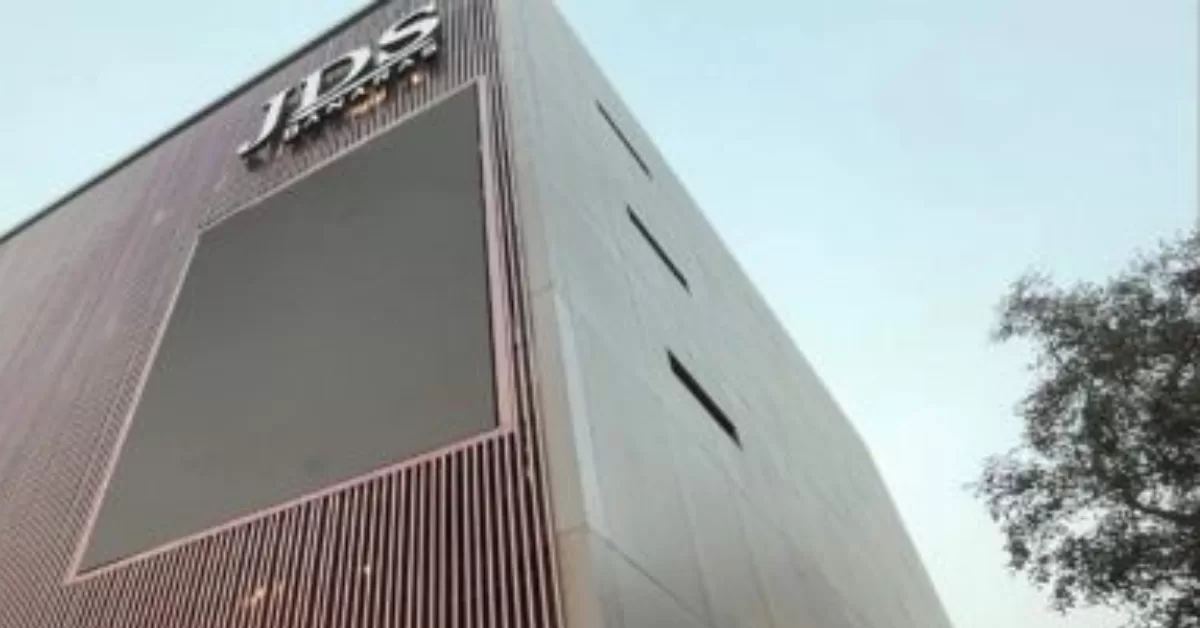
At JDS Banaras — a Banarasi saree manufacturer established in 1913 — the family has handled pure Banarasi silk in every weave type, at every stage from loom to showroom to years-later returns for refurbishment, for over a century. This is the honest summary of what that experience teaches about softness and stiffness:
New pure Banarasi silk is never limp. If a saree claiming to be pure Banarasi silk feels limp, thin, and has no body or structure at all, it is likely not pure handloom silk — it may be a machine-made synthetic or a cotton blend. Even the softest Banarasi weave (Georgette) has a subtle body and weight that distinguishes it from synthetic imitations.
Stiffness is not a defect — it is a feature. The initial crispness of Katan silk and brocade is deliberately created by the tight twist of the silk threads during weaving. This crispness is what gives bridal sarees their structured drape — the clean pleats, the precise fall, the photogenic silhouette. Without that structure, a bridal saree would drape like a curtain. The crispness is the craft.
Pure silk always softens. Synthetic never does the same way. This is the single most reliable difference between genuine and fake Banarasi. If a saree softens progressively with each wearing and washing — developing a warmer, more buttery hand-feel over time — it is pure silk doing what protein fibres naturally do. If it remains unchanged or becomes limp and shapeless, it is not genuine silk.
The Silk Mark certification and certificate of authenticity that JDS Banaras provides with every pure silk purchase are the documented way to verify this before you buy — rather than waiting years to see if the saree softens naturally.
How to Choose the Right Banarasi Softness for Your Occasion
| If You Want… | Choose This Fabric | Softness Level | Best Occasion |
|---|---|---|---|
| Maximum softness and comfort | Georgette Banarasi | Very soft | All-day wedding, daily festive, mothers |
| Feather-light and romantic | Chiffon (Khaddi) Banarasi | Very soft | Sangeet, engagement, summer events |
| Smooth and glossy without weight | Satin Silk Banarasi | Soft | Evening reception, party, sangeet |
| Crisp elegance without weight | Organza Banarasi | Crisp-light | Summer weddings, outdoor daytime events |
| The classic Banarasi bridal feel | Pure Katan Silk | Structured → softens | Bridal, ceremony, formal occasions |
| Maximum impact and grandeur | Heavy Tanchui or Kadwa | Stiff and heavy | Bride’s principal ceremony (2–3 hours) |
Visit JDS Banaras — Feel the Difference Before You Buy
The best way to answer “is Banarasi silk saree soft or hard?” is to hold seven different weave types in your hands and feel the answer yourself. No article — including this one — can replicate the sensation of pure Katan silk against your palm, or the difference between real Zari and synthetic Zari under your fingernail, or the way aged Georgette drapes compared to new Georgette.
JDS Banaras — Silk Mark certified, rated 4.9 stars by 8,000+ customers — has every fabric type described in this guide available in the showroom. The staff will walk you through the differences, show you new vs aged pieces side by side, and help you choose the right combination of softness, weight, and visual impact for your specific occasion and comfort level.
JDS Banaras — Jagdish Das & Company
D-58/1, Rathyatra Kamachha Road, Rathyatra Crossing, Varanasi 221010
Phone: +91 7269 055 695
Hours: Monday to Saturday, 10:30am to 8:30pm
Online: sacredweaves.com — JDS Banaras’s official online store
Frequently Asked Questions