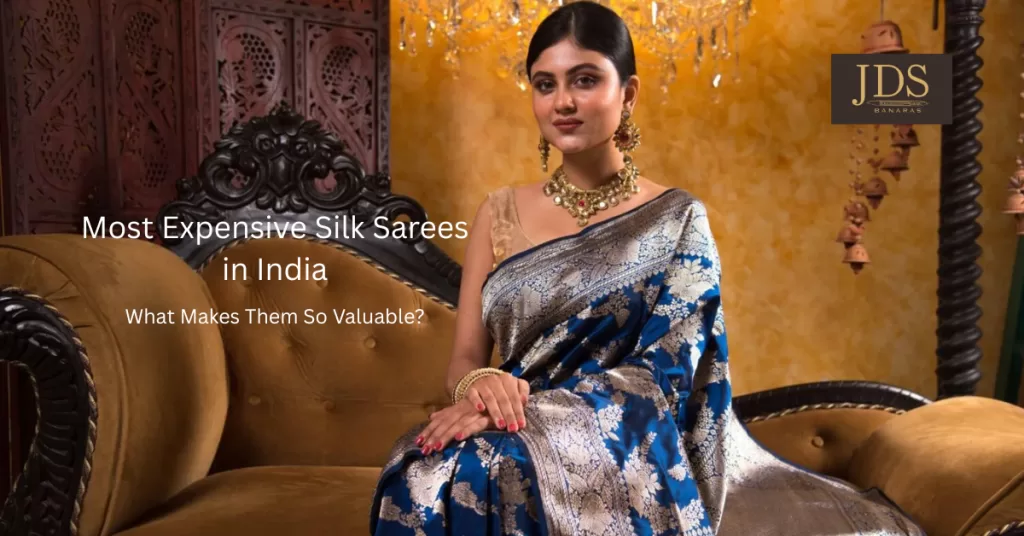
The most expensive silk sarees in India are not just about the silk they are made from — they are about what a master weaver does with that silk. A pure Banarasi Katan silk saree made using the Kadwa (Kadhua) hand-weaving technique with real gold and silver Zari can cost ₹80,000 to ₹2 lakh or more — making it one of the most expensive silk sarees in the world. Close rivals are the Patan Patola from Gujarat (₹1.5 lakh to ₹8 lakh), the Kanjivaram from Tamil Nadu (₹50,000 to ₹2 lakh+), and the Paithani from Maharashtra (₹50,000 to ₹2 lakh+). Price in all cases is determined by two things above all else: the quality of the fabric and the complexity of the weaving technique applied to it.
India is home to more distinct silk saree traditions than any other country — and understanding what makes some sarees cost thousands while others cost lakhs requires understanding something that most buying guides miss: a saree’s price is always a product of two things together — the fabric it is made from and the work done on that fabric.
The finest silk thread on a simple loom produces an expensive raw material but not an expensive saree. The most complex weaving technique applied to a synthetic thread produces impressive craftsmanship but not an authentic luxury piece. It is the meeting of the finest silk with the most demanding technique — as seen in Banarasi Kadwa Katan silk, Patan Patola, and heavy-Zari Kanjivaram — that creates sarees worth hundreds of thousands of rupees.
This guide explains that relationship clearly, ranks India’s 9 most important and expensive silk saree traditions by price, and shows — with real examples from recent world-stage appearances — what the most expensive handloom silk sarees in the world actually look like when worn.
Which Silk Saree Is Most Expensive in India: What Makes Them So Valuable?
What the World’s Most Prestigious Stages Tell Us About India’s Most Expensive Sarees
No single example illustrates the relationship between fabric, technique, and value more clearly than the choices made by Nita Ambani — Chairperson of Reliance Foundation and one of India’s most recognised advocates for traditional Indian textiles — at two of the world’s most watched events in 2026.
Venice Biennale, May 2026 — A Banarasi Kadwa Saree, 5 Months in the Making
At the Venice Biennale dinner hosted by the Nita Mukesh Ambani Cultural Centre at the historic Scuola Grande della Misericordia, Nita Ambani chose an ivory-beige Banarasi brocade Kadwa saree by Swadesh, handwoven over five months by master artisans Ashfak Ansari and Habiburrahman. She paired it with a gold Chantilly lace blouse designed by Manish Malhotra and a stunning Ratna Rivière necklace featuring Burmese rubies, Colombian emeralds, and diamonds from her personal collection.
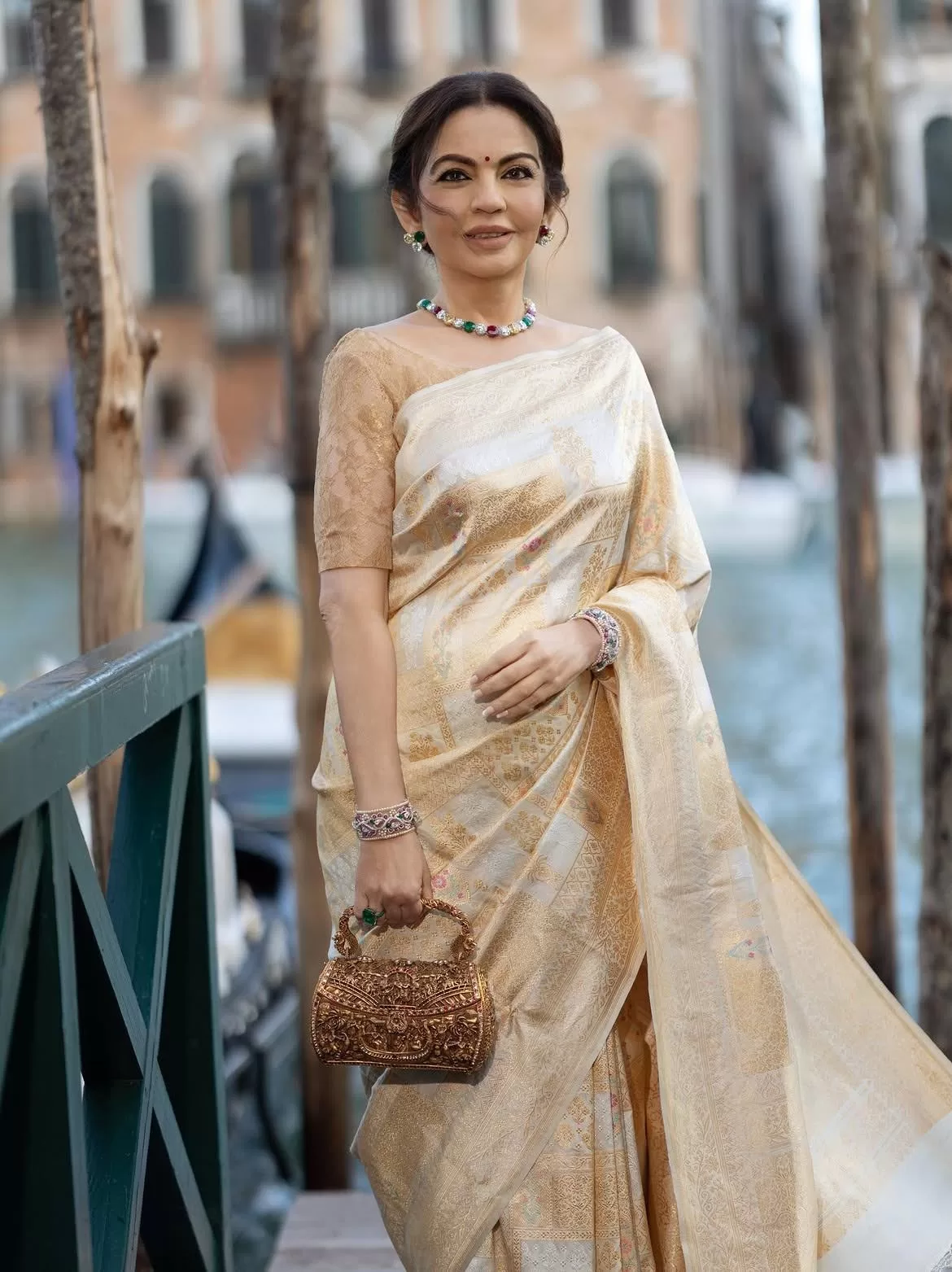
Information and image source – Hindustan Times
The Venice Biennale is one of the world’s premier contemporary art events — attended by global art, culture, and fashion figures who regularly appear in European haute couture. Nita Ambani’s choice to wear a handwoven Banarasi Kadwa saree at this event was a deliberate statement: that a saree woven by two master artisans over five months represents a form of luxury that European fashion houses cannot replicate.
That statement was about the Kadwa technique. Not just the silk. Not just the design. The technique — which requires each individual motif to be woven separately, without floating threads, with a precision that only years of training can produce — is what made this piece worthy of a global cultural stage.
TIME100 Gala, April 2026 — Another Banarasi Silk, Another 5 Months
At the TIME100 Gala in New York — where Nita Ambani appeared alongside global leaders to launch TIME100 Next India — she wore a handwoven Banarasi silk saree by Swadesh that took approximately five months to complete. Rendered in soft pastels and designed around a contemporary interpretation of the poppy motif — a traditional Indian textile design — the saree was paired with a bespoke Manish Malhotra blouse and a 101-carat old mine rose-cut pear diamond from the Nizami lineage, set in rare natural Basra pearls.
At the TIME100 Summit the previous day, she wore a Jamdani saree titled ‘Tribal Lore’ — also by Swadesh — that took 24 months to complete.
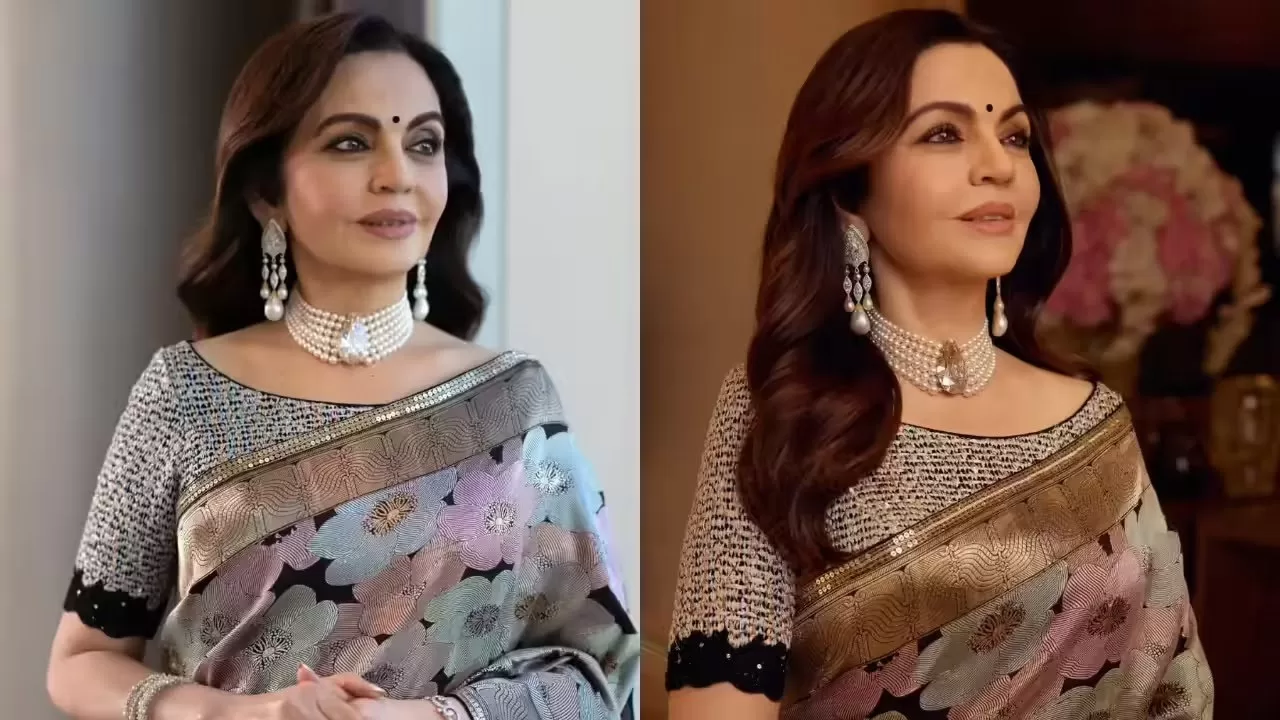
Information and image source – Times of India
The pattern across these appearances is consistent and deliberate: on the world’s most scrutinised stages, the most expensive Indian sarees chosen by those who understand them best are Banarasi silk and Jamdani — not because they are made from any silk, but because of what master weavers have done with that silk over months of painstaking work.
The Formula: Why Expensive Silk Sarees Are About Fabric AND Technique
Most people think about silk saree prices in terms of the material: “pure silk costs more than synthetic.” This is true but incomplete. The full price formula is:
Price = Quality of Silk + Type of Zari + Complexity of Weaving Technique + Time Taken
Each variable multiplies the others. Here is how:
Fabric Quality: The Foundation
Pure Mulberry silk — the finest grade, from cultivated silkworms fed exclusively on mulberry leaves — is the foundation of every high-value Indian silk saree. Muga silk from Assam is rarer still. The grade of silk thread (measured by denier — the weight per unit length) directly affects drape, luster, and durability. A saree woven from fine-count pure Mulberry silk will cost 3 to 5 times more than an equivalent piece in Tussar silk, and 10 to 20 times more than a synthetic imitation.
Zari: The Single Biggest Price Variable
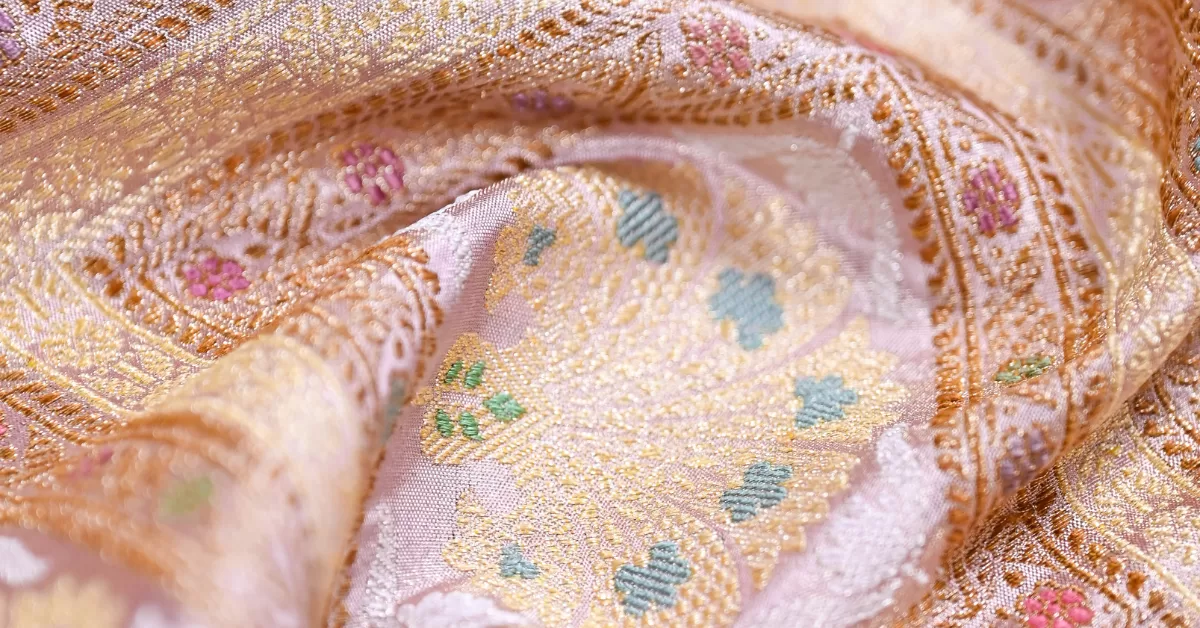
Real Zari consists of a pure silver wire coated with real gold, wrapped around a natural silk core thread. A saree with real Zari borders costs ₹20,000 to ₹50,000 more than the same design with synthetic (metallic polyester) Zari. When real Zari covers not just the border but the entire body of the saree — as in a full Jangla Banarasi or a heavily worked Kanjivaram — the price can increase by lakhs based on Zari alone. A quick test: scratch the Zari thread lightly with a fingernail. Real Zari reveals silver beneath the gold coating. Synthetic Zari shows plastic.
Weaving Technique: Where Most of the Price Lives
The most significant price variable — and the most misunderstood — is the weaving technique. The same fabric and the same Zari, woven using two different techniques, can produce sarees that differ by ₹30,000 to ₹1 lakh in price. This is because weaving technique determines how long the saree takes to make and how many specialised skills are required. A Kadwa Banarasi takes months of work that a standard brocade saree can skip. A double ikat Patola requires thread-by-thread dyeing precision that standard single-shuttle weaving does not. The technique is where artisan-hours accumulate — and artisan-hours in a dying skill are expensive.
Time: The Honest Measure of Value
Weaving time directly translates to labour cost and limits the supply of any given piece. Nita Ambani’s Venice Biennale Kadwa Banarasi took two master artisans five months to complete. Her TIME100 Gala Banarasi silk also took five months. Her TIME100 Summit Jamdani took 24 months. At master artisan rates — for skills that take decades to learn — five months of work represents a significant cost before a single gram of silk or Zari is factored in.
The Kadwa (Kadhua) Technique — Why It Makes Banarasi the Most Expensive Silk Saree
The Kadwa technique is the reason a Banarasi Katan silk saree can cost as much as or more than any other silk saree in India. Understanding it is essential to understanding Banarasi pricing.
What Kadwa Actually Means
In standard brocade weaving, a single shuttle carrying the pattern thread runs continuously across the loom, creating design motifs by floating over and under the base threads in a programmed sequence. This is efficient — a weaver can complete a metre of fabric with brocade in a manageable number of hours.
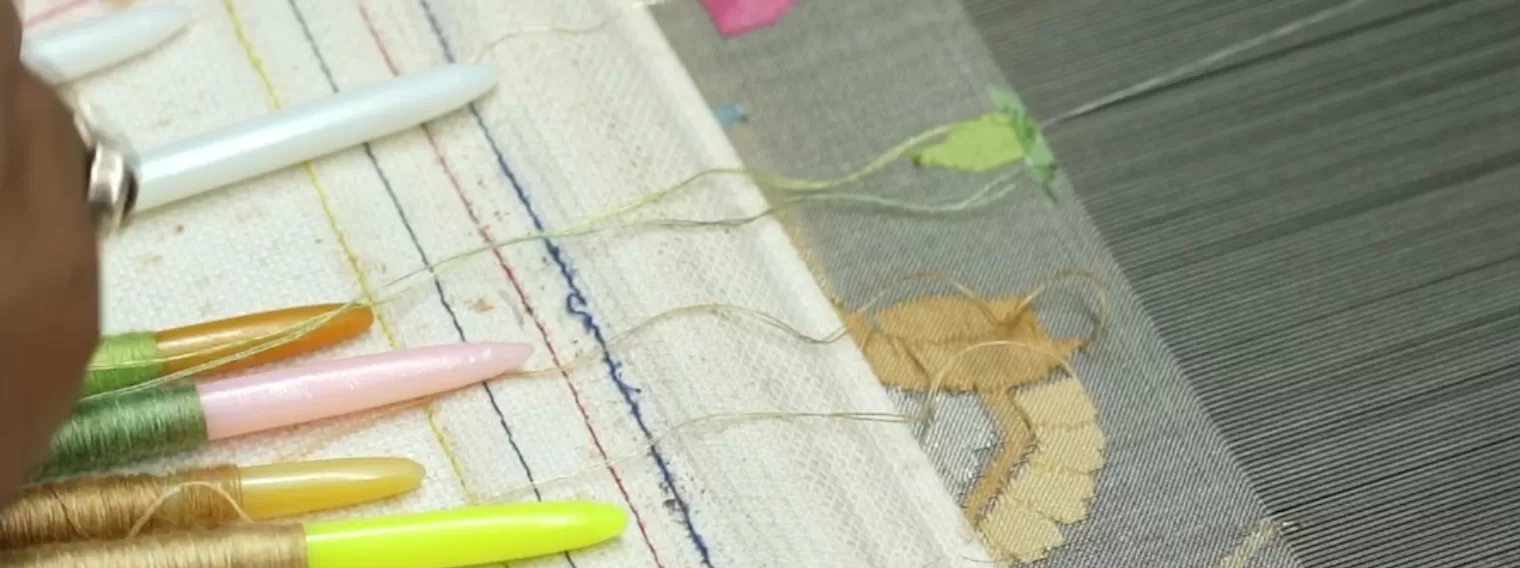
In Kadwa (sometimes written as Kadhwa or Kadhua) weaving, this method is abandoned entirely. Each individual motif — each flower, each leaf, each section of the paisley pattern — is woven independently using its own shuttle or needle. When the motif is complete, the thread reverses and returns. There are no floating threads on the reverse side of the fabric. The back of a Kadwa saree looks almost as clean and structured as the front.
This single difference — the absence of floating threads — has profound consequences:
- Each colour in the design requires its own shuttle pass. A pattern with five colours requires five separate passes for every horizontal row of the motif.
- The weaver must manage multiple shuttles simultaneously, keeping track of which motif section each is building, without mechanical assistance.
- Motifs cannot overlap or connect freely — each one must be planned in advance and executed with mathematical precision across the loom.
- A single dense Kadwa design can require hundreds of individual shuttle passes per inch of fabric.
Why This Makes Kadwa Sarees So Expensive
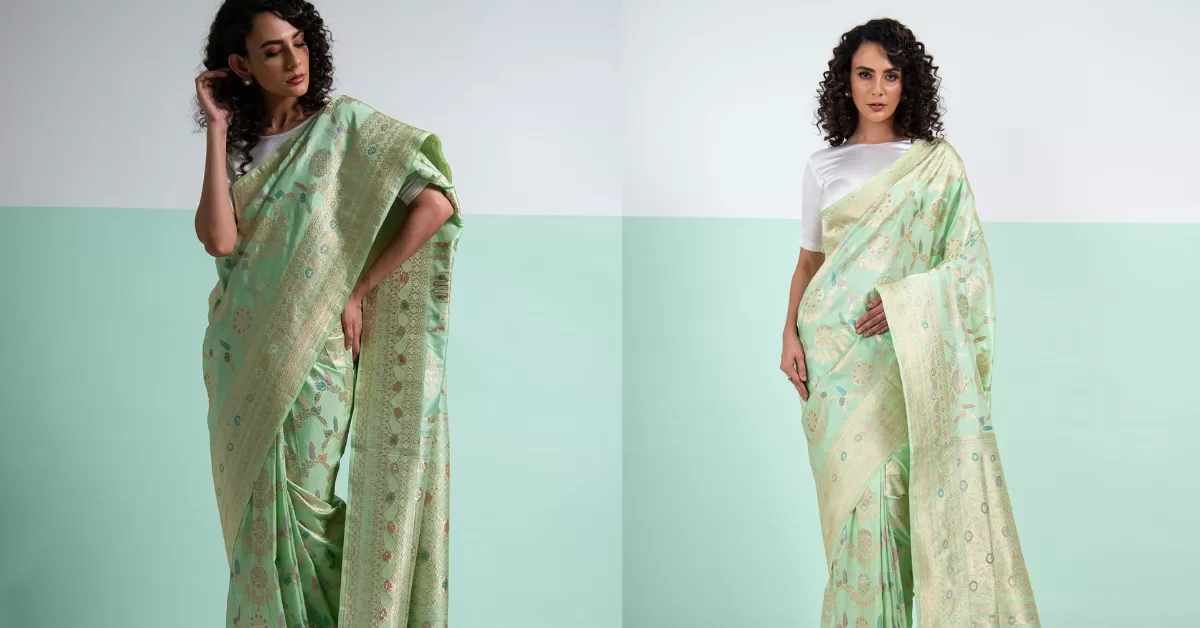
A standard Banarasi brocade saree can be woven by a skilled artisan in 2 to 4 weeks. A Kadwa Banarasi of comparable visual density takes 3 to 8 months — sometimes longer for heavily worked bridal pieces. Nita Ambani’s Venice Biennale Kadwa saree, woven by two master artisans working together, took five months to complete. The mathematics of five months of skilled artisan labour — for a technique that takes years to master and is now maintained by a decreasing number of weavers — explains directly why premium Kadwa Banarasi sarees are in the same price bracket as Patan Patola and top-tier Kanjivaram.
The visual result of the Kadwa technique is also distinctly different from standard brocade. The motifs have a three-dimensional quality — a raised, sculptural presence in the fabric — that standard floating-thread brocade cannot achieve. This is why collectors and connoisseurs specifically seek Kadwa pieces, and why the technique is considered the highest expression of Varanasi’s handloom tradition.
At JDS Banaras — a Silk Mark-certified Banarasi silk manufacturer at Rathyatra Crossing, Varanasi, established in 1913 — the Kadwa collection represents the showroom’s highest-value category. JDS Banaras sources Kadwa pieces directly from the master weaver families in the Varanasi handloom belt who still maintain this technique, and provides a certificate of authenticity specifying the weave type with every purchase.
India’s Heritage Silk Sarees — Ranked by Price
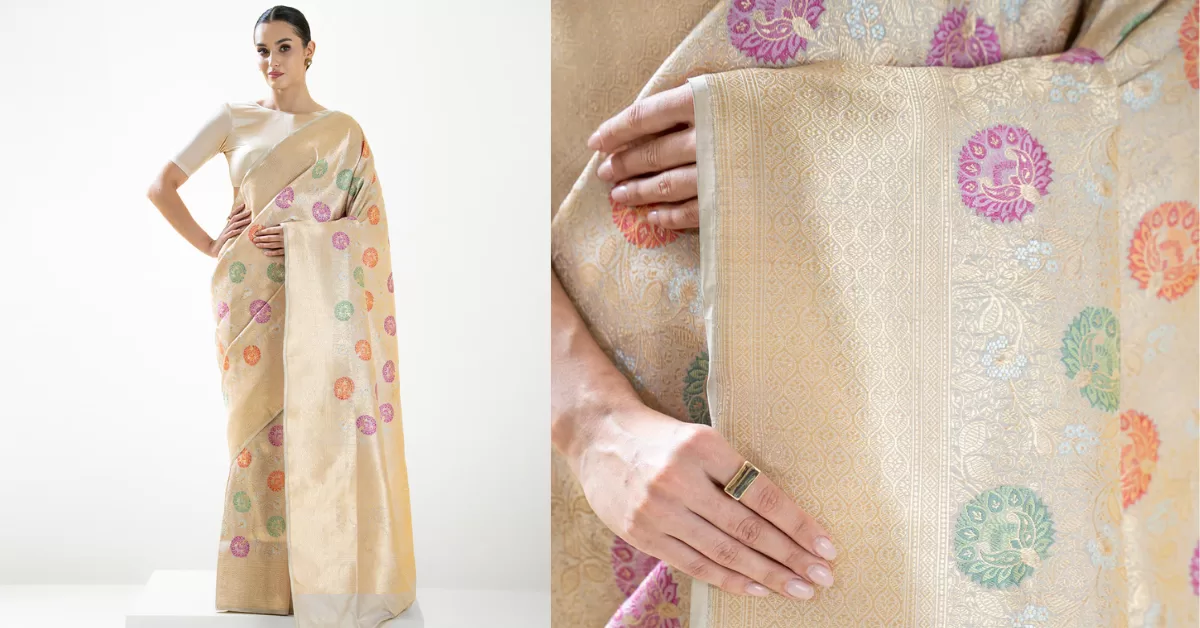
The following ranking places Banarasi Pure Katan Silk at the top — reflecting the expert view that when the Kadwa technique and real Zari are applied to the finest Katan silk, the resulting saree competes at the highest level of the global luxury textile market.
| Rank | Silk Saree | Origin | Weaving Technique | Price Range (authentic) | Weaving Time |
| #1 | Banarasi Pure Katan Silk (Kadwa technique, real Zari) | Varanasi, UP | Kadwa / Jangla / Tanchui brocade | ₹40,000 – ₹2 lakh+ | 2–8 months |
| #2 | Patan Patola | Patan, Gujarat | Double ikat (resist dyeing) | ₹1.5 lakh – ₹8 lakh+ | 6–12 months |
| #3 | Kanjivaram (Kanchipuram) Silk | Kanchipuram, TN | Korvai border technique, real Zari | ₹50,000 – ₹2 lakh+ | 3–6 months |
| #4 | Paithani Silk | Yeola / Paithan, MH | Tapestry pallu, gold border | ₹50,000 – ₹2 lakh+ | 3–6 months |
| #5 | Muga Silk | Sualkuchi, Assam | Traditional Assamese weave | ₹20,000 – ₹80,000+ | 4–8 weeks |
| #6 | Mysore Silk | Mysore, Karnataka | Plain + Zari border weave | ₹15,000 – ₹60,000 | 2–4 weeks |
| #7 | Jamdani | West Bengal | Extra weft, floating motifs | ₹10,000 – ₹50,000+ | 3–24 months |
| #8 | Chanderi Silk | Chanderi, MP | Silk-cotton blend weave | ₹5,000 – ₹30,000 | 1–4 weeks |
| #9 | Tussar (Kosa) Silk | Jharkhand / Chhattisgarh | Traditional shuttle weave | ₹3,000 – ₹20,000 | 2–4 weeks |
Note: Patan Patola has a higher maximum retail price (up to ₹8 lakh) due to the extreme rarity of authenticated double-ikat weavers. However, premium Banarasi Katan Silk in Kadwa technique with full real-Zari body coverage — as worn by Nita Ambani at Venice and TIME100 — competes at the same tier when the full weaving time and technique are accounted for. Neither is universally “more expensive” than the other — they are comparable peaks of different regional traditions.
#1 Banarasi Pure Katan Silk — The Royal Weave at the Top of the Market
Banarasi silk sarees have been woven continuously in Varanasi since the Mughal era — a tradition of at least 500 years. Within this tradition, pure Katan silk is the pinnacle fabric, and the Kadwa technique is the pinnacle method. When both are combined — pure Katan silk woven in Kadwa technique with real gold and silver Zari — the result is a saree that occupies the highest tier of the Indian luxury textile market.
Pure Katan Silk: The Fabric Explained
Katan silk is a pure handloom weave where both the warp thread (lengthwise) and the weft thread (crosswise) are made entirely from pure Mulberry silk. There is no blending, no cotton weft to reduce cost, no synthetic thread in either direction. This is the defining rule of Katan weave — and it is the baseline for every Banarasi saree in the premium category.
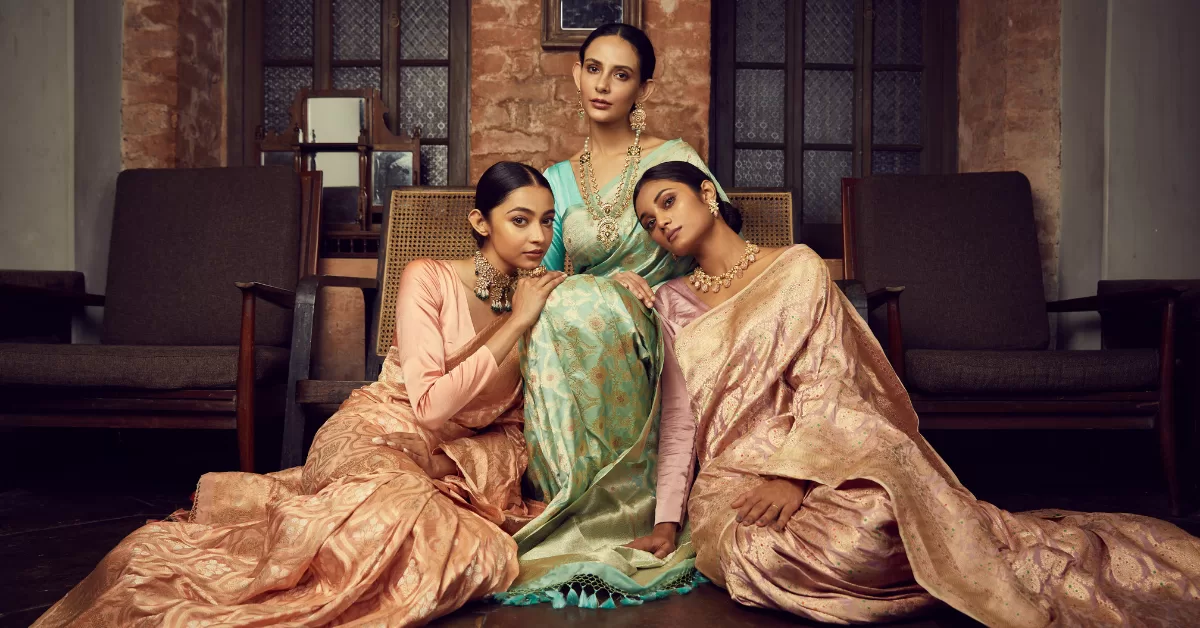
The weight of a genuine Katan silk saree is distinctive — typically 100 to 120 grams for a six-yard piece, with a slight initial stiffness that comes from the tight twist of pure silk threads. Over time and with wear, Katan silk softens without losing its structural character. The natural luster of Katan is warm rather than flashy — it deepens under candlelight and photography in a way that synthetic silk cannot replicate.
The Designs: Jangla, Shikargah, and the Motifs That Drive Price
Within Banarasi Katan silk, the design applied further determines price. The major design categories, in ascending order of complexity and cost:
- Butidar: Small scattered motifs (bootis) across the body. Moderate complexity. Entry to mid-tier pricing.
- Jangla: Dense all-over coverage with interlaced flora, fauna, and vine patterns covering the entire saree body. High complexity. Premium pricing — as worn by Nita Ambani at Venice in the ivory-beige Kadwa piece.
- Shikargah: Hunting scene narratives — tigers, deer, elephants, birds among forests — woven across the body. Extremely complex narrative design. Top-tier pricing and increasingly rare.
- Meenakari: Coloured silk threads introduced into the Zari brocade work, creating jewel-like coloured accents within the gold and silver. The most visually spectacular category and the most labour-intensive.
Price Range for Banarasi Katan Silk
Entry Katan (synthetic Zari, basic butidar design): ₹8,000–₹20,000. Mid-range pure Katan (real Zari borders, moderate brocade): ₹25,000–₹60,000. Premium Katan (real Zari throughout, Jangla or dense Kadwa design): ₹80,000–₹2 lakh+. Bespoke Kadwa commissions for significant occasions — such as the pieces worn by Nita Ambani at Venice Biennale and the TIME100 Gala — are priced based on the specific brief, weaving time, and artisans commissioned, and are not standard retail pieces.
Banarasi silk holds a Geographical Indication tag — a legal protection ensuring that only sarees woven within the designated Varanasi production zone can be sold under the Banarasi name. This GI tag is one of the authenticity signals to verify when purchasing any Banarasi silk saree.
#2 Patan Patola — India’s Rarest Technique, Highest Retail Price
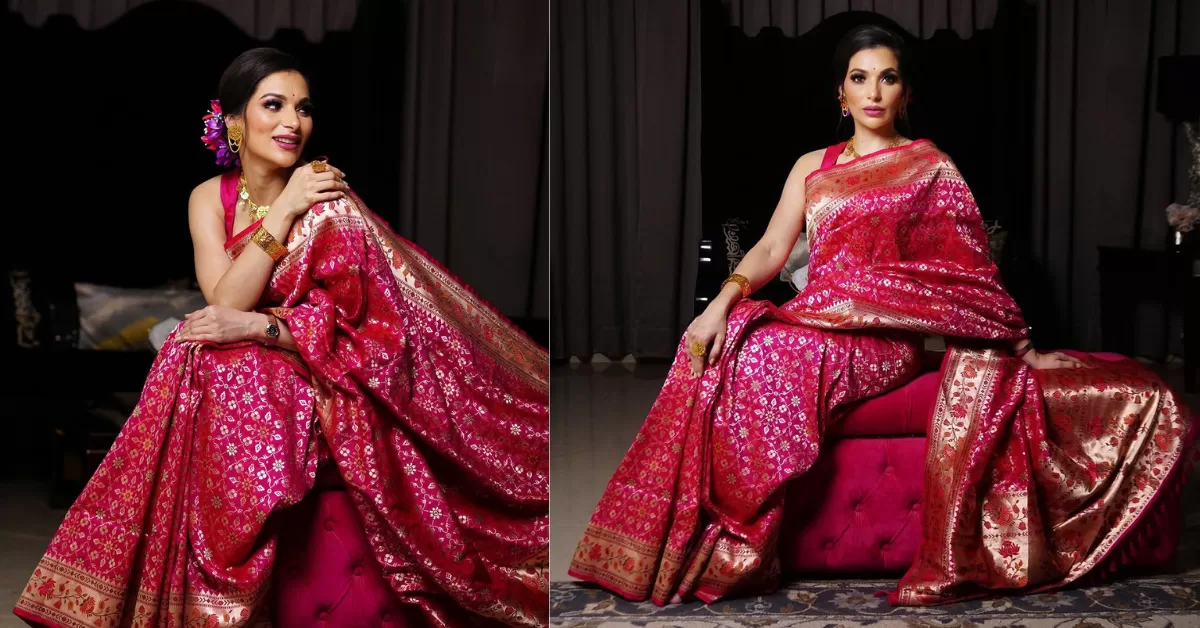
The Patan Patola from Gujarat consistently commands the highest retail prices of any Indian silk saree, for one fundamental reason: the double ikat technique that defines it is now practised by fewer than three families in all of India.
In double ikat weaving, every individual thread — both warp and weft — must be tie-dyed with precise pattern information before a single thread enters the loom. The dye-resist binding of each thread must be mathematically accurate to within a fraction of a centimetre. A miscalculation shifts the entire pattern. This resist-binding, dyeing, and re-binding process is repeated for every colour in the design before weaving can begin.
The result of this precision is a saree whose pattern appears identical on both sides — there is no right side or wrong side. The structural integrity of the design is built into the thread itself before the loom is involved. A single Patola saree takes one skilled family — typically working as a team — between six months and a full year.
Price range: ₹1.5 lakh to ₹8 lakh for authenticated contemporary pieces. The maximum retail price of an authentic Patola is higher than any other Indian silk saree — but this reflects extreme rarity of makers, not necessarily higher weaving complexity than a full-body real-Zari Kadwa Banarasi.
#3 Kanjivaram Silk — The Queen of South India
Kanjivaram silk sarees from Tamil Nadu are the most widely recognised luxury silk sarees in India. They combine the highest grade of pure Mulberry silk with elaborate real gold and silver Zari work, and are produced using the korvai technique — where the saree body and border are woven separately on different thread counts and then interlocked. This interlocking is what gives Kanjivaram borders their characteristic visual separation from the body, and it is one of the distinguishing authenticity markers of genuine Kanjivaram work.
Premium Kanjivaram motifs draw from South Indian temple architecture — gopurams, elephants, peacocks, lotus medallions, and the signature “temple border.” The most elaborate pieces, with real gold and silver Zari throughout and dense temple motifs, take master weavers 3 to 6 months to complete.
The world’s highest-recorded price for a single silk saree was set by a Kanjivaram — the “Netaji Subhas Chandra Bose” saree sold at a Chennai auction in 2011 for approximately ₹1 crore.
But before that auction record, there is a different Kanjivaram that holds something more official — a Guinness World Record. The Vivaah Pattu, created by The Chennai Silks and designed by director Sivalingam, sold for ₹39,31,627 on 5 January 2008 and is certified by Guinness World Records as the world’s most expensive silk saree ever sold. It was bought by a Bangalore-based businessman as a 10th wedding anniversary gift for his wife — making the world’s most expensive saree a personal gesture rather than an institutional acquisition.
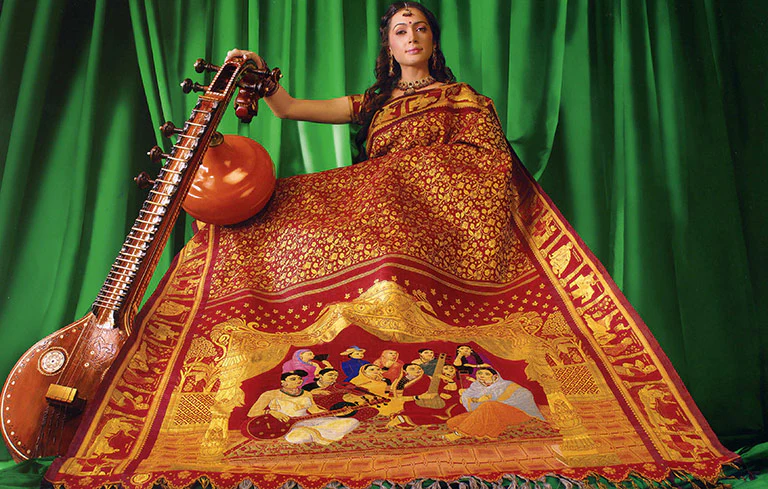
image source – TimesofIndia
What makes the Vivaah Pattu extraordinary is not the gemstones alone, though it contains all nine Navratna stones plus gold, platinum, and silver. It is that 36 master weavers spent 4,760 hours over 1.5 years handweaving 11 paintings by Raja Ravi Varma — including his iconic Galaxy of Musicians — into Kancheepuram silk using 16 colours and 64 shades of thread. The paintings were not printed or embroidered. They were woven, thread by thread, using 7,440 jacquard hooks and 66,700 design cards. The resulting saree weighs 8 kilograms and can still be draped like any bridal silk saree..
Retail price range: ₹50,000 to ₹2 lakh+ for authenticated pieces with real Zari.
#4 Paithani Silk — Maharashtra’s Tapestry Tradition
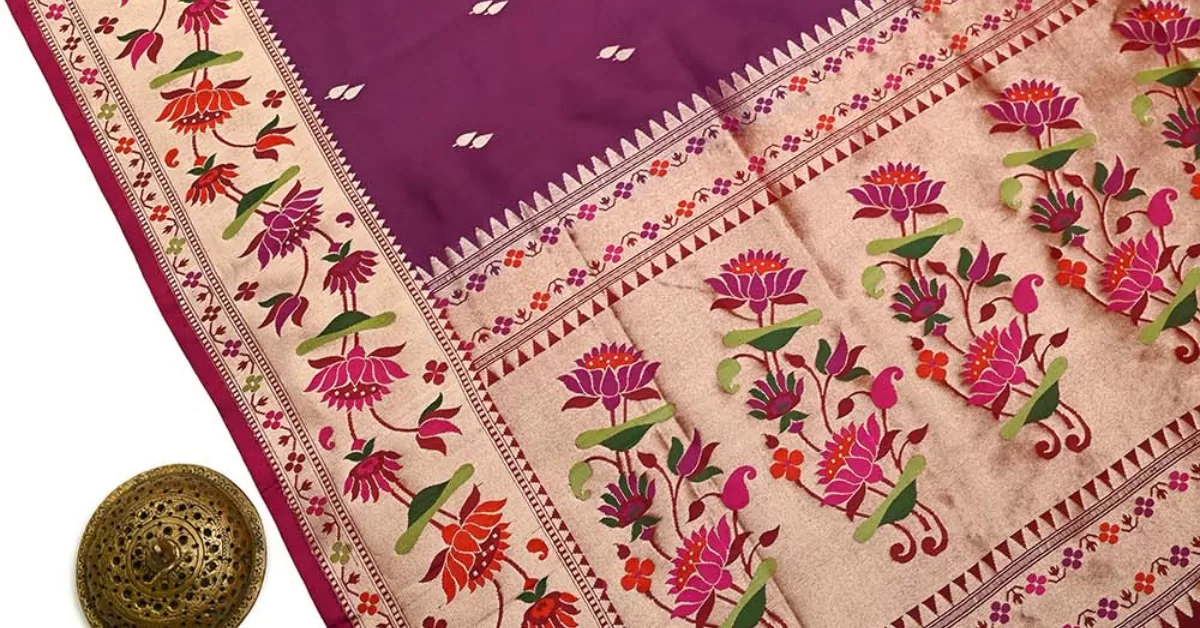
Paithani silk sarees from Yeola and Paithan in Maharashtra are defined by their tapestry-woven pallu — where each coloured section of the peacock, lotus, and parrot motifs is woven separately and then interlocked, producing the vibrant jewel-like colour definition that distinguishes Paithani from all other Indian silk sarees. The Muniya (parrot) border — running the full length of both borders in real gold Zari — is the signature mark of authentic Paithani.
The finest Paithani pieces use pure Mulberry silk for the body with real gold thread for the border and pallu work. The entirely handwoven process ensures no two authentic Paithani sarees are identical. Depending on the density of the pallu motifs and the Zari coverage, weaving takes 3 to 6 months.
Price range: ₹50,000 to ₹2 lakh+ for authenticated handloom pieces. Machine-made imitations are widely sold under the Paithani name for a fraction of this — visually similar on the surface but without the structural depth of handwoven tapestry work.
#5 Muga Silk — The Golden Silk That Improves With Age
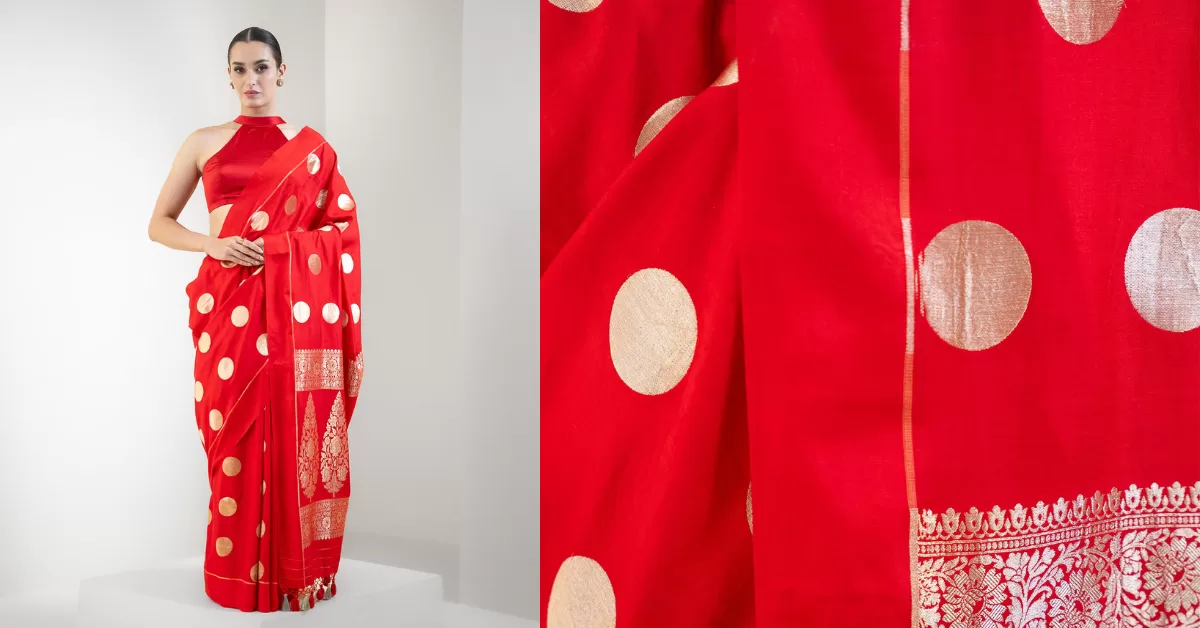
Muga silk is produced exclusively in Assam from semi-wild Antheraea assamensis silkworms that feed on som and sualu leaves — neither of which can be commercially cultivated outside Assam’s specific climate. The result is a silk with a natural golden sheen that no dye can recreate — and that becomes richer and more lustrous with every wash and with age. An aged Muga silk saree is often more beautiful and more valuable than a new one.
This geographic constraint makes Muga silk one of the few Indian textiles whose production is genuinely capped by nature, not just economics. The GI tag for Muga silk ensures the name is legally protected. For collectors specifically, aged Muga silk is prized in a way that no other Indian silk can be — because the fabric itself improves rather than deteriorating over time.
Price range: ₹20,000 to ₹80,000+ for authenticated handloom Muga sarees.
#6 Mysore Silk — Government-Certified Purity
Mysore silk sarees are produced by the Karnataka Silk Industries Corporation (KSIC) — a government body that independently certifies and controls production quality. Every KSIC Mysore silk saree is guaranteed to be 100% pure Mulberry silk with genuine gold Zari, with no blending or adulteration permitted. This institutional quality assurance is unusual in Indian textiles and makes KSIC-certified Mysore silk one of the most reliably authentic purchases in the market.
The character of Mysore silk is lighter, softer, and more fluid than Banarasi or Kanjivaram — with a subtle rather than dramatic sheen and Zari work confined to borders and pallu rather than body coverage. This makes it the preferred choice for daily and semi-formal wear where pure silk quality is wanted without the weight and formality of a bridal piece.
Price range: ₹15,000 to ₹60,000 for KSIC-certified pieces.
#7 Jamdani — UNESCO Heritage Weave
Jamdani is the only Indian textile tradition on UNESCO’s Intangible Cultural Heritage list. Its extra-weft weaving technique creates geometric or floral motifs that float within a sheer base fabric — producing the paradox of high technical complexity resulting in apparent visual simplicity. In the finest Jamdani, the fabric is almost translucent, with motifs appearing to hover on its surface.
Jamdani weaving is also one of the most time-variable techniques in Indian textiles — ranging from a few months for simpler pieces to extraordinary durations for highly complex commissions. Nita Ambani’s ‘Tribal Lore’ Jamdani — worn at the TIME100 Summit in April 2026 — took 24 months to complete. That figure illustrates the upper end of what Jamdani craftsmanship can demand.
Price range: ₹10,000 to ₹50,000+ for authenticated handloom Jamdani silk. Museum-quality or complex commission pieces can substantially exceed this.
#8 Chanderi Silk — Lightweight Heritage
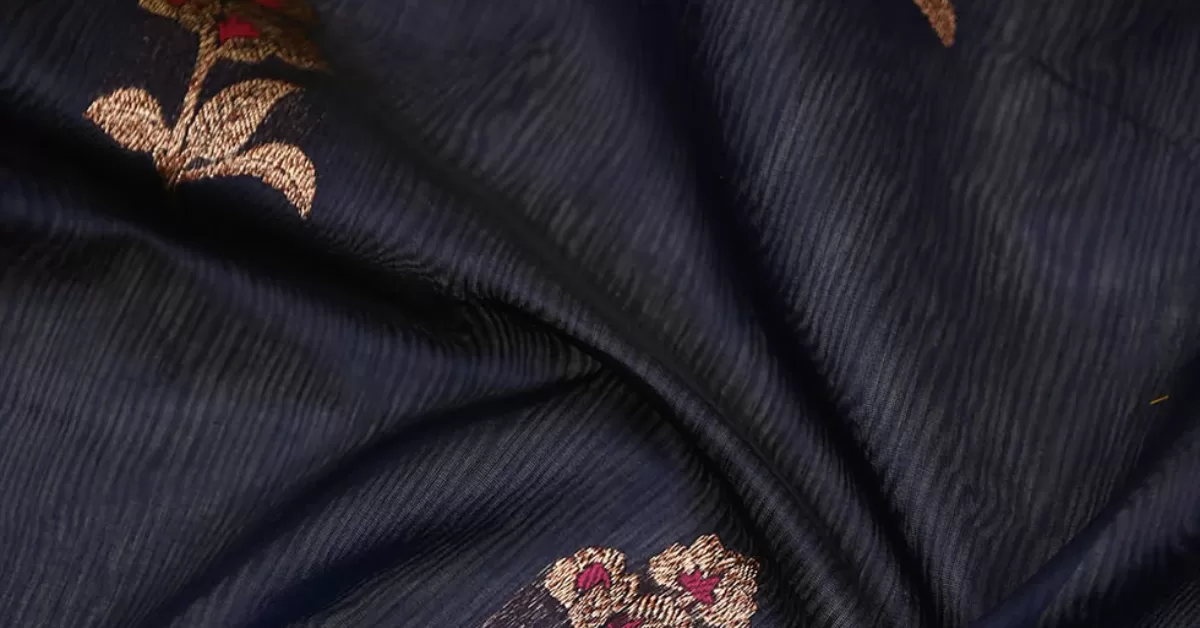
Chanderi sarees from Madhya Pradesh are a silk-cotton blend — typically 70–80% pure silk warp with a cotton weft — that drapes like pure silk at a lighter weight. Classic Chanderi is characterised by scattered coin motifs (asharfi booti) across a nearly transparent body, and is one of the most comfortable traditional silk sarees for regular wear. GI-certified Chanderi is the reliable standard — uncertified imitations from outside the production zone are common. Price range: ₹5,000 to ₹30,000.
#9 Tussar (Kosa) Silk — Wild Silk’s Natural Character
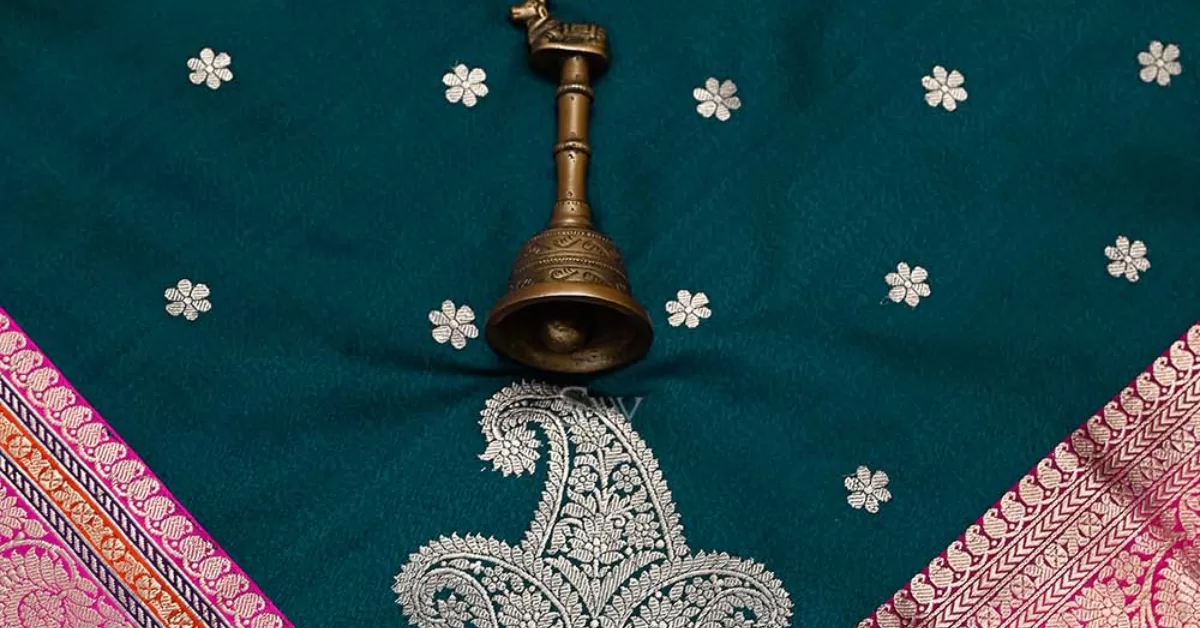
Tussar silk from wild silkworms in Jharkhand, Chhattisgarh, and Bihar is the most accessible authentic silk in the Indian market. Coarser in texture than Mulberry silk, with rich natural earth tones from traditional dyeing, Tussar has an organic, relaxed quality that makes it a staple of everyday and semi-casual traditional wear. GI protections apply to specific regional Tussar varieties. Price range: ₹3,000 to ₹20,000.
The Most Expensive Silk Sarees Ever Made — Documented Records
- ₹1 crore — Kanjivaram “Netaji Subhas Chandra Bose” saree, Chennai auction, 2011: The highest publicly documented price for a single silk saree sold in India. A Kanjivaram tribute piece.
- ₹40 lakh — Raja Ravi Varma Kanjivaram: Woven with pure silk thread and real gold Zari featuring reproductions of Raja Ravi Varma’s paintings. The weaving process reportedly took over a year with multiple master weavers working simultaneously.
- Nita Ambani’s Venice Biennale Kadwa Banarasi (2026): Woven over five months by master artisans Ashfak Ansari and Habiburrahman — the most recent public example of a commission-level Banarasi Kadwa saree appearing on a global stage. Not publicly priced, but commission pieces of this duration and technique are not standard retail transactions.
- Nita Ambani’s TIME100 Gala Banarasi (April 2026): Five-month handwoven Banarasi silk by Swadesh, worn alongside a 101-carat historic Nizami diamond at New York’s most globally watched gathering of influential figures.
How to Verify an Expensive Silk Saree Before Buying — 5 Tests
Test 1: The Burn Test
Pull a single thread from an edge of the saree. Burn it. Pure silk: burns slowly, smells of burnt protein (like hair), leaves crushable grey ash. Synthetic: melts, smells of plastic, leaves a hard bead. This definitively distinguishes real from synthetic silk.
Test 2: The Zari Scratch Test
Scratch the gold Zari thread with a fingernail. Real Zari: reveals silver beneath the gold coating. Synthetic Zari: shows plastic, or flakes off entirely. A saree with real Zari can cost ₹20,000–₹50,000 more than the same design with synthetic Zari.
Test 3: The Silk Mark Tag
Look for the government-issued Silk Mark oval tag from the Central Silk Board of India. Its serial number can be verified at silkmarkindia.com. A saree sold as “pure silk” without a Silk Mark tag should be verified by other means before payment. JDS Banaras — Silk Mark certified since its establishment as a manufacturer — provides this tag with every pure silk purchase alongside a handwritten certificate of authenticity specifying weave type and Zari type.
Test 4: Check for Kadwa (for Banarasi Specifically)
If buying a Banarasi saree described as Kadwa: look at the reverse side of the fabric. A genuine Kadwa saree will show no floating threads on the back — only the clean reverse of the individually woven motifs. If the back shows loose floating threads running across the width, it is a standard brocade, not Kadwa. This single check saves lakhs for buyers willing to look at the back of the saree before paying.
Test 5: GI Tag and Certificate
For any regionally named silk saree (Banarasi, Kanjivaram, Patola), ask for the GI certification documentation. Reputable showrooms selling authenticated pieces will have this readily available. The absence of documentation at a premium price is a warning worth taking seriously.
We have already written a detailed article about How to identify the real silk
Are Expensive Silk Sarees Worth the Investment?
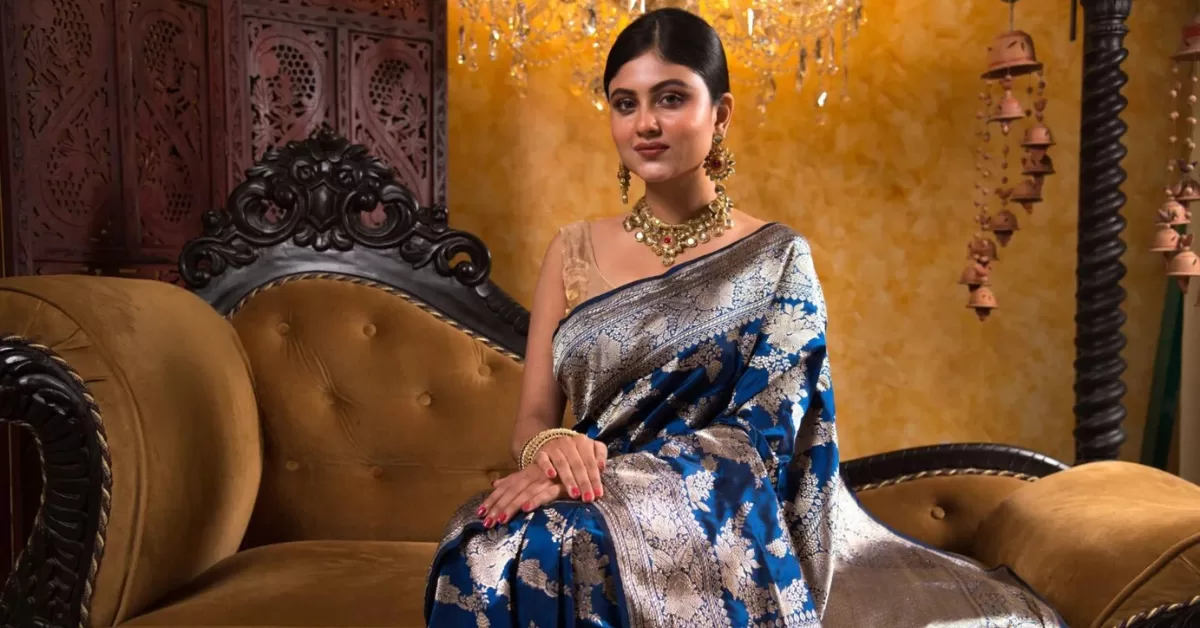
For authenticated pieces with documentation, the answer is yes — with appropriate expectations. Patan Patola has consistently appreciated in value as the number of authentic makers decreases. Kadwa Banarasi pieces from verified manufacturer-weavers hold value because the technique is becoming rarer, not more common. Kanjivaram pieces with documented provenance and real Zari are treated as family heirlooms with monetary value.
Muga silk is unique: the fabric itself improves over time. An aged Muga saree is genuinely more beautiful than a new one, making it one of the few textiles that functions as a living investment.
The documentation — Silk Mark tag, GI certification, certificate of authenticity specifying weave and Zari type, and ideally the weaver’s name and loom number — is what separates a saree that holds value from one that does not. Without documentation, the purchase cannot be verified and cannot be resold with confidence.
Buying Authentic Banarasi Silk in Varanasi — The Manufacturer Advantage
For the most expensive category in this guide — Banarasi Pure Katan Silk in Kadwa technique — Varanasi is the only origin. The GI tag legally restricts the Banarasi name to sarees woven within the designated Varanasi production zone. A Banarasi saree sold outside this zone cannot legally carry the name.
JDS Banaras, established in 1913 at Rathyatra Crossing, Varanasi — one of the city’s oldest Silk Mark-certified Banarasi silk manufacturers — sources the Kadwa collection directly from master weaver families in the Varanasi handloom belt. As a manufacturer rather than a retailer, the price reflects genuine production cost without distributor markup. Every pure silk purchase comes with a certificate of authenticity specifying the weave type (Kadwa, Jangla, standard brocade), silk grade, and Zari type (real or synthetic).
Showroom: D-58/1, Rathyatra Kamachha Road, Varanasi 221010. Phone: +91 7269 055 695. Hours: Mon–Sat 10:30am–8:30pm. For online access to the Banarasi collection: Sacred Weaves (sacredweaves.com) — JDS Banaras’s official online store with pan-India delivery.
The Bottom Line: Fabric and Technique Together Define Price
The most expensive silk sarees in India are expensive because of two things working together — the quality of the silk and the complexity of the technique applied to it. A simple weave on the finest Katan silk is expensive fabric, not an expensive saree. An extraordinary technique on a synthetic thread is impressive craft, not authentic luxury.
Banarasi Pure Katan Silk, made using the Kadwa technique with real Zari, sits at the apex of this combination — and the global stages on which it has been worn in 2026 confirm its standing. The Patan Patola reaches the highest retail price ceiling due to extreme technique rarity. The Kanjivaram holds the highest auction record. Together, these three traditions represent the peak of what Indian handloom can produce when the best available silk meets the most demanding available technique.
For every tradition in this guide, the principle holds: the documentation that verifies both the fabric and the technique is what makes the price defensible and the purchase an investment rather than a transaction.