
HSN Code 5007, Silk Mark & Authenticity Guide
Buying a Banarasi saree is not just a shopping decision — it is an emotional investment in Indian heritage, culture, and centuries of craftsmanship. Since the time of the Silk Route, silk has been considered “woven gold” — a fabric once treasured by royalty and merchants alike. Even today, a pure Banarasi silk saree remains an heirloom piece, especially for weddings and special occasions.
Unfortunately, in today’s market, powerloom copies and synthetic blends are openly sold under the name “Banarasi saree.” That’s why every buyer must know how to identify a genuine handwoven Banarasi silk saree before investing.
Before we begin, here is a short and helpful Instagram guide that explains HSN Code 5007 and Silk Mark in a very simple way. We strongly recommend watching it before buying your saree:
View this post on Instagram
Now, let’s go through the complete authenticity checklist.
- Always Check the Bill for HSN Code 5007 (Most Important)
Most customers ignore invoice details, but this is one of the strongest legal proofs of purity.
For pure silk fabric and pure silk sarees, the correct HSN code is 5007.
When you buy a Banarasi saree:
- Always ask for a proper GST bill
- Check that the HSN code is 5007
- The description should clearly mention pure silk
If the HSN code is different, the saree is not pure silk.
Reputed stores in Varanasi, such as JDS Banaras, always provide transparent billing and correct product classification.
- Look for the Silk Mark Certification Tag
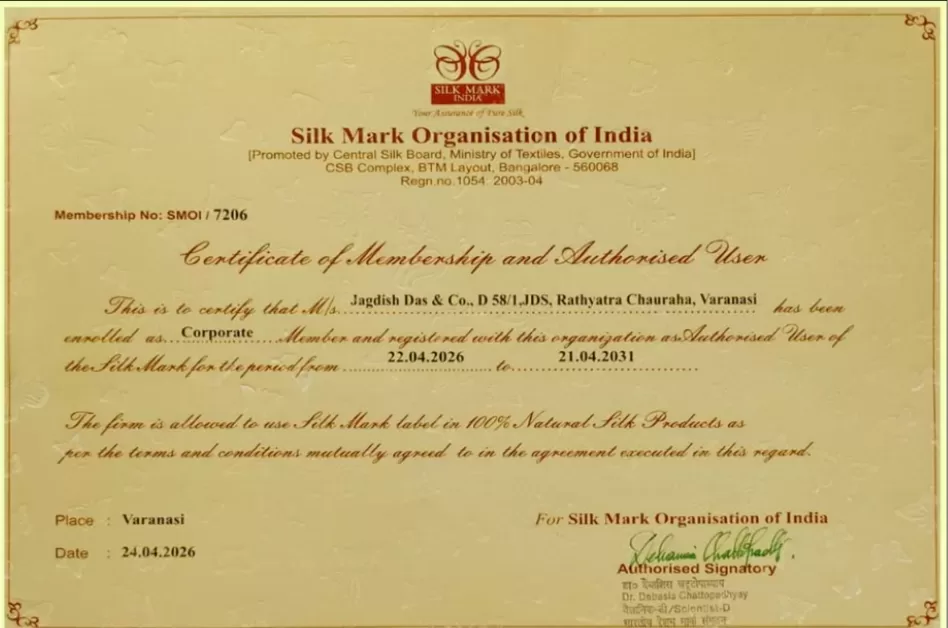
Silk Mark is a government-backed certification that confirms the product is made from 100% natural silk.
Before buying:
- Ask clearly: “Is this Silk Mark certified?”
- Check the tag on the saree or packaging
- Genuine sellers will never hesitate to show it
- Understand What a Real Banarasi Saree Actually Is
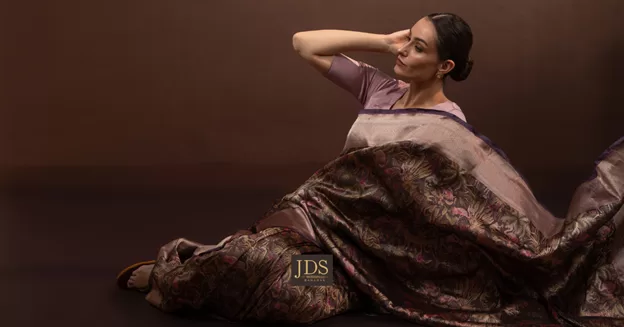
A true Banarasi saree is:
- Handwoven, not machine-made
- Woven in or around Varanasi
- Made on traditional looms
- Takes weeks or even months to complete
Different weaves such as Katan, Butidar, Tanchoi, Jangla all have distinct identities — and experienced eyes can spot the difference.
Most customers visiting traditional stores like JDS Banaras are amazed to learn how much time, skill, and heritage goes into making just one saree.
- Check the Back Side of the Saree (Expert Trick)
Turn the saree and look at the reverse:
- In handwoven Banarasi sarees, you’ll see floating threads and slight irregularities
- In machine-made sarees, the back looks too clean and perfect
Remember: Slight irregularities = Proof of handloom
- Touch Test: Feel the Fabric
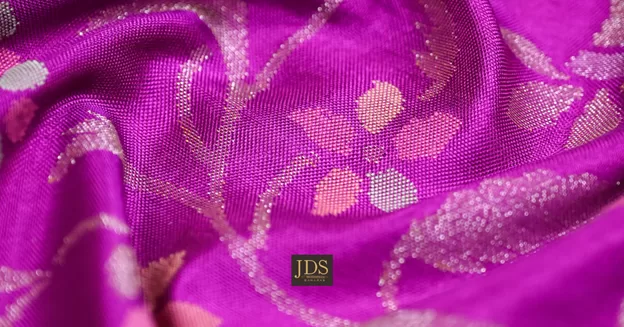
Pure silk has a butter-soft touch, rich fall, and natural shine.
A genuine Banarasi silk saree:
- Feels soft but heavy
- Has a pearl-like glow, not plastic shine
- Flows naturally, not stiff or slippery
Fake silk feels:
- Slightly harsh or overly smooth
- Has a flat, gaudy shine
- Feels synthetic to the skin
- Rub Test (Static Test)
Rub a small portion of the fabric between your palms and release it.
Because silk is a natural fiber, it produces little to no static electricity.
Artificial fabrics usually create static and cling.
- Ring Test (Fineness Test)
If the silk is pure and fine:
- The saree will pass smoothly through a ring
If there is mixing or artificial fiber:
- The fabric will clog or resist
- Zari Test: Check the Work Carefully
Zari is the soul of Banarasi sarees.
In a real Banarasi:
- Zari feels rich, slightly heavy, and deep
- The work has texture and life
In fake sarees:
- Zari looks flat, plastic-like, and lifeless
Old heritage Banarasi pieces even used real silver and gold-coated threads.
9. Price Reality Check
A real Banarasi saree is:
- Time-consuming to weave
- Made from expensive silk
- Crafted by skilled artisans
So if a saree is shockingly cheap, it is almost certainly not genuine.
10. Buy Only from Trusted & Established Sellers
Always prefer:
- Heritage stores
- Brands that specialize in Banarasi sarees
- Sellers who give proper bill, HSN code, and Silk Mark
Avoid sellers who:
- Refuse proper invoice
- Give vague answers about material
In Banaras, JDS Banaras and its online sister concern Sacred Weaves are known for authentic, pure handloom silk collections.
To know more about how to Identify the Pure Silk vs Fake read this step by step guide – Real Silk versus the Fake – How to Identify
Frequently Asked Questions (FAQs)
- What is the HSN Code for a pure Banarasi silk saree?
The correct HSN code for a pure silk Banarasi saree is 5007. If the invoice shows any other HSN code, the saree is not made of pure silk.
- Why is HSN Code 5007 important when buying a Banarasi saree?
HSN Code 5007 is a legal classification under GST that confirms the product is made from 100% natural silk. It protects buyers from being misled by blended or synthetic sarees.
- What is Silk Mark certification and why does it matter?
Silk Mark is a government-backed certification issued by the Silk Mark Organisation of India (SMOI). It guarantees that the saree is made from pure natural silk, not artificial fibers.
- Is every Banarasi saree Silk Mark certified?
No. While many genuine Banarasi sarees are Silk Mark certified, some traditional weavers may not register. However, HSN Code 5007 + Silk Mark together offer the strongest proof of authenticity.
- How can I identify a handwoven Banarasi saree?
A handwoven Banarasi saree:
- Shows floating threads on the reverse side
- Has slight irregularities
- Feels rich, heavy, and soft
Machine-made sarees look too perfect and flat on both sides.
- Are cheap Banarasi sarees genuine?
Authentic Banarasi sarees are never extremely cheap because they involve:
- Pure silk
- Skilled handloom weaving
- Weeks or months of labor
Very low prices usually indicate powerloom or synthetic sarees.
- How can I test if silk is real at home?
You can try:
- Touch test – Pure silk feels soft and warm
- Rub (static) test – Minimal static electricity
- Ring test – Fine silk passes smoothly through a ring
- What kind of zari is used in real Banarasi sarees?
Genuine Banarasi sarees use high-quality metallic zari that feels rich and dimensional. Fake sarees use plastic-like zari that looks flat and shiny.
- Where should I buy an authentic Banarasi saree?
Always buy from:
- Trusted heritage stores
- Established Banarasi specialists
- Sellers who provide GST bill, HSN Code 5007, and Silk Mark
- Is Banarasi saree an investment piece?
Yes. A pure Banarasi silk saree is an heirloom textile, often passed down generations, retaining cultural and emotional value over time.