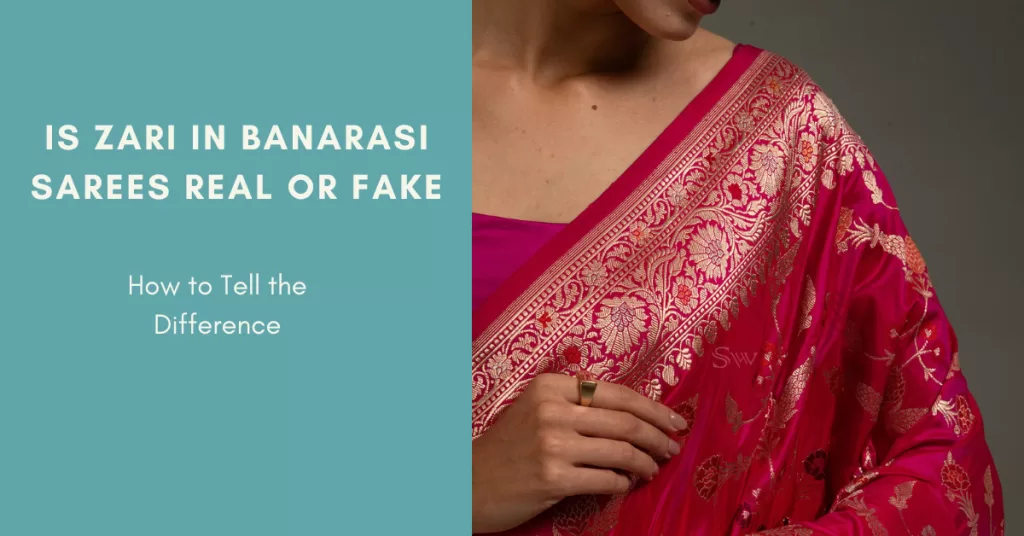
Real zari in Banarasi sarees is made from pure silver wire coated with real gold, wrapped tightly around a natural silk core thread. Fake zari — which dominates the market today — is metallic polyester film or copper wire with no precious metal content at all. Whether a zari is “real” depends entirely on the actual material used — the purity of the gold, the grade of the silver, and the fibre used as the core — not on how bright or golden it looks on the surface.
The simplest way to tell them apart: scratch the zari thread lightly with your fingernail. Real zari reveals silver beneath the gold surface. Fake zari shows plastic, or the coating flakes off entirely. The price difference between a Banarasi saree with real zari and the same design with synthetic zari can be ₹20,000 to ₹50,000 — which is why knowing what material you’re actually paying for matters more than knowing it after you’ve paid.
Zari in Banarasi Sarees at a Glance
| Feature | Real Zari (Asli Zari) | Tested / Imitation Zari | Synthetic Zari (Plastic) |
| Core material | Pure silk thread | Cotton or synthetic thread | Polyester film (Lurex) |
| Metal wire | Pure silver wire, gold-plated | Copper or electroplated wire | No metal — metallic-coated plastic |
| Shine quality | Warm, subtle, deep glow | Bright but slightly harsher | Flashy, overly bright, uniform |
| Weight impact | Adds noticeable heft to saree | Moderate weight addition | Very light — almost no weight |
| Aging behaviour | Develops warm patina over decades | May tarnish or darken unevenly | Fades, flakes, turns dull within seasons |
| Scratch test result | Silver visible beneath gold | Reddish copper visible beneath | Plastic or blackish residue |
| Burn test result | Burns like hair (silk core), grey ash | Mixed — partial melting | Melts into hard plastic bead |
| Price impact | Adds ₹20,000–₹50,000+ to saree cost | Moderate premium | Minimal cost addition |
| Longevity | Generations — improves with age | Years — decent with care | Months to a few years |
Expert Insight
At JDS Banaras, we work with all three grades of zari — and we label them clearly. Our certificate of authenticity specifies the exact zari type used in every saree, including the material composition. We’ve seen too many customers come to us after buying a “real zari” saree elsewhere that turned out to be synthetic. Transparent labelling isn’t a premium service. It should be the baseline.
Related guide – Real Zari Banarasi Saree Pioneers in Banaras: Preserving Authentic Banarasi Craftsmanship
What Exactly Is Zari? Let’s Start From the Beginning
Before we talk about real versus fake, let’s make sure we’re on the same page about what zari actually is — because the word gets thrown around so loosely that it’s lost most of its meaning in everyday saree shopping.
Zari is the metallic thread woven into the fabric of a saree to create the gold and silver patterns you see in the borders, pallu, and body motifs. In a Banarasi saree, zari is what gives the fabric its characteristic shimmer — that warm, golden glow that catches light in photographs and candlelight.
But here’s what most people don’t realise: whether zari is real or fake is entirely a question of material and quality — not appearance. Two zari threads can look almost identical to the naked eye and yet be worlds apart in what they’re actually made of. One might be genuine silver drawn into fine wire and coated with real gold. The other might be plastic film with a gold-coloured print. The visual similarity tells you nothing. The material tells you everything.
This is why “real zari” isn’t a single category — it exists in three completely different material grades, and the grade you’re getting determines not just the price but how the saree will look in five years, in ten years, and whether it’ll still be beautiful when your daughter wears it.
The Three Grades of Zari Used in Banarasi Sarees — It All Comes Down to Material to understand Is Zari in Banarasi Sarees Real or Fake?
This is the part that matters most. Every Banarasi saree with metallic threadwork uses one of these three material grades. Understanding the actual material composition — not the surface appearance — is the single most important thing a buyer can learn before spending serious money.
Grade 1: Real Zari (Asli Zari) — Pure Silver and Real Gold
Real zari begins its life as a solid bar of pure silver — typically 99% or higher purity. That bar is drawn through progressively smaller holes, over and over, until it becomes a wire thinner than a human hair. This impossibly fine silver wire is then electroplated with real gold — genuine gold, not a gold-coloured alloy — and wrapped tightly around a natural silk core thread.
The quality of real zari depends on three specific material factors that buyers rarely ask about but should:
- Silver purity: Higher-purity silver (closer to 99.9%) produces a more consistent, more durable wire that ages more gracefully. Lower-purity silver alloys are sometimes used to cut costs, and these tend to tarnish faster even within the “real zari” category.
- Gold plating thickness and purity: The gold coating on real zari is applied through electroplating, and the thickness of that gold layer directly affects both the depth of colour and how long the gold surface lasts before showing wear. Thicker, higher-karat gold plating holds its warm tone for decades; thin plating can wear through to the silver beneath with repeated handling.
- Silk core quality: The silk thread at the centre of the zari wire matters too. A finer, more tightly spun silk core gives the finished zari thread better structural integrity and drape. A coarser or lower-grade core makes the zari thread stiffer and more prone to kinking.
The result, when all three materials are of genuine high quality, is a thread that looks gold on the surface, has silver at its structural core, and uses silk as its spine. When this thread is woven into a Banarasi saree, it creates that unmistakable warm, deep, understated glow that real zari is known for. Not flashy. Not blinding. Just quietly, confidently golden — the kind of gold that looks more beautiful by candlelight than under fluorescent tubes.
Real zari, made with genuine precious metals, ages beautifully. Over decades, it develops a warm patina — a slightly mellowed, antique tone that actually adds to the saree’s character and value. A 30-year-old Banarasi with real zari doesn’t look faded. It looks dignified. This is the single biggest reason heirloom Banarasi sarees retain their beauty across generations — and it is a direct consequence of the material used, not the design or the weaver alone.
Real zari also has weight, because it contains actual metal. A Katan silk Banarasi with full real-zari body coverage can weigh 800 to 1,000 grams or more. That heft is not a burden when you know what it represents — genuine silver and gold, not a coating designed to imitate them.
Grade 2: Tested Zari (Imitation Zari) — Copper-Based Material
Tested zari — sometimes called imitation zari — replaces the pure silver wire with copper wire or electroplated base metal. The gold coating may still be present, but it sits on copper rather than silver. The core thread may be cotton or synthetic rather than silk. This is a fundamentally different material composition from real zari, even when the visual appearance is close.
Tested zari is a legitimate product with its own market. It looks quite similar to real zari when new — the shine is slightly brighter and less warm, but a casual observer might not notice the difference immediately. The problems emerge over time because of the material itself: copper oxidises, a basic chemical property that pure silver largely resists. After a year or two, especially in humid conditions, tested zari can develop greenish-brown tarnishing that real zari never shows. The ageing is not graceful the way real zari’s patina is — it looks like material deterioration, not character.
That said, tested zari Banarasi sarees are a valid choice for occasions where you want beautiful zari work at a more accessible price point and you understand the material trade-off. Not every saree needs to last three generations. Sometimes a beautiful saree for the next five to seven years is exactly what the moment calls for.
Grade 3: Synthetic Zari (Plastic/Lurex) — No Precious Material at All
Synthetic zari is not metal in any material sense. It is a thin metallic-coated polyester film — essentially a type of plastic called Lurex — that is sliced into narrow strips and used as thread. It contains no silver, no gold, no copper, and no silk. The material is, at its core, coated plastic film — nothing more.
Synthetic zari looks bright when new — very bright, uniformly bright. In fact, the excessive brightness is one of the easiest visual tells that the material is not what it appears: real zari has a warm, slightly uneven glow that changes with the angle of light, because it’s reflecting off an actual metal surface with microscopic texture. Synthetic zari’s plastic coating looks identical from every angle, like a sheet of metallic gift wrap, because there’s no genuine metal grain to catch light differently.
The problems appear quickly because the underlying material simply cannot hold up. Within one to three seasons, the metallic coating on synthetic zari begins to fade, flake, and lose adhesion to the polyester base beneath. A saree that looked golden in the showroom can look tired and worn within two years — not because it was mistreated, but because the material was never engineered to last.
Synthetic zari has its place — it makes Banarasi-style sarees accessible at very low price points (₹1,500 to ₹8,000 range). But it should never be sold as “real zari” or “gold zari,” describing a material composition it simply does not have.
Expert Insight
Here’s something I want every buyer to understand: there is nothing wrong with buying a saree with synthetic zari if you know that’s the material you’re getting and the price reflects it. The problem is when someone pays ₹30,000 thinking they’re getting genuine silver and gold, and they’re actually getting coated plastic. That’s not a disagreement over aesthetics. That’s a ₹20,000 overcharge for a material that was never there. The label should always state the actual material honestly, and at JDS Banaras, it always does.
Related guide – Is Banarasi Silk Saree Soft or Hard? The Honest Fabric Guide by Weave Type
How to Tell if Zari in Banarasi Sarees Real or Fake: 6 Material-Based Tests You Can Do Yourself
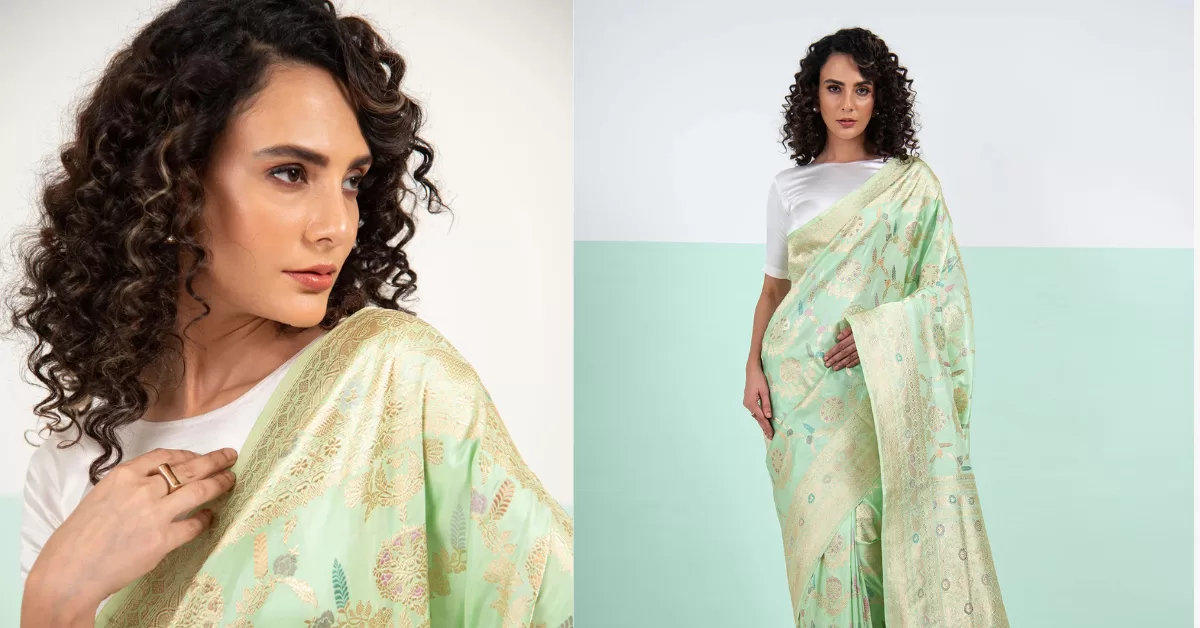
Since the entire question of real versus fake comes down to material composition, every reliable test targets the material directly — not the surface appearance. These are the tests we teach customers at the JDS Banaras showroom every day. None require equipment.
Test 1: The Scratch Test (Do This First — It Takes 5 Seconds)
This is the single quickest and most reliable showroom test for revealing the material beneath the surface. Take a small section of the zari border and scratch it firmly with your thumbnail.
Real zari: You’ll see a flash of silver beneath the gold surface — the actual silver wire material revealing itself under the gold plating. The thread structure remains intact.
Tested/copper zari: You’ll see a reddish or coppery material beneath the gold — the copper wire showing through.
Synthetic zari: The surface coating either flakes off entirely — no metal material underneath at all, just the polyester base — or you see plastic film. Sometimes the thread distorts under thumbnail pressure, which genuine metal wire never does.
Test 2: The Reverse Side Check
Turn the saree over and look at the zari work from the back. Real zari — because its core material is silk wrapped in silver wire — shows a slightly dull, reddish-silver appearance on the reverse, reflecting the actual silk core. Synthetic zari, having no metal material or silk core, looks the same bright yellow on both sides — it’s the same plastic film from every angle.
Test 3: The Weight Test
Genuine silver and gold are dense materials. Plastic is not. A Banarasi saree with real zari body and border work feels noticeably heavier than the same design in synthetic zari — a pure Katan silk Banarasi with real zari typically weighs 700 to 1,000+ grams, while the same saree in synthetic zari might weigh 450 to 600 grams. This weight difference is a direct, physical consequence of the material composition.
Test 4: The Burn Test (for a loose thread only)
This is the definitive material test. Pull a single zari thread from the fringe or an inconspicuous inner edge.
Real zari: Burns slowly. The silk core material smells unmistakably like burnt hair. It leaves behind a soft, dull grey ash — the silver residue.
Synthetic zari: Melts rather than burns, because the material is plastic. Smells of burning chemicals. Leaves a hard, dark, bead-like lump that does not crumble.
Test 5: The Magnet Test
Carry a small fridge magnet to the showroom and move it gently over the zari-heavy sections. Real silver and real gold are non-magnetic materials. If the zari contains cheap ferrous alloy — iron or steel used to cut material costs even further — the magnet will show attraction. Any magnetic pull on a “gold zari” saree confirms the material is not what it claims to be.
Test 6: The Aging and Tarnishing Check
Look at how the zari has aged. Real silver-gold material develops a warm, even patina over years — a material property specific to genuine precious metal. Copper-based tested zari material shows greenish-brown tarnishing — a property specific to copper’s chemistry. Synthetic zari’s plastic material fades and flakes — a property specific to polyester film breaking down over time. The aging pattern is a direct fingerprint of the underlying material.
Expert Insight
I’ll tell you something we see at JDS Banaras regularly. A customer brings in their mother’s saree from the 1980s and asks us to compare it to a new piece. The old saree’s zari has this gorgeous, warm, mellowed quality — still golden, still elegant, just deeper. That’s the material — genuine silver and gold — behaving exactly as those materials do over decades. It doesn’t deteriorate. It seasons. That’s the difference between real precious metal and coated plastic: one ages like wine, the other ages like milk.
Related guide – Rangkat Banarasi Saree: The Complete Guide to Banaras’ Most Artistic Weave
Bollywood’s Biggest Names Choose Real Zari Banarasi Sarees — And It Shows
The material difference between real and fake zari isn’t just a showroom talking point — it’s precisely what some of India’s most photographed women have chosen when it matters most. When you look closely at the sarees worn by Bollywood’s biggest icons at the events that get remembered for decades, real zari — genuine silver and gold, not synthetic substitutes — is what keeps appearing.
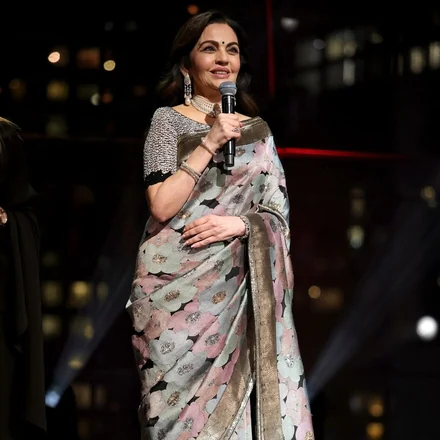
Image source – Hindustan Times
Nita Ambani, one of India’s most recognised advocates for handloom textiles, has repeatedly chosen Banarasi silk sarees with real zari and Kadwa weaving for the world’s most watched stages — including a five-month handwoven Banarasi Kadwa saree at the Venice Biennale and another real-zari Banarasi silk piece at the TIME100 Gala, both requiring master artisans working for months precisely because genuine silver-gold zari and Kadwa technique cannot be rushed.
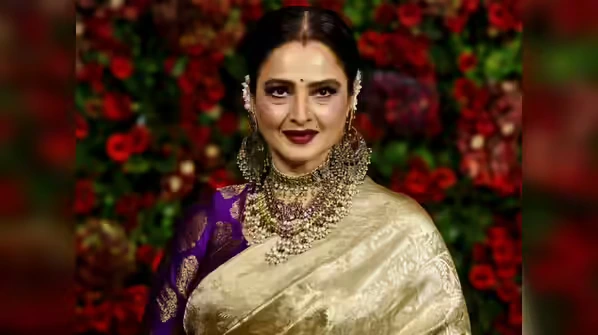
Image source – India Times
Rekha, Bollywood’s original style icon, has made Banarasi silk sarees with rich zari brocade a signature part of her red-carpet identity. At Ranveer Singh and Deepika Padukone’s Mumbai reception, she wore an elegant Irish-purple Banarasi silk organza saree with detailed zari brocade work — the kind of warm, understated gold glow that only genuine metal thread produces, paired with a full-sleeved silk blouse and her trademark statement jewellery.
Madhuri Dixit has long been associated with Banarasi silk as part of her personal style, not just her film roles. She was photographed at the Ganapati puja celebrations at the Ambani family’s Antilla wearing a green Banarasi silk saree with intricate buta work and fine zari threadwork throughout the border and body — a look that, as noted by Sacred Weaves, showcased exactly the kind of meticulous, fine zari craftsmanship that untrained eyes often miss but connoisseurs immediately recognise.
Anushka Sharma’s red Banarasi saree for her 2017 wedding reception in Delhi is one of the most detailed and well-documented real-zari stories in recent Bollywood history. The saree was handcrafted over two months by a team of three master craftsmen in Varanasi, led by veteran weaver Maqbool Hassan — whose family has worked in Banarasi weaving for over two centuries. According to The Quint’s reporting on the artisans behind the saree, the craftsmen specifically used real gold for the zari, with each individual motif worked on separately by hand — precisely the Kadwa-style approach that ensures the zari’s material integrity and gives the saree its rich but understated shine, rather than the flashy brightness typical of synthetic imitations.
What’s notable across all four examples is the pattern: none of these are synthetic-zari sarees chosen for a quick festive look. Each is a considered, often custom-commissioned piece where the choice of genuine material — real silver, real gold, painstakingly applied — was central to why the saree became iconic in the first place. The material is what separates a saree that gets remembered for decades from one that fades within two seasons.
Expert Insight
When a client asks us why real zari costs so much more, we sometimes point to these very examples. Anushka Sharma’s reception saree took two months and three craftsmen — precisely because working with genuine gold and silver, motif by motif, cannot be rushed the way printing a design onto synthetic thread can. The material dictates the process. That’s true whether you’re a Bollywood bride or a bride shopping at our showroom in Varanasi.
How Much More Does Real Zari Cost? The Honest Price Difference
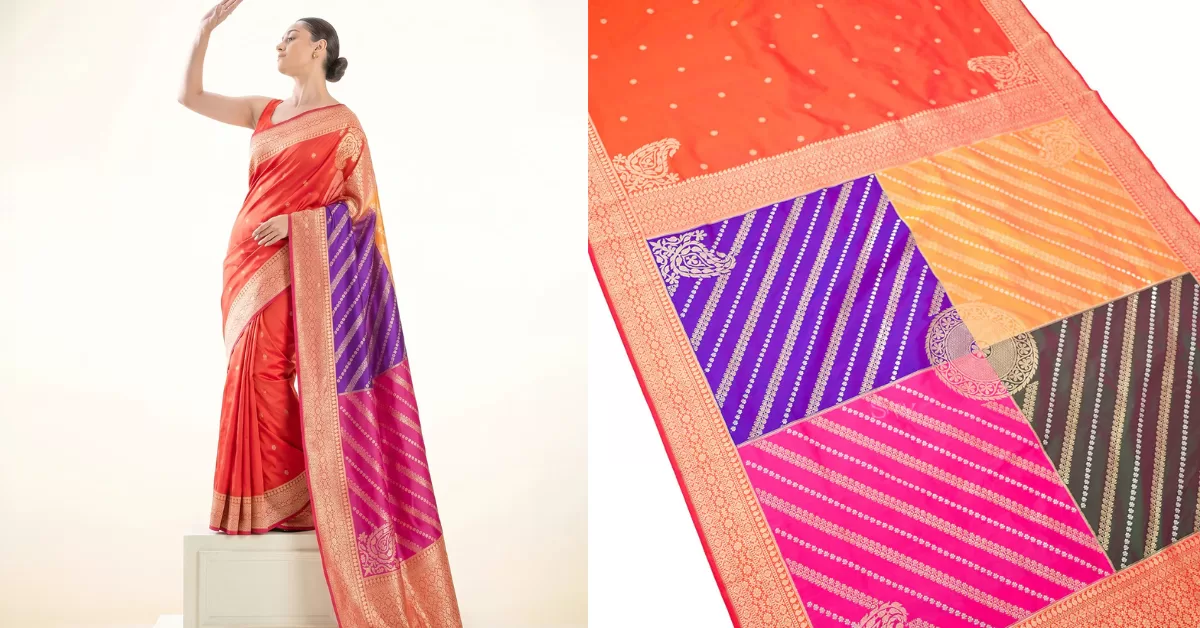
Zari material is the single biggest price variable in Banarasi sarees — bigger than silk grade, bigger than weave complexity, bigger than design density. Two sarees that look nearly identical on a showroom shelf can differ by ₹20,000 to ₹50,000 based entirely on whether the metal in the zari is genuine or synthetic.
| Saree Type | With Synthetic Zari | With Real Zari (Genuine Silver-Gold) | Price Difference |
| Katan Silk (border zari only) | ₹8,000–₹15,000 | ₹50,000–₹80,000 | ₹15,000–₹25,000 |
| Katan Silk (full body zari) | ₹18,000–₹30,000 | ₹80,000–₹2,00,000+ | ₹40,000–₹1,20,000 |
| Georgette Banarasi | ₹3,500–₹8,000 | ₹40,000–₹70,000 | ₹8,000–₹17,000 |
| Bridal Kadwa Katan | ₹25,000–₹45,000 | ₹1,50,000–₹4,00,000+ | ₹50,000–₹1,50,000+ |
| Organza Banarasi | ₹4,000–₹10,000 | ₹35,000–₹60,000 | ₹10,000–₹25,000 |
These ranges are approximate and vary by design complexity and silk quality. But the pattern is clear — the material used for the zari doesn’t add a small premium. It fundamentally changes the price tier of the saree. This is exactly why celebrity-worn real-zari pieces like Anushka Sharma’s reception saree required months of dedicated craftsmanship rather than a quick order — genuine material at that coverage level cannot be produced cheaply or quickly.
Key Takeaway
The material composition of the zari should never be a surprise discovered after purchase. It should be disclosed, documented, and verifiable before you hand over your money. Thats how you can identify if Zari in Banarasi Sarees Real or Fake.
Why Is Real Zari Becoming Rarer in the Market?
If genuine silver-gold zari is so much better, why isn’t everyone using it? The answer involves the economics of the raw materials themselves.
Silver and gold prices have increased dramatically. Real zari requires actual silver wire coated with actual gold — both precious metal commodities whose prices have risen significantly over the past two decades. A weaver who could source real zari material at a given cost ten years ago is now paying 2 to 3 times that amount for the same material.
Online marketplaces have compressed prices. When sarees are sold primarily on price, the economics push every seller toward the cheapest possible input materials. Synthetic zari material is a fraction of the cost of genuine silver and gold. In a price-driven market, the cheaper material wins by default.
Most buyers don’t know how to identify the material. Until you’ve been shown the scratch test, held real zari next to synthetic in your hands, or seen how a 40-year-old real-zari saree looks compared to a 2-year-old synthetic one, the material difference simply isn’t obvious to an untrained eye.
The weaving community is under economic pressure. Weavers who have historically worked with genuine silver-gold zari are finding it harder to justify the material cost to price-sensitive buyers. Some have shifted to synthetic zari to survive commercially — a real and painful transition, since the weavers aren’t at fault, but market incentives are pushing the craft away from its own traditional materials.
Expert Insight
This is something we feel strongly about at JDS Banaras. We carry sarees across all three zari material grades because our customers have different budgets and needs. But we label every single piece clearly by its actual material composition. If it’s synthetic, the label says synthetic. If it’s real, the certificate specifies the metal composition. That transparency isn’t heroic. It’s just honest business.
Does the Type of Zari Material Affect How the Saree Ages?
Absolutely — and this is where material composition stops being a showroom detail and starts being a 30-year story.
| Time Period | Real Zari (Genuine Material) | Tested/Copper Zari | Synthetic Zari (Plastic Material) |
| New (showroom) | Warm, subtle gold glow | Bright, slightly harsh gold | Very bright, uniform, flashy |
| After 1–2 years | No visible change | Slight darkening along folds | Beginning to fade and dull |
| After 5–10 years | Warm antique patina developing | Visible tarnishing, green spots possible | Significant fading, flaking, rough texture |
| After 20–30 years | Rich, mellowed gold — more beautiful than new | Heavily tarnished unless professionally cleaned | Largely degraded — looks old, not vintage |
| After 40+ years | Heirloom condition — genuine antique beauty | May need restoration | Typically unwearable |
This table is not theoretical. I’ve personally seen all of these stages at JDS Banaras — from brand-new pieces on our shelves to 50-year-old sarees brought in by customers for refurbishment. The aging difference between genuine and synthetic zari material is dramatic, visible, and irreversible.
Should You Always Buy Real Zari? The Honest Answer
No. And I say that as someone who manufactures sarees with real zari.
Here’s why: the right zari material choice depends on what the saree is for.
| If You’re Buying For… | Best Zari Choice | Why |
| Bridal saree (main ceremony) | Real zari | This saree will be photographed, preserved, and possibly worn by your daughter — like the celebrity examples above, it needs genuine material to age gracefully. |
| Family heirloom or investment piece | Real zari | Only genuine silver-gold material retains beauty and value across generations. |
| Mother / senior family wedding saree | Real or tested zari | Depends on budget. Real is ideal; tested is a legitimate alternative for a saree worn on fewer occasions. |
| Festive wear / party saree | Tested or synthetic zari | If the saree will be worn 5–10 times over a few years, synthetic zari material serves the purpose well at a fraction of the cost. |
| Gifting sarees (₹1,500–₹10,000 range) | Synthetic zari | At this price point, synthetic zari material is the appropriate, honest choice. Real zari is simply not available at these prices. |
| Collector / textile enthusiast | Real zari only | For collectors, the precious metal content is part of the textile’s documented material value and provenance. |
Key Takeaway
The goal is not to always buy the most expensive material. The goal is to always know exactly what material you’re buying, pay the right price for it, and make a choice that matches the purpose of the saree and you can understand if Zari in Banarasi Sarees Real or Fake.
Common Myths About Zari Material in Banarasi Sarees
Myth 1: All Zari in Banarasi Sarees Is Real Gold
Reality: The vast majority of Banarasi sarees sold today — particularly those under ₹20,000 — use synthetic or tested zari material, not genuine gold and silver. Real zari material is a premium category starting at significantly higher price points.
Myth 2: You Can’t Tell the Material Without a Lab
Reality: The scratch test takes five seconds and reliably reveals the material beneath the surface. Silver beneath gold means genuine material; plastic or copper means it’s not.
Myth 3: Real Zari Always Looks Brighter Than Fake
Reality: It’s actually the opposite. Genuine silver-gold material produces a warm, subtle, understated glow — exactly the quality seen in Rekha’s and Nita Ambani’s Banarasi sarees. Synthetic material is often the brighter one, with a flashy, uniform shine.
Myth 4: Synthetic Zari Sarees Are “Fake Banarasi”
Reality: A saree can be genuinely handloom, genuinely woven in Varanasi’s GI zone, and genuinely Banarasi — while using synthetic zari material. The zari’s material composition is one component of the saree, not the definition of its authenticity.
Myth 5: Real Zari Sarees Must Cost Over ₹1 Lakh
Reality: Real zari Banarasi sarees with lighter coverage — genuine material concentrated on the border rather than the full body — can be found in the ₹40,000 to ₹80,000 range. The price depends on the quantity and coverage of the genuine material, not just its presence.
How JDS Banaras Handles Zari Material Transparency
At JDS Banaras, we’ve operated as a Banarasi saree manufacturer since 1913. Our showroom at Rathyatra Crossing carries sarees across all three zari material grades — real, tested, and synthetic — because our customers span brides wanting the same calibre of genuine material seen on Bollywood’s biggest stages, to families buying gifting sarees at reasonable prices.
What doesn’t change across any of these categories is the labelling. Every pure silk saree purchased at JDS Banaras comes with a certificate of authenticity that specifies:
- The fabric type (Katan silk, Georgette, Organza, etc.)
- The weave category (Kadwa, Jangla, standard brocade, etc.)
- The zari material — real silver-gold, tested copper, or synthetic — stated explicitly in writing
- The Silk Mark certification status
This documentation is standard practice on every pure silk saree, regardless of price point. Because the question “what material is this zari actually made of?” should always have a documented answer before the saree leaves the showroom.
To read what over 8,000 customers have said about their experience with JDS Banaras, visit our customer reviews page.
What to Ask Before Buying a Zari Banarasi Saree — Your Checklist
- “What material is this zari — real silver and gold, tested copper, or synthetic?” Any hesitation or vague answer like “it’s gold work” is a red flag.
- “Can I do the scratch test?” A confident seller will say yes without hesitation.
- “Will the material be documented on the certificate of authenticity?” If not offered, ask why.
- “What will this material look like in 10 years?” A seller who understands the actual material will describe its aging behaviour honestly.
- “Can you show me the same design in both real and synthetic zari?” Seeing the two materials side by side — feeling the weight difference — is the most powerful education any buyer can get.
Visit JDS Banaras — See Real and Synthetic Zari Materials Side by Side
Reading about the difference between real and fake zari material is useful. Holding both in your hands is better. At JDS Banaras at Rathyatra Crossing, our staff can show you the same design in real zari and synthetic zari — same silk, same pattern, different material. That comparison, in your own hands, is worth more than any article.
JDS Banaras — Jagdish Das & Company
D-58/1, Rathyatra Kamachha Road, Rathyatra Crossing, Varanasi 221010
Phone: +91 7269 055 695
Hours: Monday to Saturday, 10:30am to 8:30pm
Online: sacredweaves.com — JDS Banaras’s official online store
Frequently Asked Questions About Zari in Banarasi Sarees