
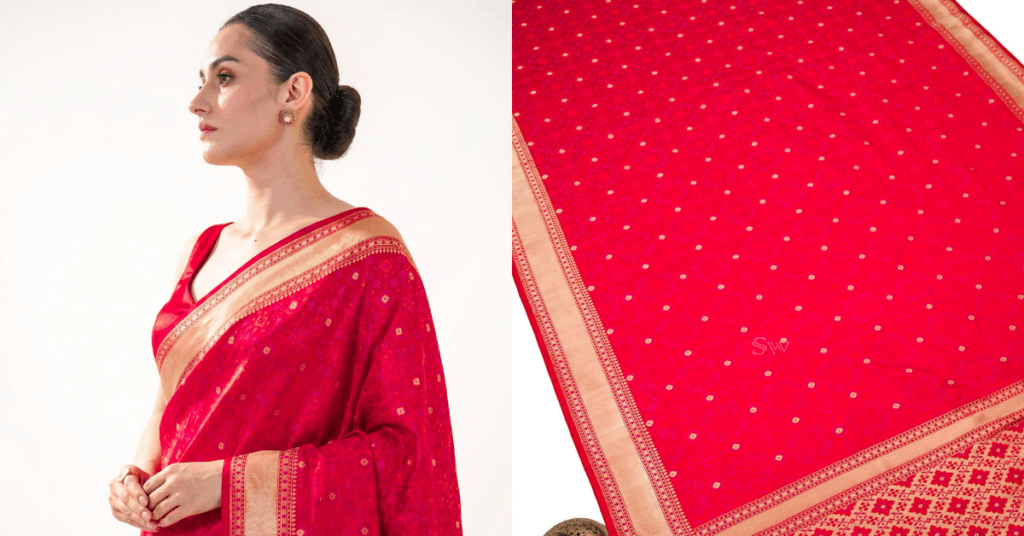
Navratri dressing has always been about colour, celebration and movement. But festive style does not have to mean choosing an outfit that will be worn once and forgotten.
This Navratri, the Banarasi saree offers a different way to dress for the festivities—rooted in Indian textile tradition, yet easy to interpret in a very contemporary way.
From lustrous Katan silk and colourful Rangkat to lightweight georgette, tissue and organza, Banarasi sarees today offer far more variety than the heavily brocaded wedding saree many people first imagine.
For Navratri 2026, the interesting trend is not simply “wearing a Banarasi saree”. It is choosing the right weave, colour and styling for the kind of celebration you are attending.
A quiet morning puja may call for something very different from a Garba evening, while an Ashtami gathering can be the perfect occasion for a richer zari saree.
Here are some of the Banarasi saree styles worth exploring this festive season.
Why Banarasi Sarees Work So Well for Navratri
Navratri naturally gives colour an important place in festive dressing.
Banarasi weaving works particularly well in this setting because colour does not have to stand alone. It can be combined with zari, meenakari, woven florals, jangla patterns, butis, contrasting borders and elaborate pallus.
That means a green saree can feel completely different depending on whether it is woven in Katan silk with gold zari, georgette with a delicate jaal, or a colourful Rangkat construction.
It also gives women a way to participate in festive dressing without moving away from a saree they can continue wearing to weddings, pujas, family occasions and celebrations long after Navratri ends.
Related guide – Navratri 2026 Saree Guide: 9 Colours in Banarasi Silk
Banarasi Saree Trends to Explore for Navratri 2026
1. Katan Silk for a Classic Festive Look
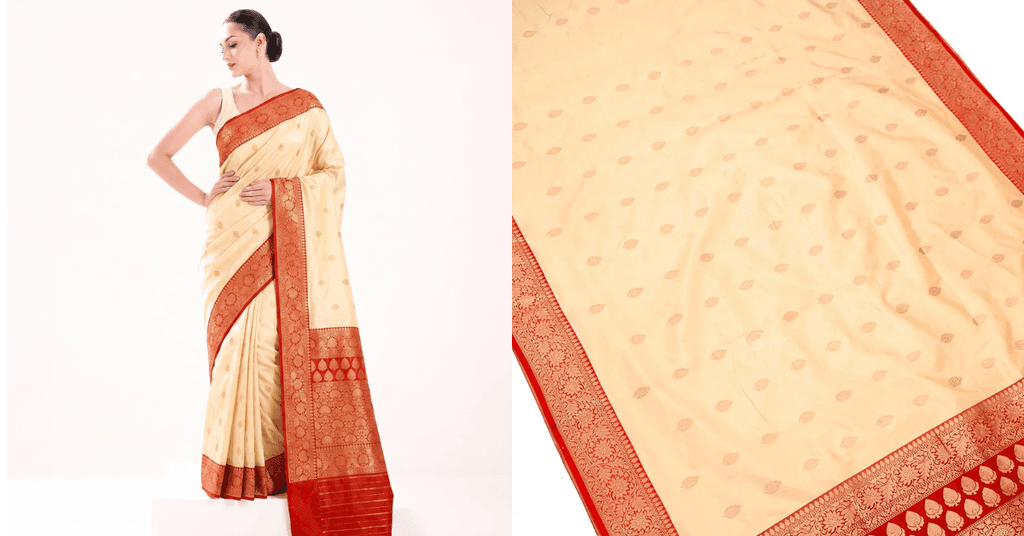
Few fabrics communicate traditional Banarasi richness as naturally as Katan silk.
Its smooth silk surface allows zari and woven motifs to stand out beautifully, making it especially suitable for temple visits, pujas, family gatherings and more formal Navratri celebrations.
For the festive season, look beyond only heavily filled brocades.
A Katan saree with elegant butis, a defined zari border and a well-designed pallu can look festive without becoming overwhelming.
Traditional reds, deep greens, royal blues and purples naturally work well, but ivory, mustard and softer festive shades can create an equally memorable look when paired with the right blouse and jewellery.
Best for: Puja, Ashtami, Navami, family celebrations and formal festive evenings.
2. Tissue Banarasi Sarees for Festive Glow
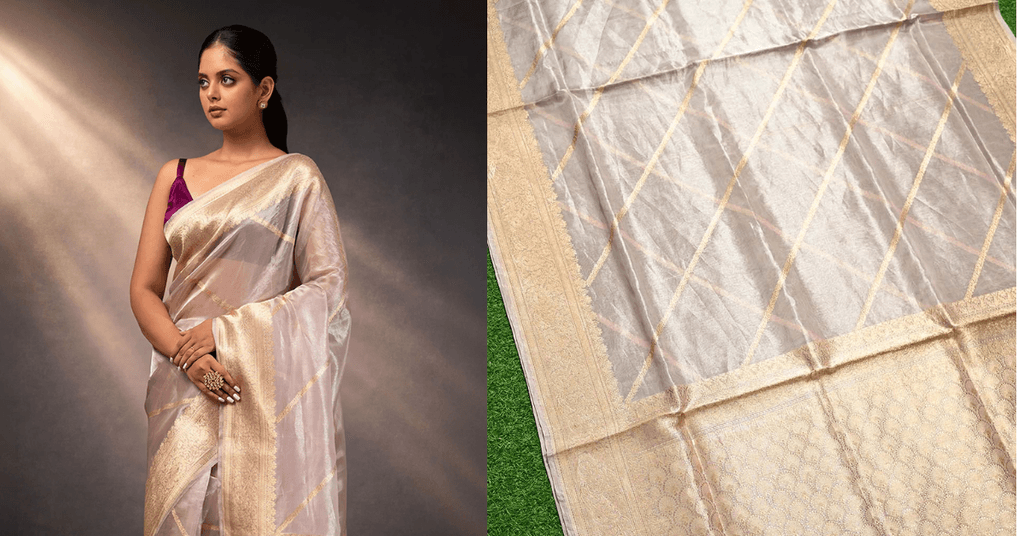
Metallic surfaces are particularly effective during evening celebrations, which makes Banarasi tissue sarees one of the more interesting choices for Navratri.
The attraction of tissue lies in the way it responds to light. Instead of depending entirely on large motifs or heavy embellishment, the fabric itself can create a luminous festive appearance.
Gold-toned tissue is the obvious classic, but contemporary tissue Banarasi sarees can also appear in pink, peach, green, silver-toned neutrals and other softer shades.
Pair one with a relatively simple blouse and allow the texture of the saree to remain the centre of the look.
Best for: Evening celebrations, festive dinners and dressier Navratri gatherings.
3. Georgette Banarasi Sarees for Garba and Dandiya Evenings
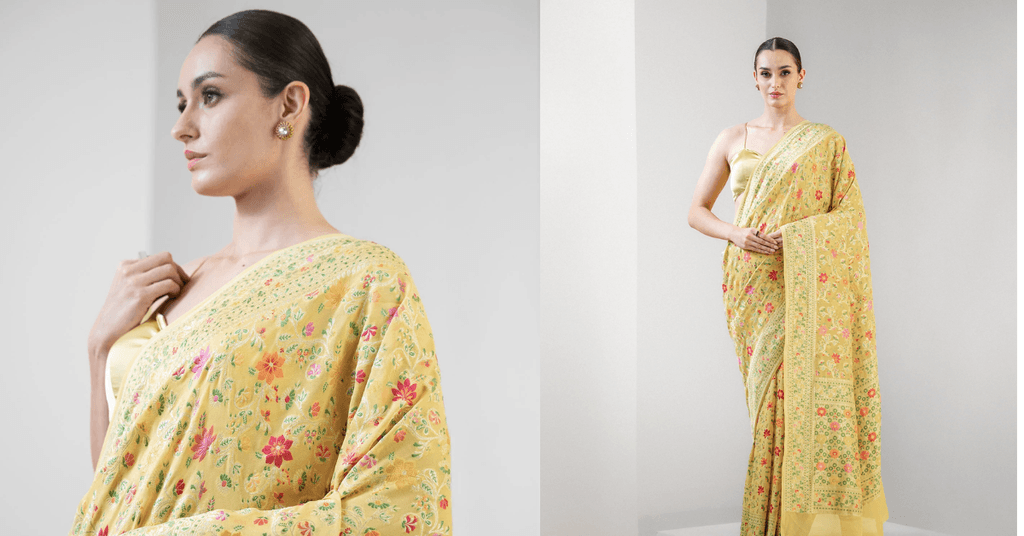
If you expect to spend the evening moving, dancing or attending a long celebration, comfort becomes just as important as appearance.
This is where a Banarasi georgette saree can make sense.
Georgette falls more fluidly than a structured silk and can feel easier to manage through an active evening. When woven with zari butis, floral jaal or a decorative border, it can still carry the visual richness associated with Banaras.
For Garba or Dandiya, consider a secure drape with neatly arranged pleats and a pallu that does not require constant adjustment.
A contrasting blouse, traditional jhumkas and bangles can provide the festive energy without adding unnecessary weight to the saree.
Best for: Garba nights, Dandiya evenings and long festive events.
4. Rangkat Banarasi Sarees for a Celebration of Colour
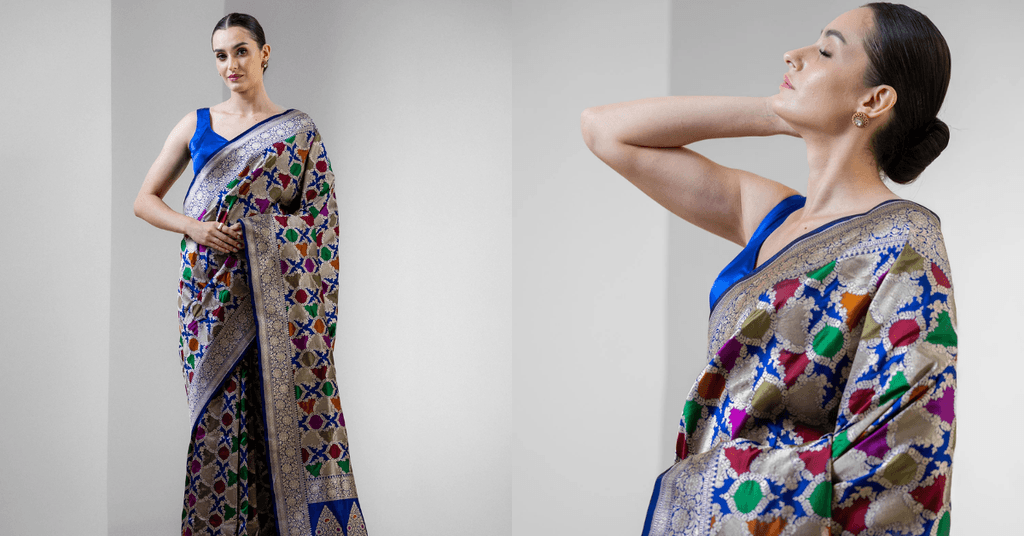
Navratri and colour naturally belong together, which makes Rangkat particularly relevant to the season.
Rather than depending on one dominant shade, Rangkat weaving introduces multiple colour sections or transitions into the textile. The result can feel lively even before motifs and zari are added.
For women who enjoy colourful festive dressing but do not want an embroidered or heavily embellished outfit, a Rangkat Banarasi saree offers another route.
The colour itself becomes part of the design.
A well-balanced Rangkat saree can also work beautifully with a relatively understated blouse because the body of the saree already carries considerable visual interest.
Best for: Festive evenings, celebrations with friends and women who enjoy strong colour.
5. Meenakari Banarasi Sarees for Multicoloured Detail
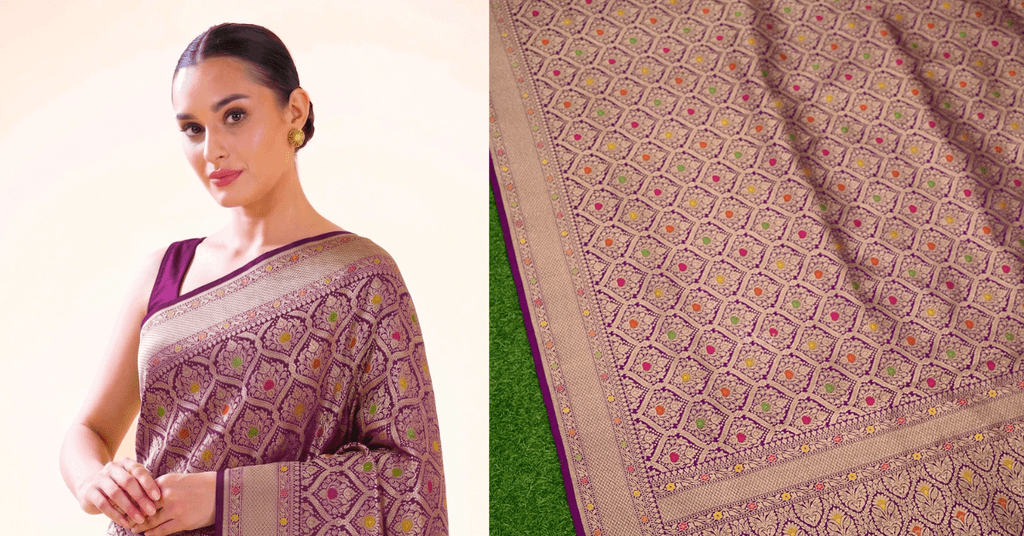
There is another way to bring multiple colours into a Banarasi saree without choosing a Rangkat base.
Meenakari weaving introduces coloured threads into motifs, adding small but noticeable accents within zari work.
Florals, birds, vines and traditional motifs can therefore carry several shades within a single composition.
For Navratri, this works particularly well because colourful meenakari details make it easier to coordinate the saree with jewellery, bangles, blouse colours and other festive accessories.
The effect can be rich without necessarily making the entire saree visually heavy.
Best for: Traditional celebrations, family functions and festive occasions where you want detailed craftsmanship to be visible.
6. Organza Banarasi Sarees for a Lighter Contemporary Look
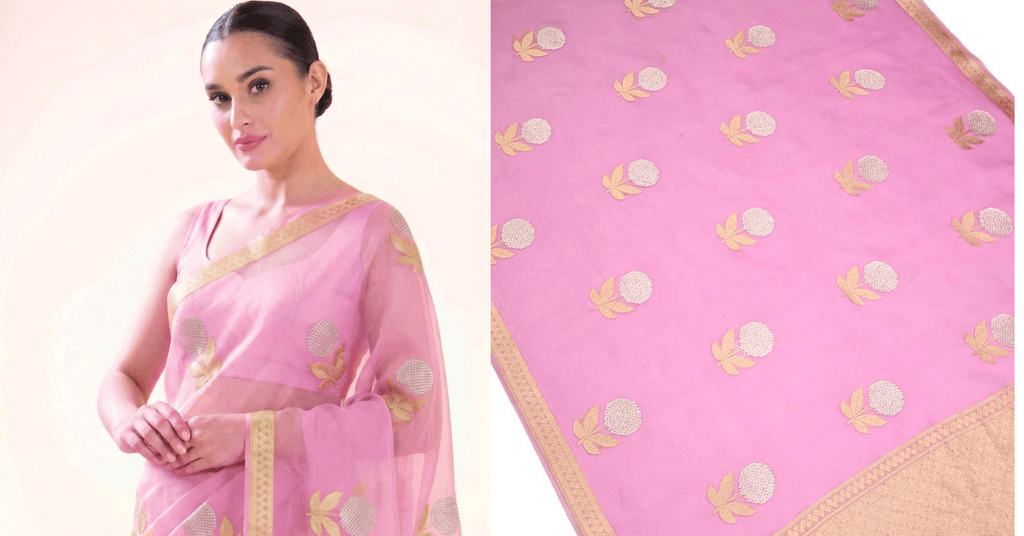
For women who prefer a cleaner silhouette, Banarasi organza offers a different festive mood.
The fabric has an airy appearance while retaining enough structure to showcase woven borders, motifs and zari.
An organza Banarasi saree paired with a thoughtfully designed blouse can look traditional without feeling overly formal.
It is particularly effective in softer shades, jewel tones and sarees where the motifs have enough breathing space to be appreciated individually.
Best for: Daytime festivities, intimate celebrations and contemporary festive styling.
9 Navratri Colours and Banarasi Saree Ideas for 2026
Many women, particularly in Maharashtra and Gujarat, follow the popular custom of wearing a designated colour on each day of Navratri. The colour sequence changes according to the weekday on which Navratri begins, so it is important to check the colours for the specific year rather than reuse last year’s list.
For Shardiya Navratri 2026, the celebrations begin on October 11, 2026. For those who enjoy following the nine-colour tradition, here is how each shade can be interpreted through Banarasi sarees.
Day 1 – October 11: Orange
Start Navratri with warmth.
An orange Katan silk Banarasi saree with restrained gold zari can create a traditional festive look without needing excessive accessories.
For something more contemporary, choose burnt orange, rust or saffron instead of a very bright shade.
Try: Orange Katan silk with gold zari and an antique-gold blouse.
Day 2 – October 12: White
White offers an opportunity to let craftsmanship take centre stage.
An ivory or off-white Banarasi saree with gold or silver zari can feel both festive and sophisticated. Meenakari motifs can introduce small touches of colour without taking away from the white base.
Try: Ivory Katan or organza Banarasi with zari butis and a contrasting blouse.
Day 3 – October 13: Red
Red and Banarasi weaving have a natural relationship.
If you want a richer Navratri look, choose a red Katan silk saree with traditional zari motifs. For something lighter, a red georgette Banarasi can provide festive impact with a more fluid drape.
Try: Classic red with gold zari for an unmistakably traditional look.
Day 4 – October 14: Royal Blue
Royal blue works exceptionally well with metallic zari because of the strong contrast between the deep base and the woven design.
A royal-blue saree with floral jaal, butidar work or meenakari can transition easily from a daytime gathering to an evening celebration.
Try: Royal-blue Banarasi with gold zari and emerald or ruby jewellery accents.
Day 5 – October 15: Yellow
Yellow brings brightness without requiring a heavily decorated saree.
Mustard, turmeric and deeper marigold tones are particularly effective in silk, while softer yellow organza can suit daytime celebrations.
Try: Mustard Katan with zari butis or a lighter yellow organza Banarasi.
Day 6 – October 16: Green
From parrot green and emerald to bottle green and mehendi, this is one colour family where Banarasi sarees offer enormous variety.
For a traditional look, choose deeper green silk with zari. For something more playful, a green saree with coloured meenakari motifs can work beautifully.
Try: Emerald Katan or a green meenakari Banarasi saree.
Day 7 – October 17: Grey
Grey may seem unexpected for a festival, which is precisely what makes it interesting.
A silver-grey tissue saree can turn the colour into something highly festive. Gold zari creates warmth, while silver-toned weaving can produce a cooler contemporary look.
Try: Grey tissue Banarasi with a jewel-toned blouse.
Day 8 – October 18: Purple
Purple naturally carries the richness required for an important festive evening.
Deep plum, aubergine and royal purple work especially well with gold zari and traditional Banarasi motifs.
For Ashtami celebrations, a rich purple Katan saree can provide enough presence without requiring elaborate styling.
Try: Purple Katan silk with a broad zari border.
Day 9 – October 19: Peacock Green
Peacock green sits beautifully between blue and green, making it particularly effective with gold, antique zari and colourful meenakari.
It can also be an excellent shade for a saree with peacock or floral motifs because the colour enhances the nature-inspired palette.
Try: Peacock-green silk or georgette with a decorative zari pallu.
The nine-colour custom is particularly popular in Maharashtra and Gujarat; it should be treated as a festive dressing tradition rather than a rule that every Navratri celebrant is required to follow.
How to Choose a Banarasi Saree for Puja vs Garba
The prettiest saree in your wardrobe is not always the best saree for every Navratri event.
For a morning puja or temple visit, Katan silk, organza or a relatively understated zari saree can create an elegant traditional look.
For Garba and Dandiya, consider movement first. Georgette and lighter Banarasi sarees can be easier to manage than an extremely elaborate silk brocade.
For an evening festive dinner, tissue, Rangkat or a saree with richer zari can make more visual impact under artificial lighting.
And for Ashtami or Navami celebrations, this can be the right moment to bring out a more traditional silk Banarasi with a stronger border and pallu.
Choosing according to the occasion makes the saree feel intentional rather than simply festive.
Styling a Banarasi Saree for Navratri Without Overdoing It
A Banarasi saree already has its own surface detail, so festive styling does not require every element to compete for attention.
If the saree has a dense jaal or elaborate zari, consider a cleaner blouse.
If the saree itself is restrained, the blouse can carry more personality through colour, cut or texture.
Traditional jewellery such as jhumkas, bangles, necklaces or a statement nose pin can work beautifully, but they do not all need to be worn together.
For Garba, comfort matters. Secure the pleats properly, keep the pallu manageable and choose footwear you can comfortably move in.
A potli or compact festive bag is usually more practical than carrying something large.
The aim should be to look dressed for the celebration—not dressed under the weight of it.
Traditional or Contemporary? You Do Not Have to Choose
One of the reasons Banarasi sarees continue to remain relevant is that the textile gives you room to style tradition differently.
The same Katan silk saree can look deeply traditional with temple jewellery and a classic blouse or considerably more contemporary with a sleeveless blouse and minimal accessories.
A tissue saree can be styled ceremonially or almost like an evening textile.
Rangkat can feel heritage-led while still looking surprisingly modern because colour becomes its strongest visual feature.
That flexibility makes Banarasi sarees particularly useful during Navratri, when celebrations move between devotion, family gatherings, social events and dance.
Buying a Banarasi Saree for Navratri? Think Beyond One Festival
Seasonal fashion often encourages us to buy specifically for an event.
A Banarasi saree deserves a slightly different approach.
Instead of asking only, “What can I wear this Navratri?”, consider where else the saree will fit into your wardrobe.
Can you wear it to a wedding later in the year?
Would it work for Diwali?
Could the blouse be restyled?
Will the colour remain useful beyond the nine-day festival?
This is particularly important when investing in handwoven or premium Banarasi sarees. A good saree should not lose its relevance when the festival calendar changes.
The Navratri 2026 Banarasi Mood: Colour With Craft
The most interesting Banarasi saree trend for Navratri 2026 is not one particular fabric or motif.
It is the freedom to use colour and craft together.
Katan brings classic silk richness. Tissue catches festive light. Georgette makes movement easier. Rangkat celebrates colour directly. Meenakari introduces colourful detail, while organza offers a lighter contemporary expression.
And for women who enjoy following the Navratri colour tradition, nine days provide nine very different ways to experience Banarasi weaving.
The best choice is not necessarily the heaviest saree or the one with the most zari.
It is the saree that suits your celebration, feels comfortable when worn and remains meaningful in your wardrobe long after Navratri is over.
Frequently Asked Questions
There is no single best type. Katan silk works well for traditional pujas and formal celebrations, while georgette can be more comfortable for Garba or Dandiya. Tissue, Rangkat, Meenakari and organza are good options depending on the occasion and styling you prefer.
For the widely followed nine-colour tradition in 2026, the sequence from October 11 to October 19 is Orange, White, Red, Royal Blue, Yellow, Green, Grey, Purple and Peacock Green.
Yes. If you plan to dance, consider a lighter and more fluid Banarasi saree such as georgette and secure the drape properly. Extremely heavy sarees may be less practical for a long Garba evening.
There is no mandatory saree colour for everyone. If you follow the popular 2026 nine-colour sequence, October 18 is associated with purple and October 19 with peacock green. Personal, family and regional traditions may differ.
Not necessarily. Banarasi sarees come in different fabrics and weaving densities. Georgette, organza and lighter butidar sarees can be much easier to wear than densely woven bridal brocades.
Absolutely. That is one of its advantages. Depending on the saree, it can later be styled for weddings, Diwali, pujas, festive dinners and other traditional occasions.