What is a Meenakari Banarasi Saree?
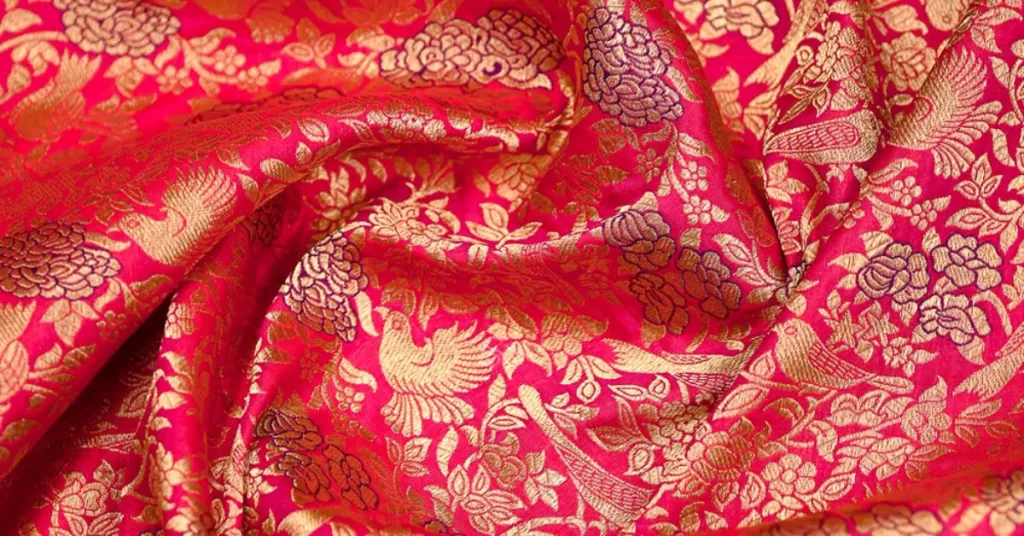
A Meenakari Banarasi Saree is one of the most artistic and intricate forms of Banarasi weaving, admired for its vibrant multicoloured motifs created using fine Resham (silk) threads. Unlike traditional Banarasi sarees that primarily rely on zari for decorative patterns, Meenakari introduces carefully woven coloured silk threads into floral, paisley, animal, and ornamental motifs, giving the saree remarkable depth, contrast, and visual richness.
In simple terms, Meenakari work in a Banarasi saree is the art of enhancing woven motifs with multiple colours of Resham, making every design appear more detailed, lifelike, and luxurious. Whether woven on a delicate floral Buta or an elaborate Shikargah scene, Meenakari transforms an already beautiful Banarasi saree into a true work of textile art.
Today, Meenakari work can be created on almost every popular Banarasi fabric, including Katan Silk, Organza, Tissue, Georgette, Dupion Silk, and other traditional handloom varieties. While the weaving technique may vary, the defining characteristic of every Meenakari Banarasi saree remains the same—its intricate multicoloured motifs woven with exceptional precision and craftsmanship.
Among collectors and connoisseurs, authentic handloom Meenakari Banarasi sarees are considered rare masterpieces. They require years of weaving expertise, meticulous colour planning, and countless hours of manual craftsmanship, making them significantly different from mass-produced powerloom alternatives available in today’s market.
Meaning of Meenakari: From Persian Enamel Art to Banarasi Weaving
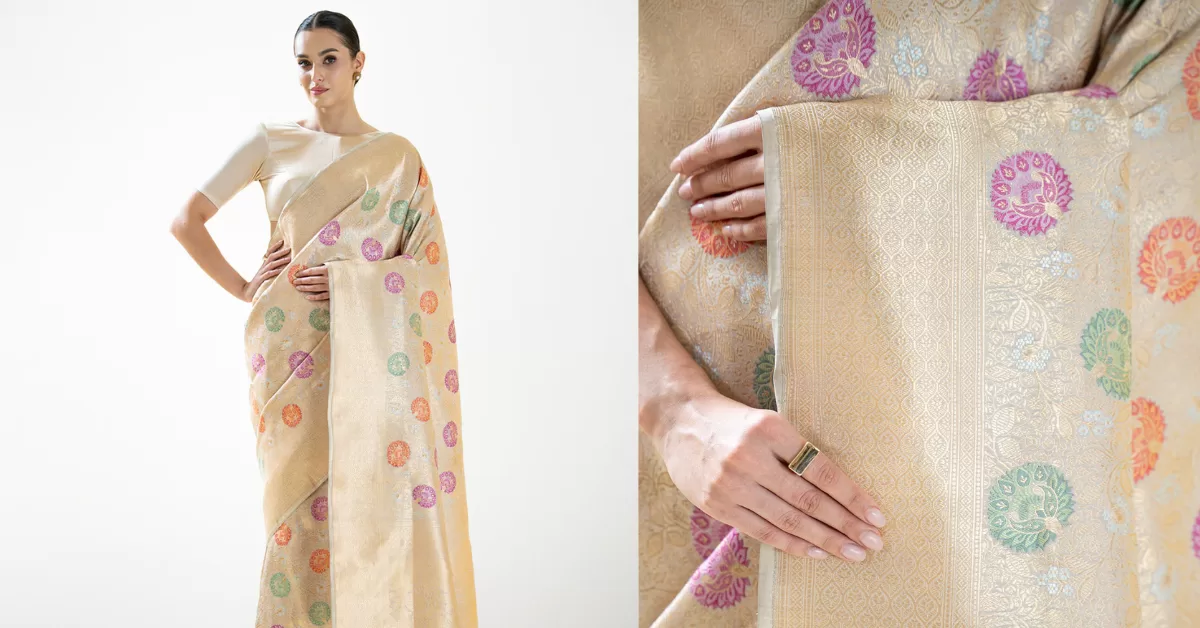
The word Meenakari originates from the Persian word “Meena,” meaning enamel or the art of decorating a surface with vibrant colours. Historically, this artistic technique was first associated with jewellery and precious metals, where skilled craftsmen filled engraved designs with colourful enamel to create intricate decorative pieces.
Over time, the artistic philosophy of Meenakari found its way into Indian craftsmanship. While its earliest use was associated with jewellery and ornamental objects, the same concept of introducing rich, vibrant colours into decorative designs gradually inspired Banarasi weavers to incorporate multicoloured Resham threads into woven motifs.
Unlike enamel work on metal, Meenakari in Banarasi weaving is achieved entirely through the loom. Instead of coloured enamel, master artisans use carefully selected Resham threads to create intricate floral, botanical, animal, and Mughal-inspired motifs that appear almost painted into the fabric. This adaptation transformed Meenakari from a decorative art form into one of the most admired artistic expressions in Banarasi handloom weaving.
Today, when people ask “What is Meenakari work in a saree?”, the answer goes far beyond colourful motifs. It represents centuries of artistic evolution, where the beauty of Persian decorative traditions merged with the unparalleled craftsmanship of Banaras to create one of India’s most celebrated textile arts.
Related guide – The Timeless Elegance of Banarasi Meenakari Sarees
History and Origin of Meenakari in Banarasi Sarees
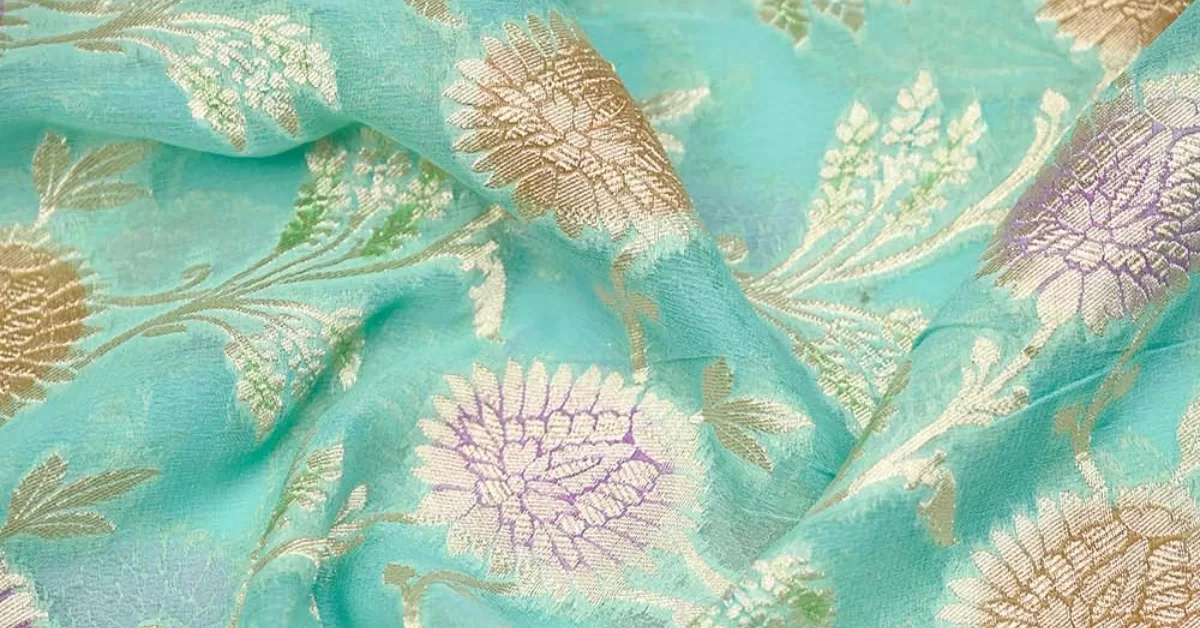
The history of Meenakari dates back several centuries and is widely associated with Persian decorative art, where colourful enamel work was used to embellish jewellery, precious metals, and ornamental objects. The art eventually reached India, where it flourished under royal patronage and became one of the finest expressions of traditional craftsmanship.
While the exact period when Meenakari was introduced into Banarasi weaving is not documented with complete historical certainty, many experienced weaving families and long-established heritage textile houses in Varanasi believe that the art gained prominence during the Mughal era, particularly under the reign of Emperor Akbar in the late 16th century. As Persian artistic influences blended with the already flourishing weaving traditions of Banaras, artisans began adapting the concept of colourful ornamentation into textile weaving.
Unlike traditional Meenakari on jewellery, where coloured enamel is applied to metal surfaces, Meenakari in Banarasi sarees evolved into the art of weaving multicoloured Resham threads directly into decorative motifs. This remarkable adaptation allowed Banarasi weavers to create intricate floral patterns, birds, animals, paisleys, and Mughal-inspired designs with extraordinary colour depth, all without using enamel or paint.
Over generations, this artistic innovation became one of the defining characteristics of premium Banarasi sarees. Today, authentic handloom Meenakari Banarasi sarees continue to preserve this heritage, combining centuries-old weaving traditions with exceptional craftsmanship passed down from one generation of artisans to the next.
Related guide – Is Zari in Banarasi Sarees Real or Fake? How to Tell the Difference
Is Meenakari a Weaving Technique or an Art?
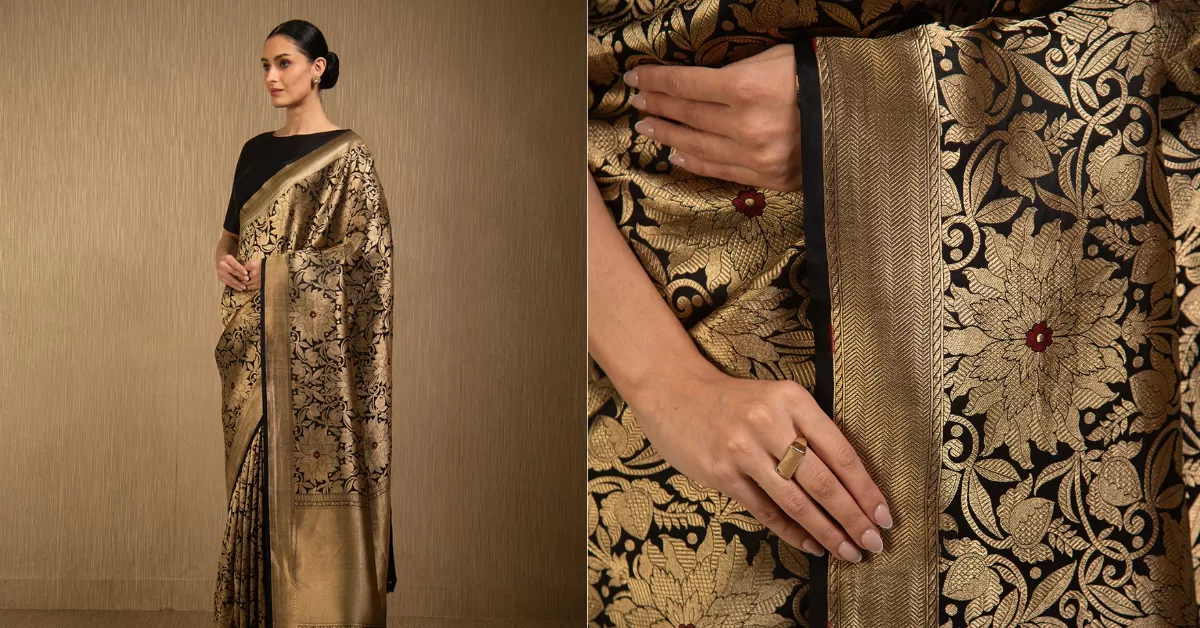
One of the most common misconceptions is that Meenakari is a weaving technique. In reality, it is an artistic embellishment incorporated into Banarasi weaving, not a weaving method itself.
Techniques such as Kadwa, Cutwork, and Rangkat determine how a Banarasi saree is woven. Meenakari, on the other hand, determines how the motifs are artistically enhanced using multiple coloured Resham threads.
Think of it this way:
- Kadwa is a weaving technique.
- Cutwork is a weaving technique.
- Rangkat is a specialised weaving style that creates multicoloured effects across the fabric.
- Meenakari is the art of introducing colourful Resham details into woven motifs, making them richer, more vibrant, and visually striking.
Because of this, Meenakari can be incorporated into different weaving techniques. A Banarasi saree may feature Kadwa Meenakari, Cutwork Meenakari, or even machine-made Meenakari-inspired designs. However, the level of detailing, durability, and artistic value differs significantly depending on the weaving method and the skill of the artisan.
This distinction is important because it explains why two Meenakari Banarasi sarees can look similar at first glance but vary greatly in craftsmanship, weaving time, and price.
How is a Meenakari Banarasi Saree Made?
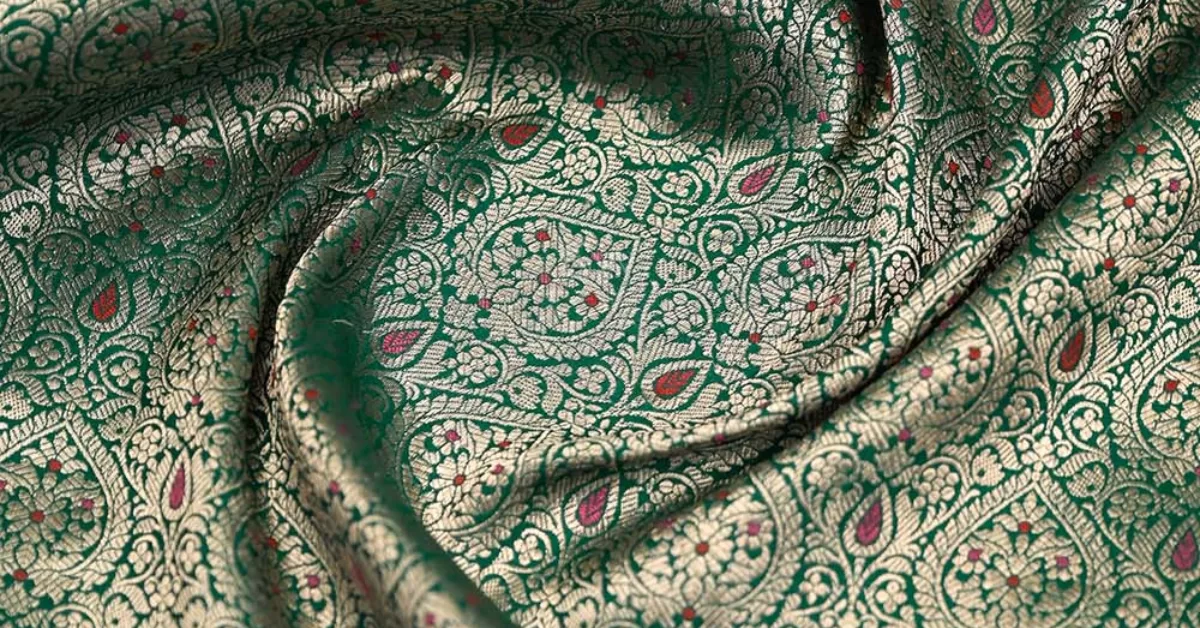
Creating a handloom Meenakari Banarasi saree is a meticulous process that combines artistic vision with technical precision. Unlike ordinary woven motifs, Meenakari requires the artisan to carefully introduce multiple coloured Resham (silk) threads while weaving each motif, ensuring that every colour transition blends seamlessly into the design.
The process begins with designing the motif and selecting the appropriate colour palette. Depending on the complexity of the design, the weaver prepares several coloured Resham threads, each of which is individually woven into the motif alongside silk and zari. As the number of colours increases, so does the complexity of the weaving process.
This is why elaborate Meenakari work demands years of experience. Every colour must be introduced at precisely the right point in the weave, and even a small mistake can affect the symmetry and beauty of the finished motif. The result is a saree where flowers appear more lifelike, birds more vibrant, and traditional Banarasi motifs richer than those woven with zari alone.
When combined with traditional weaving techniques such as Kadwa, the process becomes even more labour-intensive, producing some of the finest and most valuable Banarasi sarees ever woven.
Popular Meenakari Motifs in Banarasi Sarees: Meaning, Placement & Significance
One of the defining characteristics of a Meenakari Banarasi saree is the extraordinary variety of motifs woven using colourful Resham threads. Inspired by nature, Mughal architecture, mythology, royal life, and everyday surroundings, these motifs are far more than decorative elements—they represent centuries of artistic tradition passed down through generations of Banarasi weavers.
Unlike ordinary woven patterns, Meenakari motifs are carefully highlighted using multiple colours of Resham, giving them greater depth, contrast, and lifelike detailing. The choice of motif often determines the personality of the saree, making it suitable for bridal wear, festive occasions, cultural ceremonies, or heirloom collections.
Related guide – Why Are Tissue Silk Sarees So Expensive? Understanding Their True Value
Popular Meenakari Motifs in Banarasi Sarees
| Traditional Motif | Meaning & Inspiration | Common Placement | Complexity |
| Buta (बूटा) | Floral motif inspired by blooming flowers and nature | Body | Medium |
| Bel (बेल) | Flowing vine or creeper pattern symbolising continuity and elegance | Border & Pallu | Medium |
| Kalga (कलगा) | Ornamental Mughal motif often paired with floral vines | Border & Pallu | High |
| Ambi / Paisley (आंबी) | Mango-shaped motif representing prosperity and abundance | Body & Pallu | Medium |
| Konia (कोनिया) | Decorative corner motif placed on saree corners | Corners | High |
| Shikargah (शिकारगाह) | Royal hunting scenes featuring animals, birds and human figures | All-over Body | Very High |
| Bird & Animal Motifs | Peacocks, parrots, elephants, deer and other symbolic creatures | Body & Pallu | High |
| Human & Palace Motifs | Royal courts, musicians, dancers and architectural scenes | Pallu & Body | Very High |
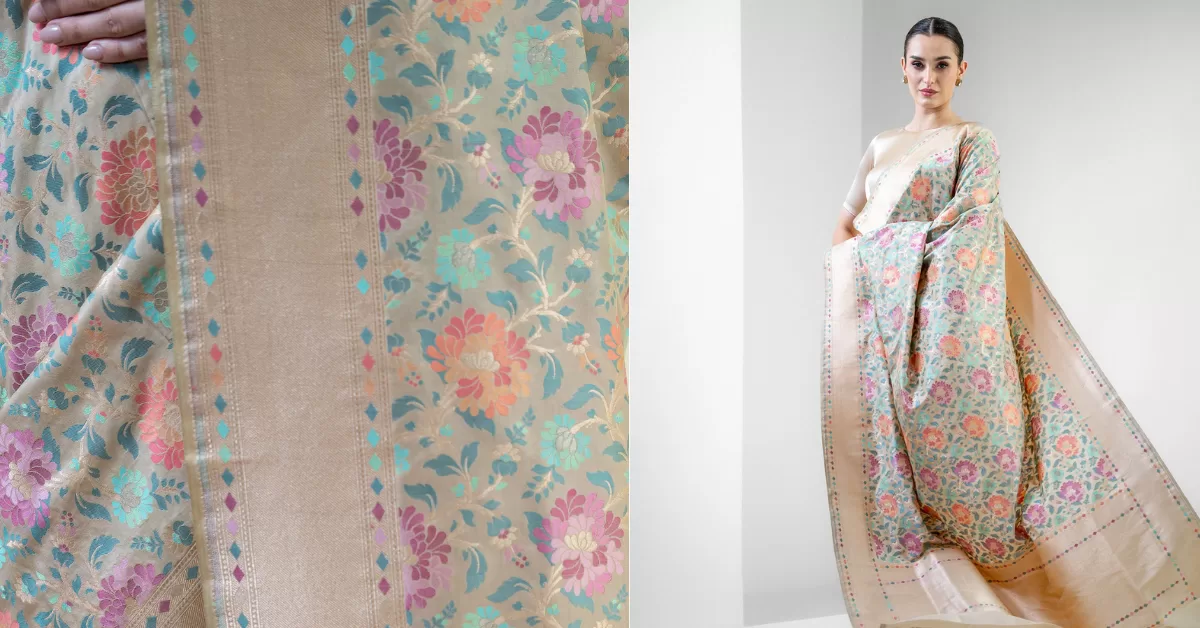
Buta (बूटा)
Among the oldest and most recognisable Banarasi motifs, Buta represents floral beauty inspired by nature. In Meenakari weaving, colourful Resham threads bring every petal and leaf to life, making the motif appear rich, vibrant, and highly detailed. Buta designs are especially popular in bridal and festive Banarasi sarees because of their timeless elegance.
Bel (बेल)
Bel refers to graceful vine-like patterns that flow continuously across the border or pallu of the saree. These motifs create a sense of movement and harmony, while the addition of Meenakari work enhances every flower and leaf with multiple shades of colour, making the borders appear exceptionally luxurious.
Kalga (कलगा)
Inspired by Mughal decorative art, Kalga is an ornamental motif admired for its intricate detailing. It is commonly woven along the borders and pallu, where Meenakari work highlights every curve with carefully chosen Resham colours. Kalga motifs are frequently seen in premium bridal Banarasi sarees because of their regal appearance.
Ambi or Paisley (आंबी)
Known internationally as the Paisley motif, Ambi resembles the shape of a mango and has long symbolised prosperity, fertility, and abundance in Indian textiles. When woven with colourful Meenakari work, the motif gains remarkable depth and becomes one of the most elegant design elements in a Banarasi saree.
Shikargah (शिकारगाह)
Among the most intricate Banarasi designs, Shikargah depicts elaborate royal hunting scenes featuring animals, birds, forests, and human figures. Every element requires exceptional precision, making it one of the most labour-intensive motifs to weave. When combined with Meenakari work, a Shikargah Banarasi saree becomes one of the rarest and most valuable examples of Banarasi craftsmanship.
Can Every Meenakari Motif Be Woven on Every Fabric?
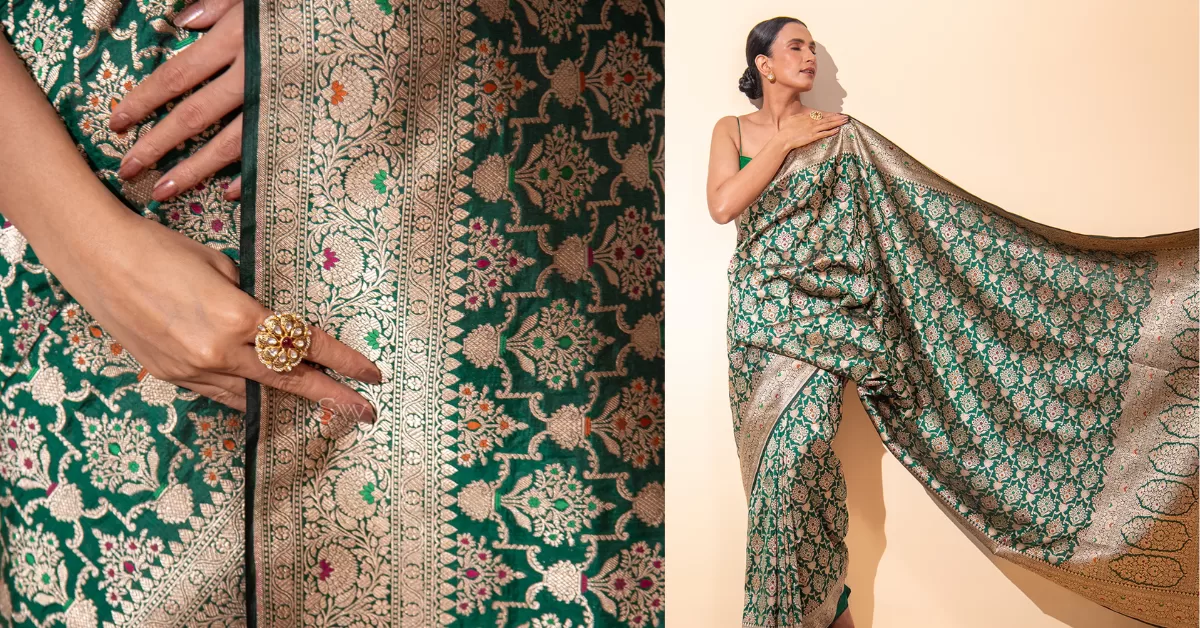
One common misconception is that certain Meenakari motifs are restricted to specific Banarasi fabrics. In reality, Meenakari work can be incorporated into almost every traditional Banarasi fabric, including Katan Silk, Organza, Tissue, Georgette, Dupion Silk, and several other handloom varieties.
However, the size, complexity, and level of detailing that can be achieved depend on the fabric’s weave, the weaving technique, and the artisan’s expertise. Dense fabrics such as Pure Katan Silk comfortably accommodate highly intricate motifs like Shikargah and elaborate Kalga, while lighter fabrics such as Organza beautifully showcase delicate floral Buta, Bel, and Paisley designs.
Which Meenakari Motifs Work Best on Different Banarasi Fabrics?
| Fabric | Common Meenakari Motifs | Why It Works Well |
| Katan Silk | Shikargah, Kalga, Buta, Bel | Dense weave allows exceptional detailing and rich colour transitions. |
| Organza | Floral Buta, Bel, Paisley | Transparent texture beautifully highlights delicate Meenakari motifs. |
| Georgette | Paisley, Floral Butis, Bel | Soft drape complements elegant and flowing designs. |
| Tissue | Kalga, Bel, Floral Motifs | Metallic sheen enhances the brilliance of coloured Resham work. |
| Dupion Silk | Buta, Paisley, Floral Designs | Rich texture gives Meenakari motifs a bold and luxurious appearance. |
Rather than limiting the choice of motif, the fabric influences how prominently the Meenakari work is expressed. This is why experienced manufacturers carefully select both the fabric and the motif before weaving begins, ensuring the final saree achieves the desired balance of elegance, craftsmanship, and visual richness.
Types of Meenakari Based on the Number of Resham Colours
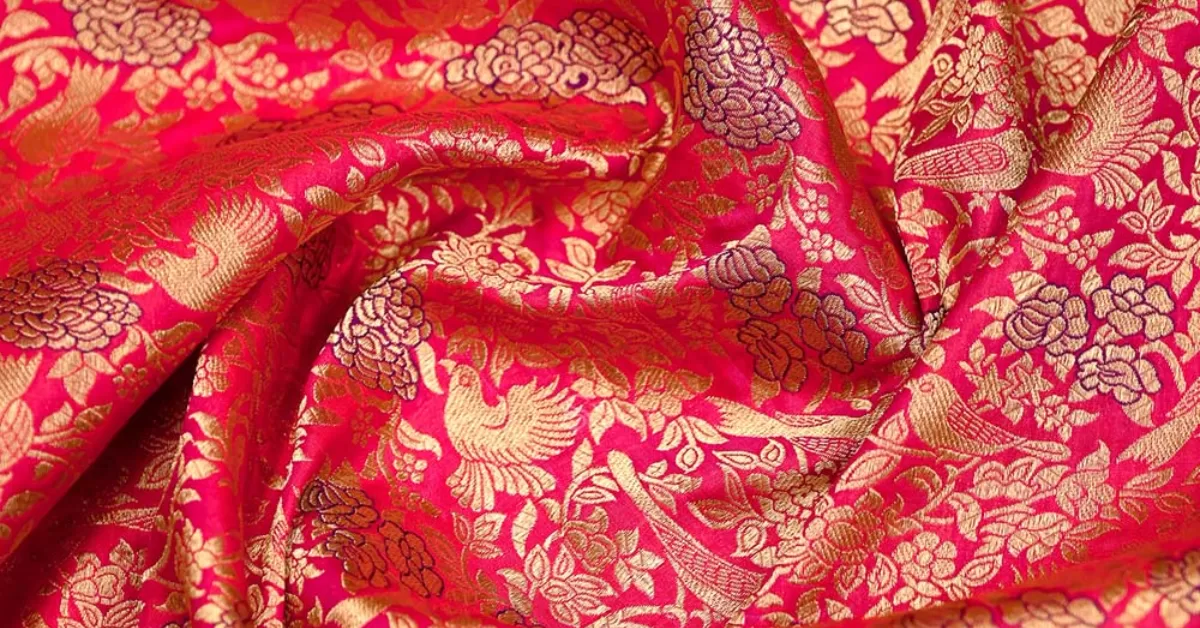
One of the most fascinating aspects of a Meenakari Banarasi saree is the number of coloured Resham (silk) threads used to create its intricate motifs. Contrary to popular belief, these numbers do not represent different weaving techniques—they simply indicate the number of Resham colours introduced into the Meenakari work.
The greater the number of colours, the richer and more detailed the motif becomes. More colour transitions require additional planning, greater weaving precision, and significantly more manual effort, making the saree increasingly complex and valuable.
While 5, 7, 14, 36, 50, and 72 colour Meenakari are among the most commonly recognised variations in Banarasi weaving, the actual number is not fixed. It depends entirely on the motif, the level of detailing desired, and the artistic vision of the master weaver. Some bespoke creations may even use customised colour combinations beyond these commonly recognised counts.
Popular Meenakari Colour Variations
| No. of Resham Colours | Characteristics | Complexity |
| 5 Colours | Simple multicolour floral and decorative motifs with subtle colour variation. | Moderate |
| 7 Colours | One of the most popular combinations for elegant floral and traditional Banarasi designs. | Moderate |
| 14 Colours | Provides greater depth and smoother colour transitions within the motifs. | High |
| 36 Colours | Rich detailing with vibrant colour combinations suitable for premium Meenakari work. | Very High |
| 50 Colours | Exceptional artistic detailing requiring advanced weaving expertise. | Extremely High |
| 72 Colours | Among the finest forms of Meenakari weaving, producing extraordinarily lifelike motifs with remarkable colour depth. | Masterpiece Level |
Why Does the Number of Colours Matter?
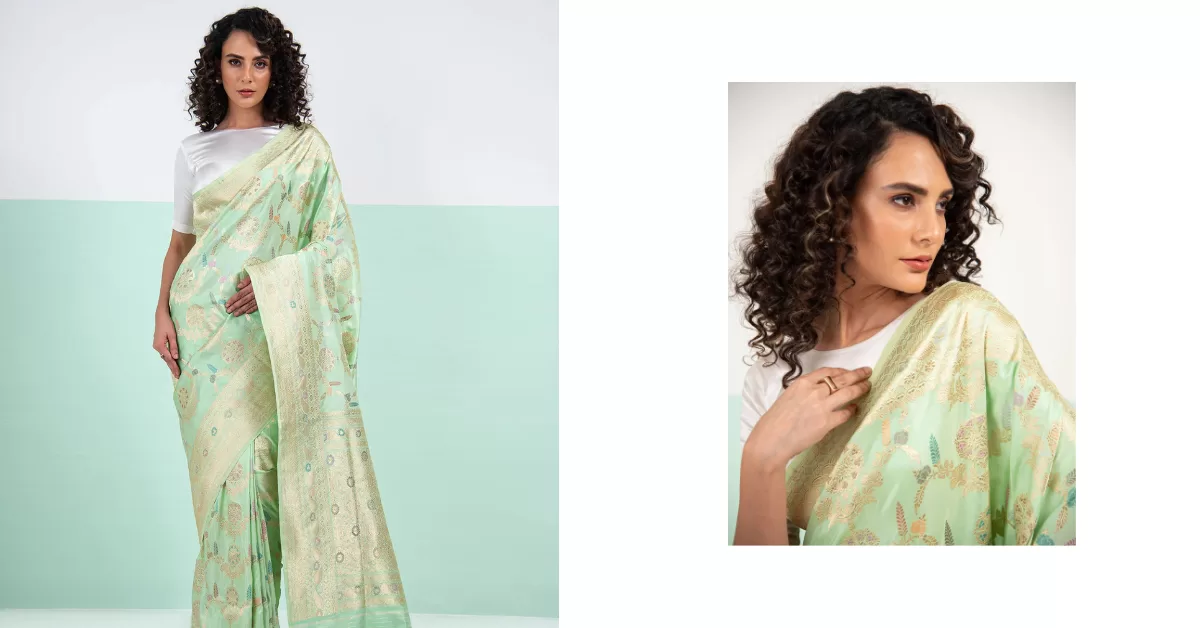
Every additional Resham colour means the weaver must carefully introduce another silk thread into the motif at precisely the right moment during weaving. Unlike printed or embroidered designs, these colours are woven directly into the fabric, making the process highly labour-intensive.
As the number of colours increases:
- More Resham bobbins are required on the loom.
- Colour transitions become more intricate and natural.
- The weaving process becomes slower and more demanding.
- Greater experience and precision are needed from the artisan.
- The artistic value and overall cost of the saree increase.
This is why a 72-colour handloom Meenakari Banarasi saree represents far more than simply using additional colours—it reflects months of planning, exceptional craftsmanship, and generations of weaving expertise.
Related guide – Trending Banarasi Saree Designs for a Luxurious and Stunning Look
Different Types of Meenakari Work on Banarasi Sarees
Meenakari is not limited to a single style of decoration. Depending on the design, occasion, and artistic vision, colourful Meenakari motifs can be incorporated into different parts of a Banarasi saree.
| Type of Meenakari Work | Description |
| Overall Body Meenakari | Colourful motifs are woven across the entire saree, creating a rich and luxurious appearance. |
| Border Meenakari | Intricate Meenakari work is concentrated along the borders for an elegant yet balanced design. |
| Pallu Meenakari | The decorative focus remains on the pallu, often featuring elaborate floral or Mughal-inspired motifs. |
| Body, Border & Pallu Combination | Different Meenakari motifs are artistically distributed across all three sections of the saree. |
| Contemporary Meenakari Designs | Modern interpretations combine traditional Meenakari with innovative layouts, abstract patterns, and customised motifs. |
Over time, Banarasi weaving has evolved significantly. While traditional floral Buta, Bel, and Kalga remain timeless favourites, today’s master weavers continue to introduce new compositions and motif arrangements, allowing Meenakari Banarasi sarees to appeal to both heritage collectors and modern brides without compromising the authenticity of the craft.
Handloom vs Powerloom Meenakari Banarasi Saree
With the growing popularity of Meenakari Banarasi sarees, many designs available today are produced using powerlooms or machine-assisted weaving. At first glance, they may appear similar to authentic handloom sarees, but the difference lies far beyond appearance. It is reflected in the craftsmanship, artistic value, exclusivity, and heritage that each saree represents.
A handloom Meenakari Banarasi saree is woven entirely by skilled artisans who carefully introduce every coloured Resham thread into the motifs during the weaving process. Since each saree is handcrafted, no two sarees are ever completely identical, even when woven from the same design graph or pattern. Every artisan brings subtle differences through hand movement, weaving rhythm, colour placement, and finishing, making every saree a unique work of art.
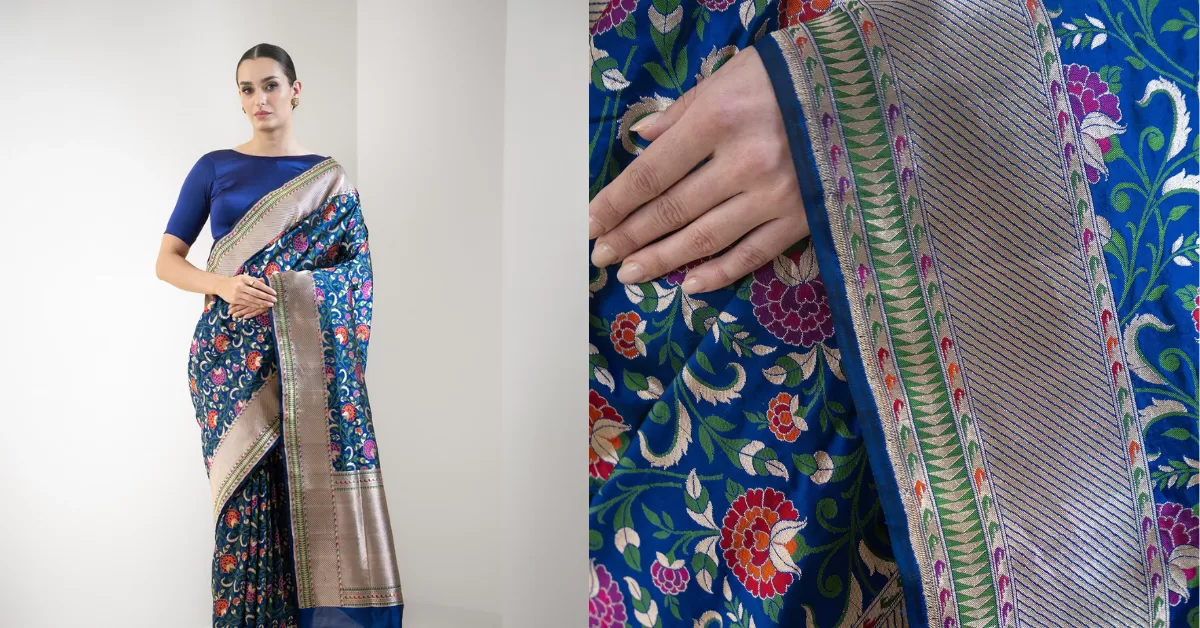
This individuality is one of the reasons why authentic handloom Banarasi sarees are admired worldwide. They are not simply garments but collectible heirlooms, appreciated for preserving centuries-old craftsmanship. Their exclusivity has made them a preferred choice for collectors, brides, dignitaries, and celebrities who value originality over mass production.
In contrast, powerloom Meenakari sarees are produced using programmed weaving patterns that can replicate the exact same design thousands of times. While they make Banarasi-inspired designs more affordable and accessible, every saree produced from the same pattern remains virtually identical. As a result, they offer significantly less artistic exclusivity and cannot replicate the uniqueness that defines authentic handloom weaving.
Handloom vs Powerloom Meenakari Banarasi Saree
| Feature | Handloom Meenakari | Powerloom Meenakari |
| Weaving | Completely handcrafted by skilled artisans | Machine or powerloom produced |
| Uniqueness | Every saree is naturally unique, even from the same design | Thousands of identical sarees can be produced |
| Craftsmanship | Reflects years of artisan experience and manual precision | Machine-controlled production |
| Artistic Value | Exceptional, recognised as heritage textile craftsmanship | Primarily decorative and commercial |
| Exclusivity | Rare and difficult to reproduce | Mass-produced |
| Global Recognition | Admired by collectors, heritage enthusiasts, celebrities and luxury buyers | Mainly designed for affordable everyday fashion |
| Heirloom Value | Can be treasured and passed down through generations | Generally purchased for regular use |
| Price | Premium due to craftsmanship, rarity and exclusivity | Comparatively affordable |
Authentic handloom Meenakari Banarasi sarees are not valued simply because they require more time to weave. Their true value lies in the fact that every saree is one of a kind. Even if another artisan follows the same design and weaving plan, the finished saree will always carry its own unique artistic identity. That individuality is what transforms a handloom Banarasi saree into a symbol of luxury, heritage, and timeless craftsmanship.
Why Are Authentic Handloom Meenakari Banarasi Sarees Becoming Rare?
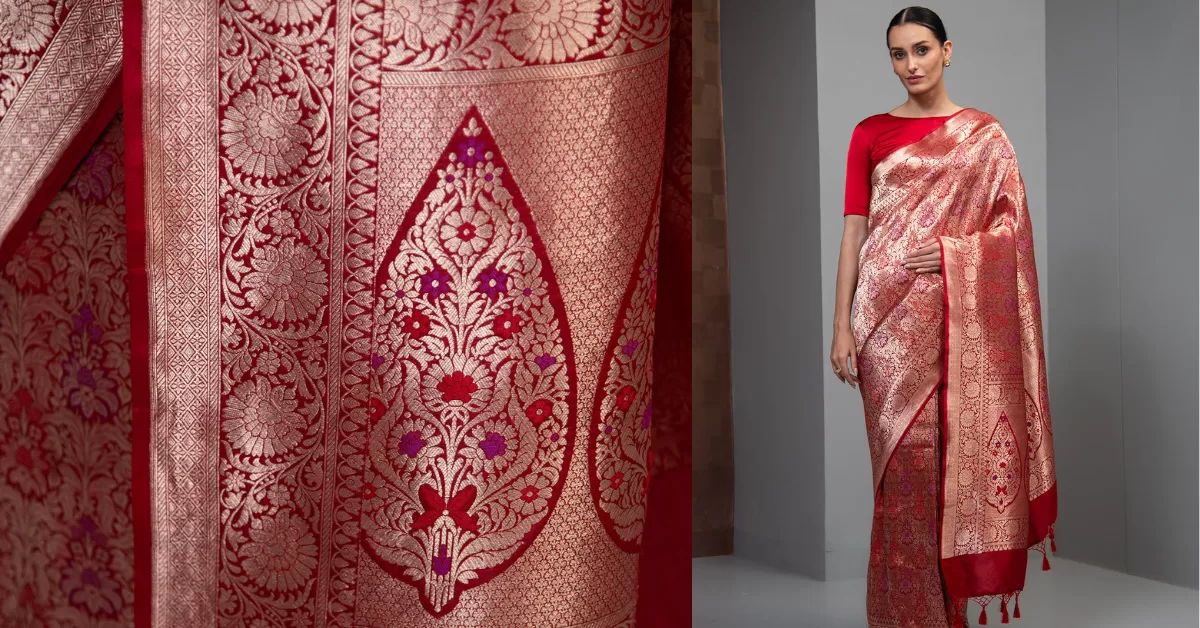
Authentic handloom Meenakari Banarasi sarees are becoming increasingly rare, not because the art has disappeared, but because very few artisans continue to practise this highly specialised craft.
Unlike ordinary Banarasi weaving, Meenakari requires the artisan to simultaneously manage multiple coloured Resham threads while maintaining perfect alignment of every motif. Each colour has to be introduced at precisely the right point during weaving, demanding exceptional concentration, years of experience, and complete command over the loom.
As the complexity of the motifs increases, so does the weaving time. A premium handloom Meenakari saree may take several weeks or even months to complete, depending on its fabric, weaving technique, motif detailing, and the number of Resham colours used.
At the same time, the demand for faster and more affordable production has encouraged the widespread use of powerlooms. Machine weaving can produce hundreds of identical sarees in the time required to weave a single handcrafted masterpiece. Naturally, fewer artisans now choose to specialise in traditional handloom Meenakari weaving.
Yet, this rarity is precisely what gives authentic handloom Meenakari Banarasi sarees their enduring value. Every saree represents generations of inherited craftsmanship, countless hours of meticulous weaving, and a level of artistic individuality that cannot be replicated by machines.
Related guide – Real Silk versus the Fake – How to Identify
What Determines the Price of a Meenakari Banarasi Saree?
One of the most common questions buyers ask is:
“Why do some Meenakari Banarasi sarees cost ₹15,000 while others exceed ₹2 lakh?”
The answer lies in the craftsmanship behind each saree. The price is never determined by a single factor but by the combination of materials, weaving technique, artistic complexity, and the expertise of the artisans who create it.
Factors That Influence the Price of a Meenakari Banarasi Saree
| Factor | How It Influences the Price |
| Fabric | Pure Katan Silk generally commands the highest value because of its richness, durability, and ability to support intricate weaving. Organza, Tissue, Georgette, Dupion Silk, and other Banarasi fabrics are priced according to their weaving characteristics. |
| Weaving Technique | Kadwa Meenakari is significantly more labour-intensive than Cutwork Meenakari, making it considerably more valuable. |
| Handloom or Powerloom | Authentic handloom weaving requires extensive manual craftsmanship, making every saree unique and considerably more valuable than machine-produced alternatives. |
| Number of Resham Colours | More colour variations require greater weaving precision, longer production time, and higher artistic expertise. |
| Motif Complexity | Elaborate motifs such as Shikargah, detailed Kalga compositions, and architectural scenes demand substantially more weaving effort than simpler floral Buta or Bel motifs. |
| Zari Quality | Premium or genuine zari enhances both the visual richness and long-term value of the saree. |
| Customisation | Bespoke weaving often requires fresh design planning, colour development, and exclusive loom preparation, increasing both production time and value. |
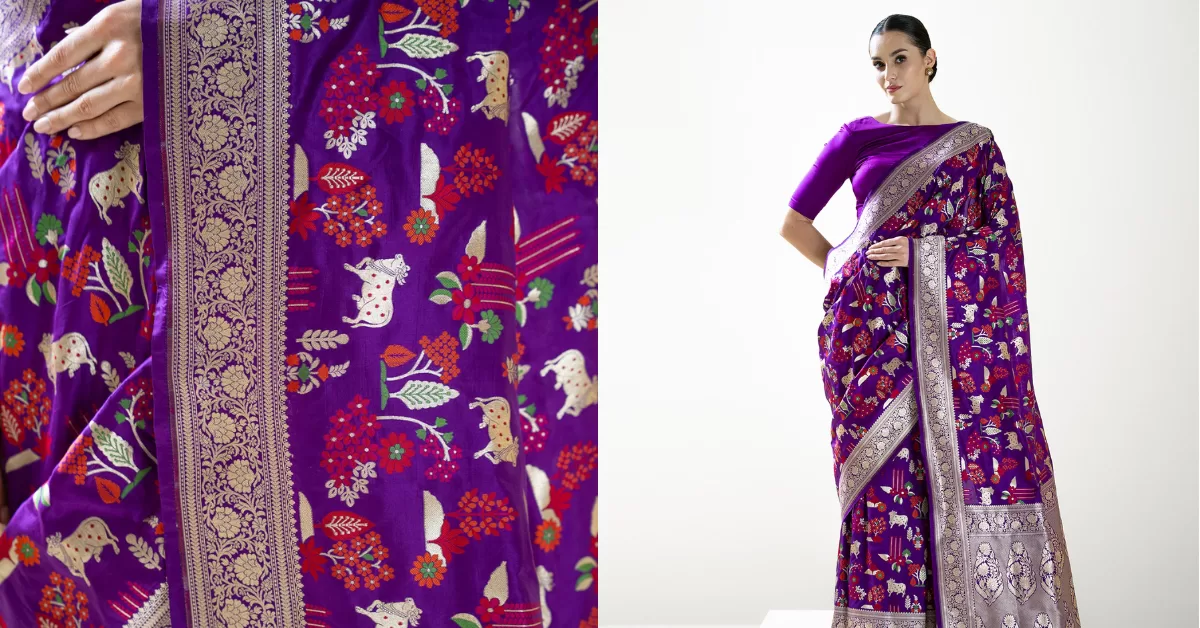
What Is the Price Range of a Meenakari Banarasi Saree?
The price of an authentic Meenakari Banarasi saree varies widely depending on the combination of the factors discussed above.
As a general guide:
- Authentic handloom Meenakari Banarasi sarees usually begin around ₹15,000–₹45,000 for comparatively simpler designs.
- Premium handcrafted sarees featuring Pure Katan Silk, Kadwa weaving, intricate Meenakari motifs, higher Resham colour counts, and superior zari generally range between ₹50,000 and ₹1.5 lakh.
- Bespoke masterpieces woven using 72-colour Meenakari, highly intricate motifs like Shikargah, premium Katan Silk, and exceptional craftsmanship can comfortably exceed ₹2 lakh, particularly when created as exclusive commissions.
Rather than judging a Banarasi saree solely by its price, buyers should evaluate its weaving technique, craftsmanship, authenticity, materials, and the reputation of the manufacturer. These are the factors that ultimately determine whether a saree is simply a beautiful garment or a timeless heirloom worthy of being preserved for generations.
Why This Matters Before You Buy
A genuine Meenakari Banarasi saree is more than an investment in luxury clothing—it is an investment in one of India’s finest weaving traditions. Understanding how fabric, weaving technique, motifs, colour complexity, and craftsmanship influence the final product helps buyers appreciate the true value behind every handcrafted saree.
Whether you choose a subtle floral design or a highly intricate masterpiece, knowing what goes into its creation ensures that you purchase not just a saree, but a piece of Banaras’ living textile heritage.
Meenakari vs Rangkat Banarasi Saree: What Is the Difference?
Meenakari and Rangkat are often confused because both feature vibrant multicoloured designs. However, they represent two entirely different artistic concepts in Banarasi weaving.
A Meenakari Banarasi saree derives its beauty from the intricate multicoloured motifs, where coloured Resham threads are carefully woven into floral, paisley, animal, and ornamental designs. The focus is on enhancing individual motifs with artistic detailing.
A Rangkat Banarasi saree, on the other hand, creates its visual appeal through the weaving of multiple coloured silk and zari threads across the fabric itself. Rather than highlighting individual motifs, Rangkat produces seamless colour transitions throughout the saree, making the fabric appear naturally painted with multiple shades.
Although both represent exceptional craftsmanship, they differ in their artistic philosophy, weaving approach, and final appearance.
Meenakari vs Rangkat Banarasi Saree
| Feature | Meenakari Banarasi Saree | Rangkat Banarasi Saree |
| Primary Focus | Multicoloured motifs | Multicoloured weaving across the fabric |
| Artistic Style | Enhances motifs using coloured Resham threads | Creates colour transitions while weaving the saree itself |
| Weaving Nature | Decorative artistic embellishment | Distinct weaving style |
| Appearance | Rich, colourful motifs on the saree | Flowing multicolour effect across the entire weave |
| Popular Motifs | Buta, Bel, Kalga, Shikargah, Paisley | Floral, geometric, traditional Banarasi motifs |
| Suitable For | Brides, festive wear, collectors | Bridal couture, luxury collections, collectors |
| Craftsmanship | Highly intricate | Extremely intricate, especially in Kadwa Rangkat |
Both are masterpieces of Banarasi weaving, and neither is superior to the other. The choice depends entirely on personal preference. Those who appreciate intricate artistic motifs often gravitate towards Meenakari, while those seeking dramatic colour transitions across the entire saree are usually drawn to Rangkat.
If you’d like to understand how Rangkat differs from Meenakari in terms of weaving technique, craftsmanship, and rarity, read our Complete Guide to Rangkat Banarasi Sarees
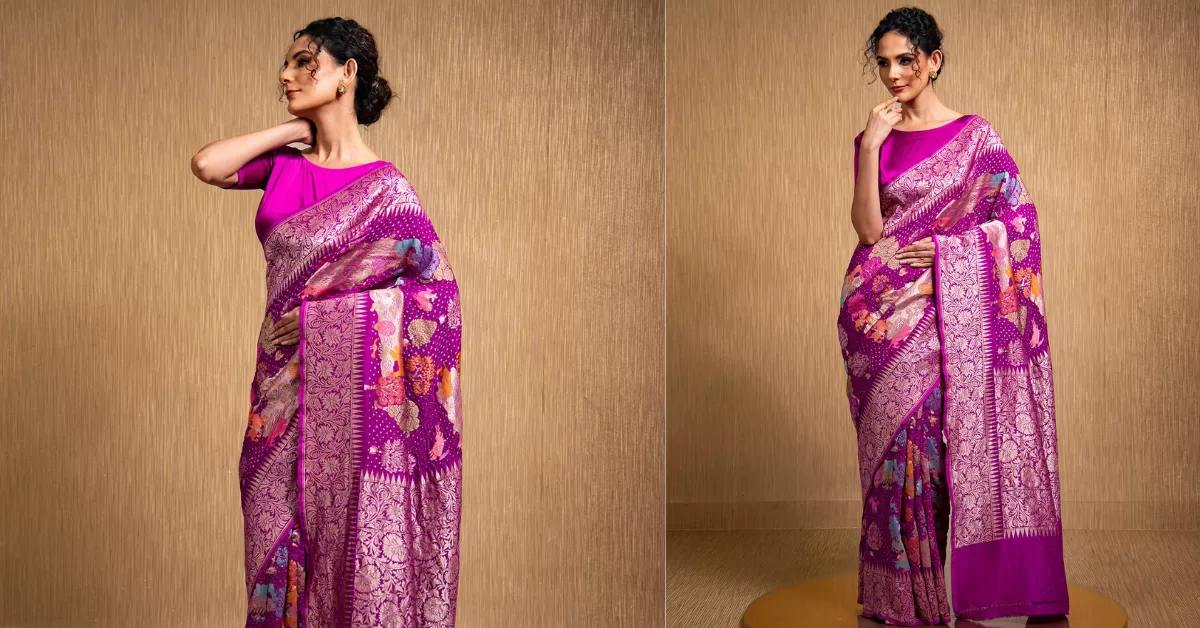
Why Brides Love Meenakari Banarasi Sarees
Among the many varieties of Banarasi sarees, Meenakari Banarasi sarees have become one of the most admired choices for bridal wear. Their intricate multicoloured motifs, luxurious texture, and timeless elegance create a regal appearance that beautifully complements traditional Indian weddings.
When woven on Pure Katan Silk, Meenakari work acquires exceptional richness. The lustrous silk enhances every coloured motif, allowing the intricate Resham detailing to stand out beautifully. This combination has long been favoured by brides seeking a classic heirloom saree that can be cherished for generations.
Modern brides also appreciate the versatility of Meenakari. Whether woven on Organza, Tissue, Georgette, or other Banarasi fabrics, the colourful motifs add depth and sophistication without overwhelming the overall design. The result is a saree that feels equally appropriate for wedding ceremonies, receptions, festive celebrations, and family heirlooms.
More importantly, an authentic handloom Meenakari Banarasi saree carries a sense of individuality. Since no two handcrafted sarees are exactly alike, every bride owns a piece that is truly unique—something that cannot be replicated through mass production.
How to Identify an Authentic Meenakari Banarasi Saree
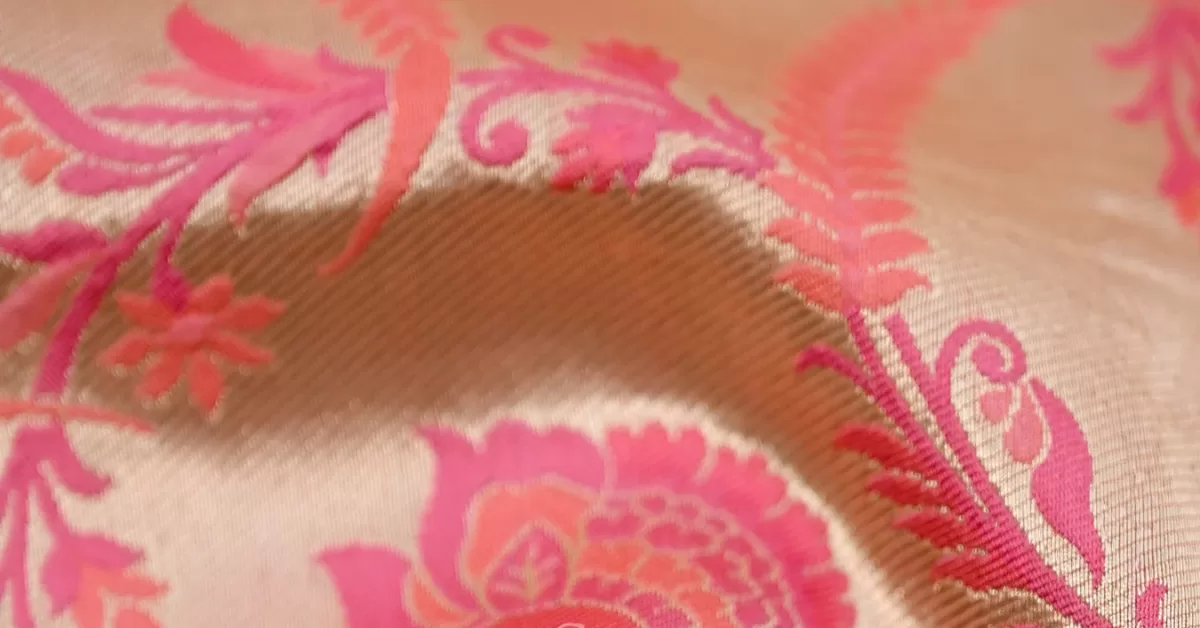
With the growing popularity of Banarasi sarees, identifying authentic craftsmanship has become more important than ever. While machine-made alternatives may resemble handloom designs from a distance, several factors help distinguish a genuine Meenakari Banarasi saree.
Checklist for Buying an Authentic Meenakari Banarasi Saree
- Choose Handloom Whenever Possible: Handloom sarees preserve the originality of Banarasi weaving and showcase the subtle individuality that machines cannot replicate.
- Look for the Silk Mark Certification: The Silk Mark certifies the authenticity of pure silk and provides buyers with confidence in the quality of the fabric.
- Verify the GI (Geographical Indication) Tag: A genuine GI-tagged Banarasi saree confirms its association with the traditional weaving heritage of the Banaras region.
- Buy from Established Heritage Stores or Manufacturers: Choose retailers or manufacturers with a proven reputation, transparent business practices, and expertise in authentic Banarasi weaving.
- Examine the Meenakari Detailing: Authentic handloom Meenakari displays refined colour transitions, intricate motif definition, and exceptional weaving precision that machines struggle to reproduce.
Related guide – How to Identify Real Tissue Silk Saree – Complete Buyer’s Guide
Where to Buy an Authentic Meenakari Banarasi Saree
Purchasing an authentic Meenakari Banarasi saree begins with choosing the right source. Rather than focusing only on price or appearance, buyers should prioritise authenticity, craftsmanship, transparency, and the heritage behind the weaving.
If you’re visiting Varanasi, consider purchasing from a reputed heritage showroom that works directly with Banarasi artisans, offers Silk Mark-certified sarees, and maintains transparency about weaving techniques, fabrics, and craftsmanship. Direct sourcing from experienced manufacturers also helps ensure authenticity while supporting the traditional weaving ecosystem.
For those unable to visit Varanasi, several established heritage brands now provide carefully curated collections online. Choosing a seller with genuine expertise in Banarasi textiles, clear product information, and authentic certifications is always preferable to buying solely based on price.
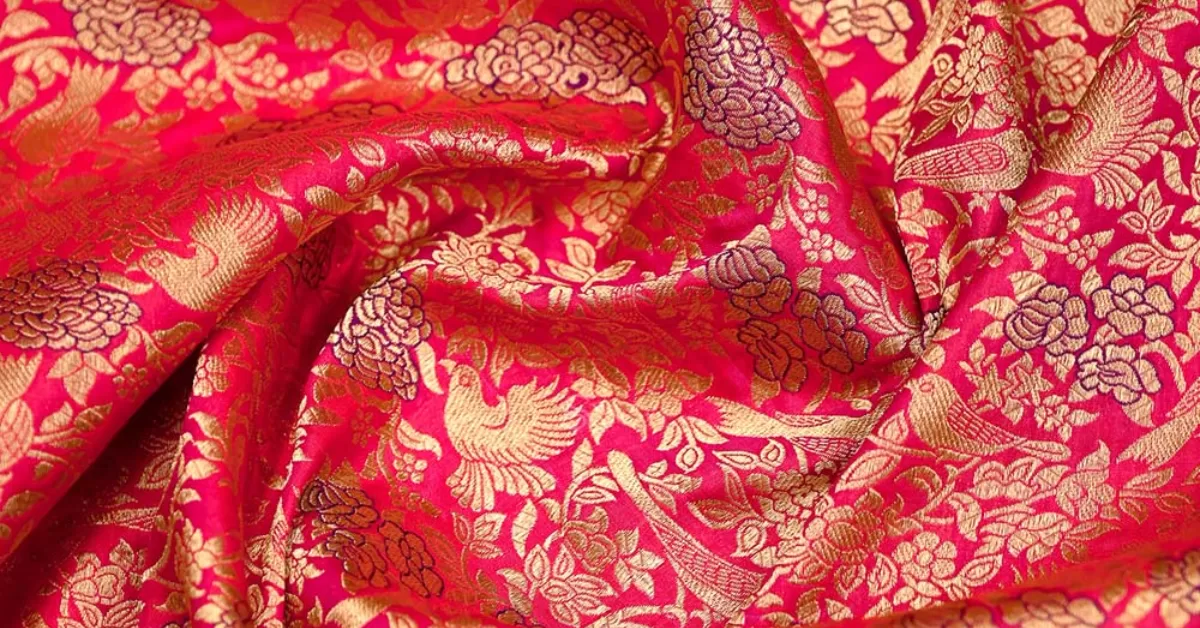
For buyers seeking authentic handloom Meenakari Banarasi sarees backed by more than a century of Banarasi textile heritage, JDS Banaras offers carefully curated collections crafted in association with skilled Banarasi artisans. Each saree reflects the brand’s commitment to authenticity, traditional craftsmanship, and transparency, helping preserve the rich weaving legacy of Varanasi for future generations.
If you prefer shopping online, Sacred Weaves, the sister brand of JDS Banaras, offers an extensive collection of authentic handloom Banarasi sarees, making traditional Banarasi craftsmanship accessible to customers across India and around the world.
Related guide – JDS Banaras Reviews
Preserving the Legacy of Meenakari Banarasi Sarees
A Meenakari Banarasi saree is far more than a beautifully woven garment—it is a reflection of centuries of artistic excellence preserved by the master weavers of Banaras. Every multicoloured motif, every carefully woven Resham thread, and every intricate design represents generations of inherited knowledge, patience, and craftsmanship that continue to define one of India’s richest textile traditions.
Whether woven on luxurious Pure Katan Silk for a bridal trousseau or crafted on elegant Organza, Tissue, or Georgette for festive occasions, an authentic handloom Meenakari Banarasi saree carries a uniqueness that cannot be replicated through mass production. It is this individuality that transforms each saree into a timeless heirloom, admired not only for its beauty but also for the heritage it preserves.
Understanding the artistry behind Meenakari weaving allows buyers to appreciate its true value beyond fabric, colour, or price. Every authentic Meenakari Banarasi saree tells a story—of Banaras, of its master artisans, and of a weaving tradition that continues to inspire collectors, brides, and textile lovers across the world.
Frequently Asked Questions