
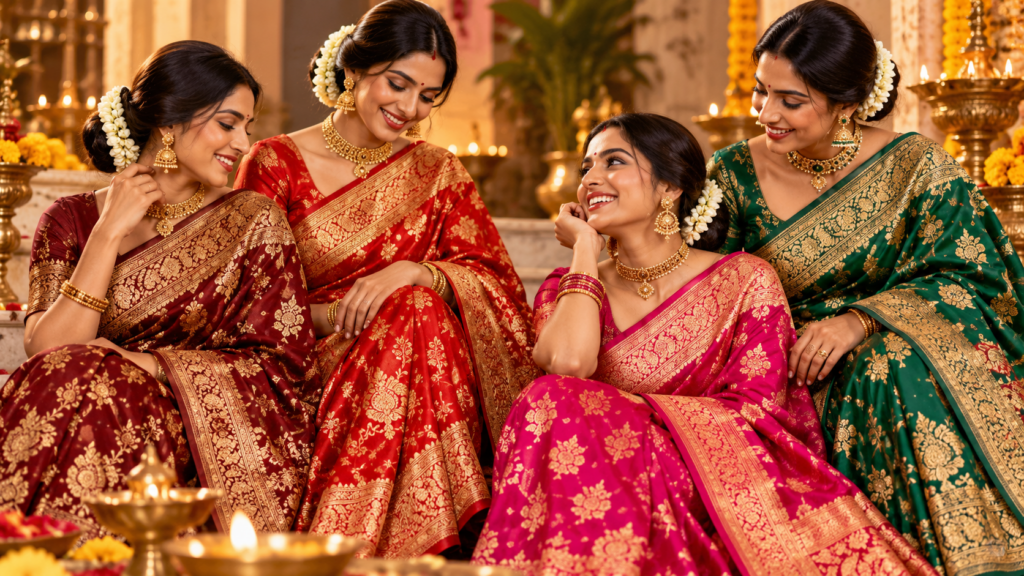
When choosing a Banarasi saree for an Indian wedding, colour is often just as important as fabric, zari and design.
A red Banarasi saree may feel naturally bridal. A deep maroon can look more mature and regal. Rani pink feels festive and celebratory, while gold or tissue tones can create a luminous look for receptions and evening functions.
But there is no single colour that is considered appropriate for every Indian wedding.
Wedding customs vary by family, region and community, so it is better to think of Banarasi saree colours in terms of tradition, visual character and occasion rather than treating any one shade as universally compulsory or auspicious.
Why Colour Matters So Much in a Banarasi Wedding Saree
Banarasi sarees are visually rich because of their silk, zari and woven motifs.
Colour changes the way all of these elements appear.
Gold zari looks bold against red or green, softer against beige or ivory, and particularly luminous on tissue-based sarees.
Similarly, the same floral jaal or butidar design can feel completely different depending on whether it is woven on maroon, rani pink or cream.
That is why colour should not be chosen in isolation.
A good wedding saree balances:
colour + fabric + zari + motif + occasion.
Related guide – Why Banarasi Sarees Are a Timeless Choice for Diwali: Colours, Zari & Festive Traditions
Red Banarasi Sarees: The Classic Bridal Choice
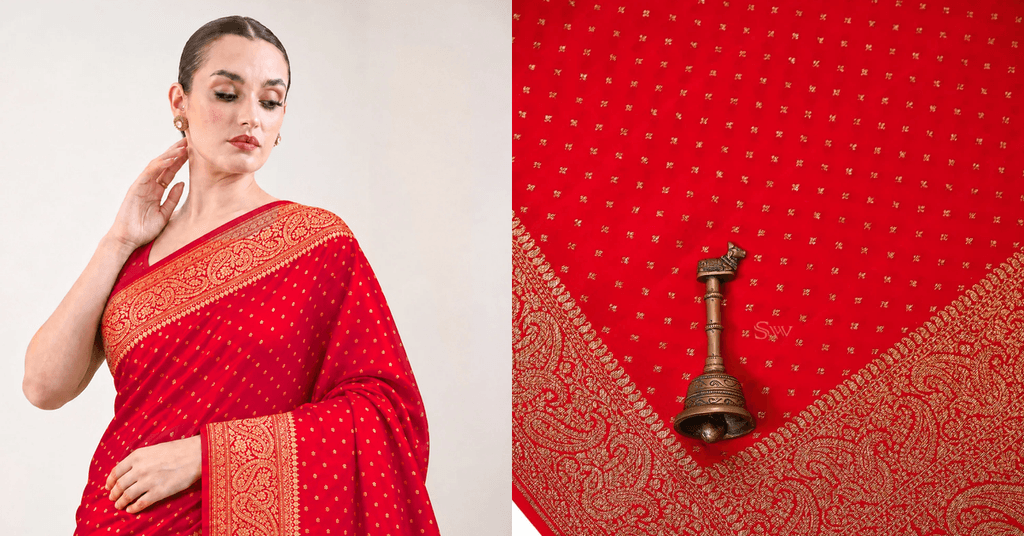
Red is one of the most recognised colours in Indian bridal dressing, particularly across many North Indian wedding traditions.
A red Banarasi saree with gold zari naturally creates a formal, ceremonial look.
It works especially well for brides who want a traditional appearance without relying heavily on surface embroidery.
Best suited for:
- wedding ceremony
- bridal trousseau
- first major post-wedding function
- traditional family ceremony
Why it works
Red creates strong contrast with gold zari, making borders, butis and pallu designs highly visible.
A pure Katan silk red Banarasi saree can look especially rich because the silk surface gives the colour depth while allowing the zari to remain prominent.
For women who feel bright bridal red is too intense, deeper vermilion, sindoor red or slightly muted crimson can offer a more refined look.
Maroon Banarasi Sarees: Rich, Mature and Elegant
Maroon has many of the traditional qualities associated with red but usually feels deeper and more understated.
It works beautifully for brides who want a classic look without choosing a very bright colour.
Maroon also tends to pair exceptionally well with antique-finish jewellery, kundan, polki and traditional gold.
Best suited for:
- wedding ceremony
- reception
- bride’s mother
- groom’s mother
- major family functions
A maroon Banarasi saree with restrained zari can also have excellent repeat value after the wedding.
Unlike highly bridal red, maroon can transition more easily into festive and formal family occasions.
Rani Pink and Magenta: Festive Without Looking Too Bridal
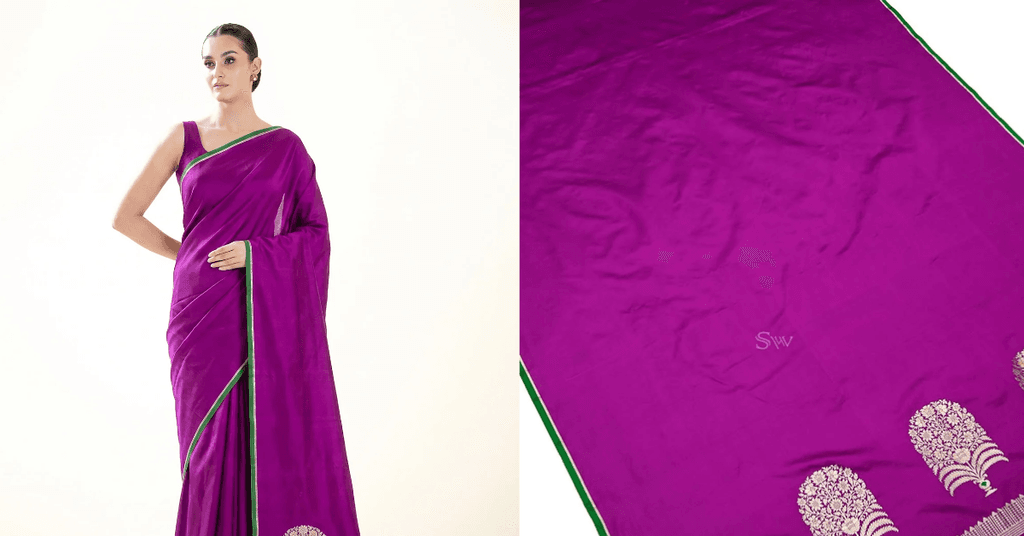
Rani pink and magenta are among the strongest alternatives to red.
These shades carry plenty of festive energy but can feel younger and more versatile.
Gold zari and meenakari detailing often stand out particularly well against pink backgrounds.
Best suited for:
- engagement
- sangeet
- wedding ceremony
- family functions
- bridesmaids and close family members
Rani pink can work beautifully for brides who want a traditional Indian colour without wearing red.
It is also an excellent choice for mothers, sisters and close relatives because it photographs well and works across daytime and evening functions.
Green Banarasi Sarees: Traditional Yet Versatile
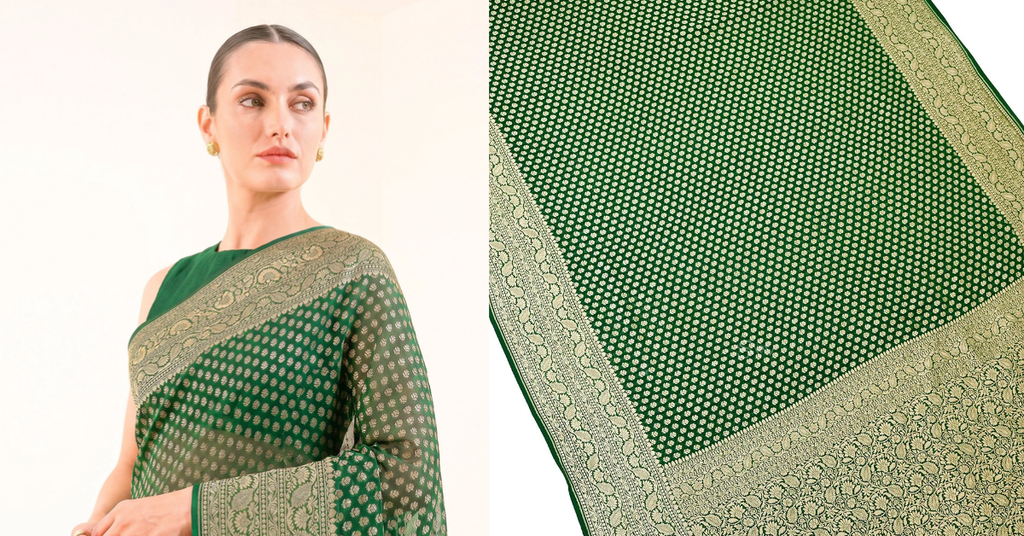
Green has long been part of Indian festive and ceremonial wardrobes, though its meaning and importance vary between communities.
For Banarasi sarees, deeper greens such as emerald, bottle green and forest green create strong contrast with gold zari.
Best suited for:
- mehendi
- pre-wedding functions
- wedding guest attire
- festive ceremonies
- reception or family celebrations
Green also pairs well with contrasting blouses in:
- maroon
- red
- gold
- pink
- mustard
A bottle-green Banarasi saree with traditional zari butis can feel formal enough for a wedding while remaining reusable afterward.
Related guide – What Makes a Banarasi Saree Special for Karwa Chauth? Colours, Traditions & Styling Explained
Gold and Tissue Banarasi Sarees: Ideal for Evening Functions
Gold-toned Banarasi tissue sarees have become especially popular for receptions and evening celebrations because of their luminous appearance.
The fabric itself reflects light, so the saree can look rich without requiring very dense zari work.
Best suited for:
- reception
- cocktail-style wedding event
- evening ceremony
- festive dinner
- modern bridal or family look
Gold tissue can be paired with:
- deep red blouse
- emerald green blouse
- wine blouse
- antique gold blouse
- contrasting jewel tones
This creates a more contemporary look while still keeping the Banarasi textile identity intact.
Ivory, Cream and Beige: Refined and Understated
Not every wedding look needs to be built around bright colours.
Ivory, cream, beige and champagne-toned Banarasi sarees can look extremely elegant, particularly when woven with fine gold zari.
These shades allow the weave and zari to become the primary visual focus.
Best suited for:
- reception
- daytime wedding
- engagement
- elegant family function
- minimalist styling
However, colour traditions vary considerably across communities, so neutral tones may be more appropriate in some families than others.
The safest approach is to consider both personal preference and family tradition.
Purple, Wine and Plum: Rich Alternatives to Red
Deep jewel tones such as purple, wine and plum work particularly well in Banarasi silk.
They provide the richness expected from wedding wear while feeling less conventional than red or maroon.
Best suited for:
- reception
- engagement
- evening wedding
- family celebrations
These colours also pair beautifully with antique or muted zari, making them suitable for women who prefer a more sophisticated rather than brightly bridal look.
Which Colours Work Best for Different Wedding Functions?
Instead of choosing one saree for every ceremony, colour can help define the mood of each function.
Wedding Ceremony
Strong traditional choices include:
red, maroon, rani pink, deep green and rich jewel tones.
Katan silk usually works well here because the fabric has the structure and richness expected from the main ceremony.
Mehendi
Green is the most obvious visual choice, though pink, yellow, rust and lighter Banarasi sarees can also work beautifully.
Lighter fabrics may be more practical because mehendi functions usually involve more movement.
Sangeet
Rani pink, magenta, purple, wine and brighter jewel tones work well.
The saree can be festive without necessarily looking bridal.
Reception
Gold tissue, ivory, wine, deep purple and elegant pastel metallic tones can create a sophisticated evening look.
Engagement
Rani pink, red, gold, green and lighter Banarasi sarees all work depending on the formality of the function.
Bride vs Mother of the Bride or Groom
Colour selection changes depending on who is wearing the saree.
For the Bride
A bride may choose:
- red
- maroon
- rani pink
- magenta
- deep green
- gold
The saree can carry heavier zari, a richer pallu or more elaborate jaal work.
For the Mother of the Bride or Groom
Maroon, wine, green, purple, gold and deeper pinks work particularly well.
The saree can still look ceremonial without directly replicating the bride’s visual language.
A rich Katan silk or traditional Banarasi saree with balanced zari is often a good choice.
For Wedding Guests
Guests have far more flexibility.
Rani pink, green, purple, blue, gold, rust and pastel Banarasi sarees can all work depending on the function.
The main consideration should be dressing appropriately without making the outfit excessively bridal.
How Zari Changes the Appearance of Colour
The same saree colour can look completely different depending on the zari.
Bright Gold Zari
Creates strong contrast and a more traditional festive appearance.
Works especially well with:
red, maroon, green, pink and purple.
Antique or Muted Gold
Creates a softer, more refined look.
Works beautifully with:
wine, maroon, beige, olive and deeper tones.
Silver-Toned Zari
Can create a more contemporary effect, particularly on cooler shades and lighter backgrounds.
The choice of zari often matters as much as the base colour itself.
Which Colour Is Best for a Bridal Banarasi Saree?
There is no single correct answer.
If you want a classic traditional bridal look, red and maroon remain among the strongest choices.
If you want something brighter, rani pink or magenta can work beautifully.
For a more contemporary look, gold tissue, wine or deep jewel tones can be equally effective.
The best choice should reflect:
- family tradition
- wedding function
- personal complexion preference
- jewellery
- blouse
- desired reusability
A bridal saree should feel right for the wearer, not simply follow a trend.
Should Every Wedding Banarasi Saree Be Bright?
No.
A common mistake is assuming that wedding sarees must always be heavily coloured and heavily woven.
Some of the most elegant Banarasi sarees use restrained tones and carefully balanced zari.
For example:
- ivory with gold zari
- muted rose with antique zari
- deep wine with minimal butis
- beige tissue with contrasting pallu
These can look just as ceremonial as brighter sarees when styled well.
How to Choose a Colour That You Can Wear Again
Wedding shopping often focuses only on the event itself.
A better approach is to think about where you can wear the saree afterward.
Ask yourself:
- Can I wear this for Diwali?
- Can I wear it to another wedding?
- Will it work for a family function?
- Can I style it differently with another blouse?
- Will the colour still feel relevant in five years?
Maroon, green, rani pink, wine and gold are particularly versatile because they can move easily between wedding and festive wardrobes.
Avoid Choosing Only by Trend
Every wedding season brings new colour trends.
One year it may be pastels. Another year it may be deep reds, metallic tissue or jewel tones.
Trends can be useful for inspiration, but a Banarasi saree is usually purchased with a longer life in mind.
The fabric and weave can last far beyond a single fashion cycle.
That is why traditional colours continue to remain relevant.
How JDS Banaras Approaches Wedding Saree Selection
At JDS Banaras, we have worked with Banarasi textiles across generations, with the family business established in 1913.
One thing experience teaches is that there is rarely a universal “best” wedding saree.
Two women may choose completely different colours and both can make equally appropriate choices.
The right recommendation depends on:
occasion, age, personal taste, family tradition, fabric preference, jewellery and budget.
Our role is not simply to recommend the most expensive saree, but to help customers understand what will suit the occasion and remain useful after it.
You can also read our guide on Banarasi sarees considered traditional for Indian wedding ceremonies for a broader understanding of wedding-focused Banarasi sarees.
You can also explore the heritage of JDS Banaras to learn more about the family’s long association with Banarasi textiles.
Choosing the Right Colour Is Ultimately Personal
Traditional wedding colours carry cultural associations, but Indian weddings are too diverse for rigid rules.
Red may be perfect for one bride.
Another may feel more comfortable in maroon, rani pink or gold.
A mother may prefer deep green, wine or purple.
A wedding guest may choose a lighter tissue or organza saree.
What matters most is that the colour works with the saree’s fabric, zari and design—and feels appropriate for the occasion.
A well-chosen Banarasi saree should not only look beautiful on the wedding day.
It should remain something you want to wear again.
Frequently Asked Questions
Red and maroon are classic choices, while rani pink, magenta, green, wine and gold can also work beautifully depending on family tradition and personal preference.
No. Red is common in many Indian wedding traditions, but customs differ significantly across communities and regions.
Gold tissue, wine, purple, maroon, ivory and jewel tones are strong choices for evening receptions.
Maroon, green, wine, purple, rani pink and gold are versatile options that look formal without necessarily appearing overly bridal.
Yes. Green works particularly well for mehendi, pre-wedding functions, wedding guest dressing and even formal ceremonies depending on styling.
Yes. Ivory, cream, beige, pastel and gold-toned Banarasi sarees can look very elegant, especially for daytime weddings, engagements and receptions.