
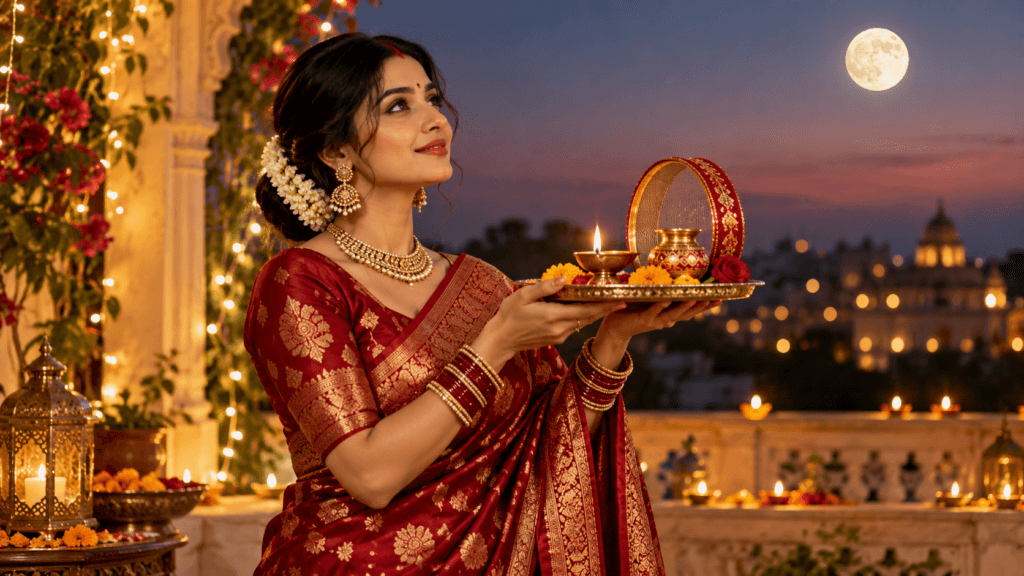
Karwa Chauth is one of those occasions when traditional Indian clothing carries more meaning than simply looking festive. For many married women, dressing for the evening puja is part of the celebration itself, and sarees in red, maroon, rani pink and other rich colours are often preferred for their association with bridal and festive dressing.
A Banarasi saree fits naturally into this setting because it brings together silk, zari, traditional motifs and the grandeur expected from an important occasion.
In 2026, Karwa Chauth will be observed on 29 October, although puja and moonrise timings vary by location. Drik Panchang
But choosing a Karwa Chauth saree is not simply about buying the heaviest red saree you can find. The right Banarasi saree should suit your personal style, how formal your celebration is, and whether you want a classic bridal-inspired look or something lighter and more contemporary.
Why Banarasi Sarees Work So Well for Karwa Chauth
Banarasi sarees are known for finely woven silk, intricate zari work and decorative motifs such as floral vines, kalga, bel, jaal and meena work. These characteristics are also documented among the distinguishing features of Banaras Brocades and Sarees, which received GI registration in 2009. Varanasi District
That combination makes Banarasi sarees particularly suitable for occasions such as Karwa Chauth.
Unlike everyday festive wear, Karwa Chauth dressing often leans toward a more ceremonial look. Silk provides richness, while zari adds the gold or silver detailing traditionally associated with Indian celebration wear.
A well-chosen Banarasi saree can therefore look festive without requiring excessive embroidery, sequins or surface embellishment.
For women who already own a wedding Banarasi saree, Karwa Chauth can also be an opportunity to wear that saree again rather than keeping it packed away as an heirloom.
Why Red Is So Popular for Karwa Chauth
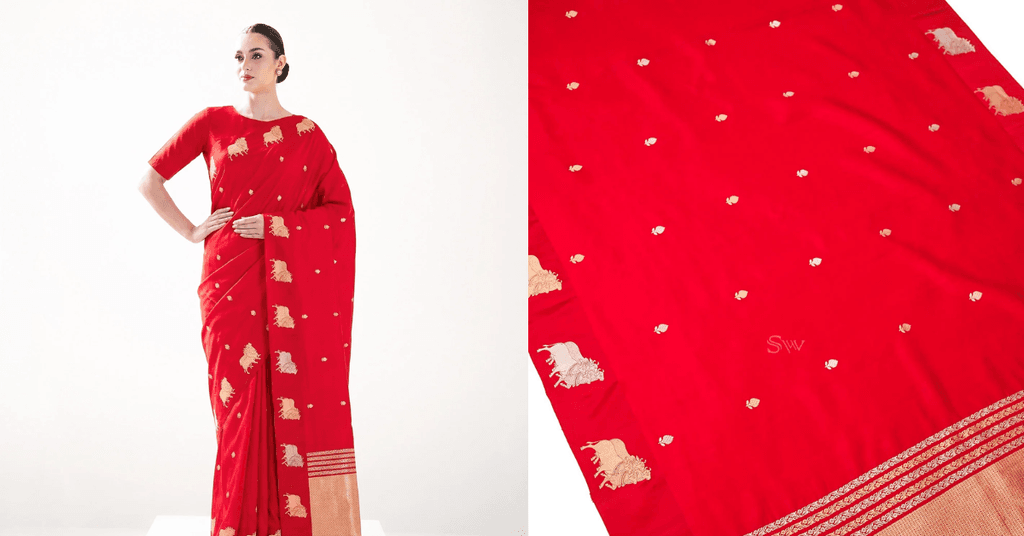
Red remains one of the most commonly chosen colours for Karwa Chauth because it has long been associated with bridal and married-woman dressing in many North Indian traditions.
However, it is better not to describe one colour as universally mandatory or auspicious across all Indian communities. Customs differ by family, region and personal preference.
For Karwa Chauth, women commonly choose shades such as:
- classic bridal red
- deep maroon
- sindoor red
- rani pink
- magenta
- wine
- rust
- vermilion-toned red
A red Banarasi saree with gold zari creates the most traditional visual effect, especially when paired with classic jewellery, bangles and a contrasting or matching blouse.
If you want something more understated, maroon or wine often gives the same festive richness with a softer overall appearance.
Red, Maroon or Rani Pink: Which One Should You Choose?
There is no single correct Karwa Chauth colour.
Red Banarasi Saree
Choose red if you want a strongly traditional or bridal-inspired look.
Red works especially well in Katan silk sarees with rich borders, zari butis or a woven pallu.
It is also a natural choice for newly married women who want to recreate some of the visual richness of their wedding wardrobe.
Maroon Banarasi Saree
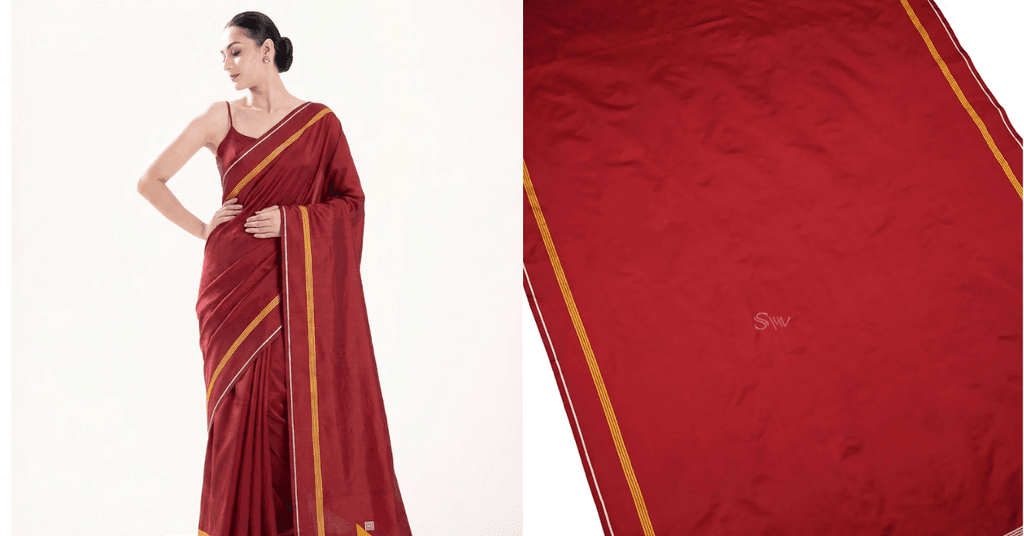
Maroon gives a slightly deeper and more mature look.
It pairs beautifully with antique gold jewellery, temple jewellery and traditional kundan or polki pieces.
A maroon Banarasi saree with restrained zari can also be easier to wear again at weddings, family functions and festive occasions.
Rani Pink or Magenta Banarasi Saree
Rani pink and magenta are excellent options if you want traditional festive dressing without wearing red.
These colours work especially well with gold zari and meenakari details and can photograph beautifully in evening light.
Which Banarasi Saree Fabric Is Best for Karwa Chauth?
Your choice of fabric should depend on how elaborate you want the look to be.
Pure Katan Silk
For a classic and luxurious Karwa Chauth look, pure Katan silk is difficult to beat.
Its smooth silk structure supports intricate brocade and zari work beautifully, making it particularly suitable for women who want a more traditional appearance.
If the celebration includes a family gathering, puja and photographs, a Katan silk saree offers enough visual richness without needing heavy accessories.
You can also read JDS Banaras’ guide on which Banarasi saree fabric is best for weddings for a deeper comparison of fabrics suitable for ceremonial dressing. Jagdish Das and Company – JDS Varanasi
Banarasi Georgette
For women who prefer something lighter and easier to carry for several hours, Banarasi georgette can be a practical choice.
It gives a softer, more fluid drape while still allowing woven motifs and zari to create a festive appearance.
This works particularly well for younger women or anyone who prefers lighter occasion wear.
Organza or Tissue
Organza and tissue Banarasi sarees are good options for a more contemporary Karwa Chauth look.
They can offer beautiful sheen and structure without recreating the full weight of a traditional bridal saree.
These fabrics also work especially well with minimalist jewellery and modern blouse designs.
How Much Zari Is Right for Karwa Chauth?
Karwa Chauth does not necessarily require a heavily woven bridal saree.
The amount of zari should depend on the look you want.
A saree with small zari butis and a traditional border can feel elegant and refined, while a dense jaal or richly woven pallu gives a much grander effect.
At JDS Banaras, we generally recommend thinking about three things:
occasion, comfort and reusability.
If you want to wear the saree regularly for future festivals and weddings, a balanced zari design may be more versatile than an extremely heavy bridal weave.
For an heirloom-style piece, however, traditional Katan silk with elaborate zari can be worth considering.
Traditional Banarasi Motifs That Suit Karwa Chauth
The beauty of Banarasi weaving lies not only in its silk and zari but also in its design vocabulary.
Traditional Banarasi textiles commonly feature intricate floral and foliate patterns, including kalga and bel, along with jaal and meena work. Varanasi District
For Karwa Chauth, you might consider:
Butidar designs for a graceful and balanced look.
Floral jaal if you want something richer and more decorative.
Kalga and bel motifs for a more classical Banarasi character.
Meenakari work when you want additional colour within the weave.
The right motif is ultimately an aesthetic choice rather than a religious requirement.
Can You Wear Your Wedding Banarasi Saree Again for Karwa Chauth?
Absolutely.
In fact, this can be one of the most meaningful ways to dress for Karwa Chauth.
Wedding sarees are often purchased with significant thought and craftsmanship, yet many are worn only once because they are assumed to be too elaborate for other occasions.
Karwa Chauth gives you a natural opportunity to bring that saree back into your wardrobe.
Instead of reproducing the entire bridal styling, change the way you wear it.
You can pair the saree with:
- a simpler blouse
- lighter jewellery
- fewer bangles
- a different hairstyle
- a contrasting blouse
- a more restrained makeup look
This allows the saree to retain its emotional connection to your wedding while creating a completely different appearance.
If you are still building your ceremonial saree wardrobe, our earlier guide on Banarasi sarees considered traditional for Indian wedding ceremonies explains the broader role of Banarasi sarees in wedding dressing. Jagdish Das and Company – JDS Varanasi
What Should a Newly Married Woman Wear for Her First Karwa Chauth?
A first Karwa Chauth often carries additional emotional significance, so many newly married women prefer a richer and more traditionally styled outfit.
A red or maroon Banarasi Katan silk saree with gold zari is one classic option.
But it does not have to look exactly like your wedding-day saree.
You can choose:
Red Katan with butis for a classic look.
Rani pink with meenakari for something brighter.
Maroon with antique zari for understated richness.
Banarasi tissue or organza for a lighter modern interpretation.
The best choice is the one you will feel comfortable wearing through the evening puja and celebrations.
How to Style a Banarasi Saree for Karwa Chauth
Because Banarasi sarees already contain significant visual detail, styling does not need to compete with the weave.
For a traditional look, you can pair a red or maroon saree with a matching blouse, gold jewellery, glass bangles and a small bindi.
For something slightly more contemporary, try a contrasting blouse in emerald green, deep pink, gold or wine.
A statement necklace can work beautifully with a simpler Banarasi saree, while richly woven sarees often look better with more restrained jewellery.
The key is balance.
If the saree has heavy zari, allow the weave to remain the centre of attention.
Should You Choose Real Zari for Karwa Chauth?
Real zari can make a Banarasi saree more valuable, luxurious and heirloom-worthy, but it is not necessary for every Karwa Chauth saree.
The decision should depend on your budget and how you intend to use the saree.
If you are purchasing a special saree that you hope to preserve for years or eventually pass down within the family, a high-quality silk saree with genuine zari can make sense.
If your priority is occasional festive wear, there are also beautifully woven alternatives that provide the traditional Banarasi look at a more accessible price point.
What matters most is knowing what you are actually buying.
Choose the Saree for the Occasion, Not Just the Photograph
Festive fashion today is often influenced by social media, celebrity looks and seasonal trends.
But a good Karwa Chauth saree should still work beyond one photograph.
Think about whether you could wear the saree again for:
- a wedding
- Diwali
- an anniversary
- a family puja
- a reception
- an engagement
- another festive gathering
A versatile Banarasi saree becomes part of your wardrobe rather than a one-day purchase.
A Banarasi Saree Is More Than Festive Dressing
Karwa Chauth may be the occasion, but the value of a good Banarasi saree goes far beyond a single festival.
The weaving tradition of Banaras is recognised for its silk, brocade, zari and intricate decorative vocabulary, and these are the qualities that give the saree its distinctive character. Varanasi District
At JDS Banaras, our connection with Banarasi textiles has been carried across generations. Established in 1913, the family business continues to work with Banarasi textiles through manufacturing, retail and close engagement with the weaving tradition. You can read more about the heritage of JDS Banaras.
Whether you choose traditional red Katan silk, rich maroon zari or a lighter contemporary Banarasi weave, the most meaningful Karwa Chauth saree is one that reflects both the occasion and your own style.
Frequently Asked Questions
Red, maroon, rani pink and magenta are among the most popular traditional-looking choices. However, there is no universal rule requiring one particular colour.
Yes. Banarasi sarees are particularly well suited to festive and ceremonial dressing because of their silk, zari and elaborate woven motifs.
Yes. Karwa Chauth is a good occasion to rewear a wedding saree. Changing the blouse, jewellery and styling can give it a completely different look.
Pure Katan silk with traditional zari is a classic option. Women who prefer something lighter can also consider Banarasi georgette, organza or tissue.
No. Red is widely associated with festive and bridal dressing, but colour preferences and customs vary among families and regions.
Karwa Chauth will be observed on Thursday, 29 October 2026. Moonrise and puja timings vary by city.