
Indian weddings are deeply connected with tradition, family customs and regional culture, and the saree has always held a special place in these celebrations. For many women, choosing a wedding banrasi saree is not simply about finding a beautiful colour or an attractive design. The fabric, weave, zari, motifs and even the colour can carry cultural meaning and become part of an important family memory.
Across India, different communities have their own traditional wedding sarees. A Banarasi silk saree is closely associated with bridal elegance in North India, while a Kanjivaram silk saree has an important place in South Indian weddings. Paithani is treasured by Maharashtrian families, Patola and Bandhani have strong Gujarati and Rajasthani associations, and temple-border silk sarees are deeply connected with traditional South Indian ceremonies.
There is no single saree that is considered auspicious for every Indian wedding because customs differ from one region and family to another. However, some traditional weaves are repeatedly chosen for wedding ceremonies because they represent prosperity, heritage, blessings, craftsmanship and the beginning of a new chapter.
If you are selecting a banrasi saree for your own wedding or for an important family ceremony, understanding these traditional options can help you make a choice that feels both beautiful and meaningful.
Which Banarasi Sarees Are Considered Most Auspicious for Indian Weddings?
The most traditional wedding banrasi sarees generally include Banarasi silk, Kanjivaram silk, Paithani, Patola, Bandhani and regional silk sarees with traditional motifs and zari work. The choice often depends on where the wedding family comes from and the role of the saree in the ceremony.
For example, a North Indian bride may traditionally prefer a rich Banarasi saree for the main wedding, while a South Indian bride may choose a Kanjivaram silk saree with a contrasting border and temple-inspired motifs. In Gujarat, Panetar and Gharchola have specific ceremonial importance, while Maharashtra has a strong tradition of Paithani sarees.
The following sarees are among the most traditional choices for Indian wedding ceremonies.
Banarasi Silk Saree – A Traditional Choice for Brides Across India
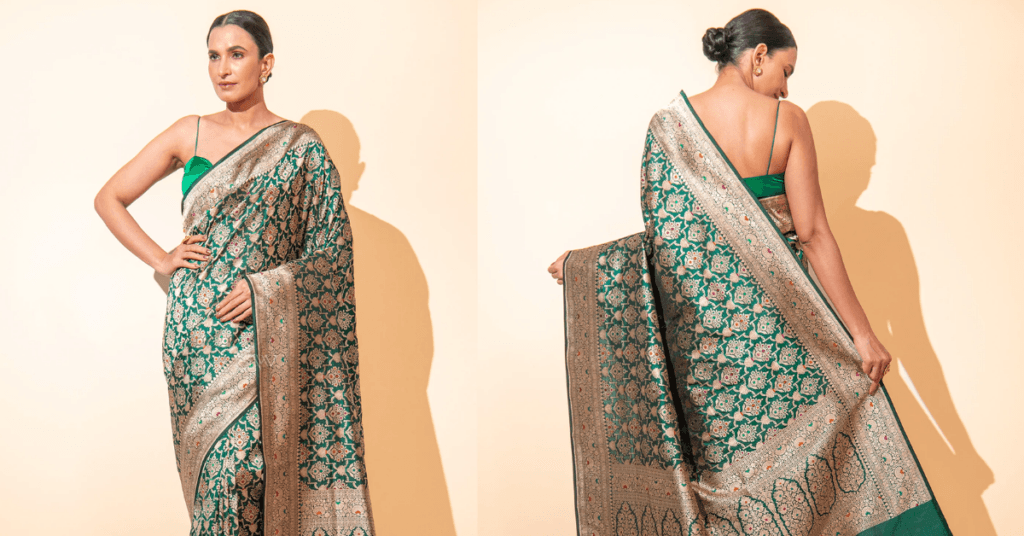
Banarasi silk sarees are among the most recognised traditional bridal sarees in India. Woven in and around Varanasi, these sarees are known for their luxurious silk, detailed brocade weaving and rich zari work. They have a strong place in Indian bridal wardrobes and are often chosen for the main wedding ceremony, reception or other important family occasions.
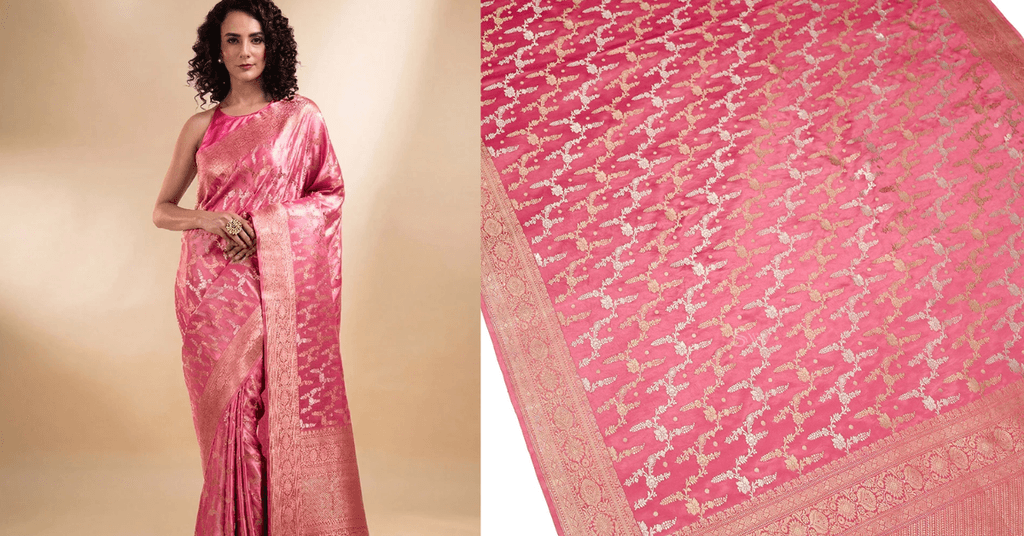
A traditional Banarasi saree can feature intricate floral vines, paisley patterns, jaal designs and Mughal-inspired motifs. Kalga and Bel patterns are also associated with classic Banarasi design. The pallu and border can be richly woven with zari, giving the saree the grand appearance expected from a traditional wedding outfit.
For brides who want a regal appearance, deep red, maroon, rani pink, magenta, emerald green and royal blue can work beautifully. Gold zari with a rich silk base creates a particularly traditional bridal appearance, while silver zari can offer a cooler and more contemporary effect.
One important point when buying a Banarasi saree is that the word “Banarasi” alone does not guarantee a particular level of quality. The material, silk quality, weaving technique, zari quality, workmanship and finishing all influence the saree. If you are specifically looking for a genuine handwoven Banarasi for your wedding, it is worth asking the seller about the fabric, weaving process and zari used rather than choosing only on appearance.
For women shopping in Varanasi, visiting an established and knowledgeable saree retailer can make the selection process easier. A reputed best banarasi saree showroom for wedding in Varanasi should be able to explain the weave, silk, zari and design instead of simply showing you different colours.
Why Banarasi saree is widely considered traditional for weddings
Banarasi silk combines the richness expected from a bridal saree with the heritage of Varanasi’s weaving tradition. A well-made Banarasi is also more than a one-day garment. Many families preserve their special Banarasi sarees and wear them again for festivals, anniversaries and important family celebrations.
Related guide – How Can I Check the Quality of Zari Work to Verify If a Banarasi Saree Is Authentic?
Other Popular Choices by Indian Regional Weddings
1. Banarasi Paithani Saree – A Cherished Maharashtrian Wedding Tradition
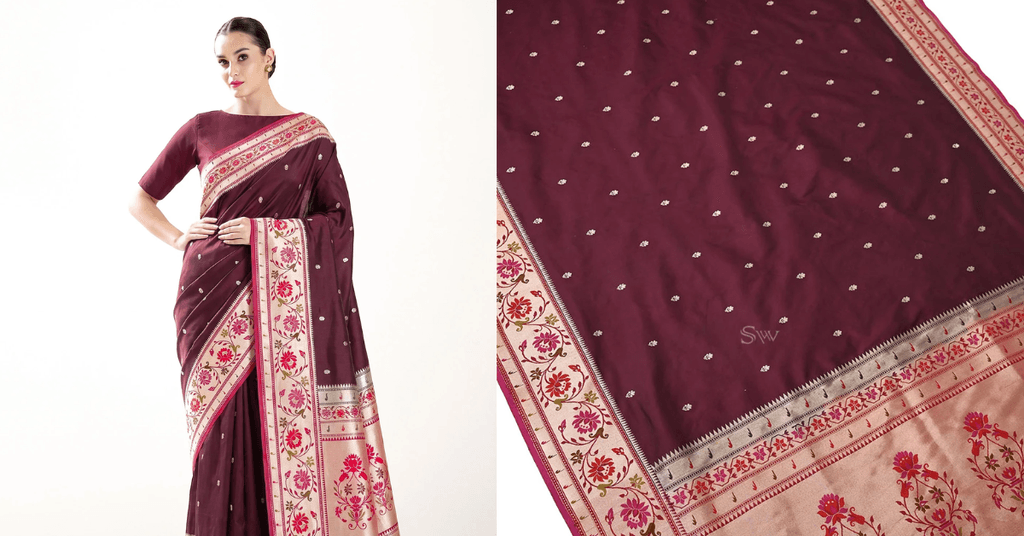
Banarasi Paithani sarees represent one of Maharashtra’s most treasured handloom traditions. They are especially recognised for their beautiful pallu designs, vibrant colours and distinctive motifs.
The peacock is one of the most recognisable Paithani motifs, although parrots, flowers and other traditional designs are also found. Classic colours include peacock blue, parrot green, purple and pink, creating a striking appearance without relying on heavy embroidery.
For Maharashtrian brides and families, a Paithani can carry significance beyond its appearance. It may become part of the bridal trousseau or be preserved as an heirloom for future generations.
The saree is therefore a wonderful option for women who want a wedding garment that reflects regional identity and traditional craftsmanship. A Paithani can be especially meaningful when the bride wants to stay connected with her family’s Maharashtrian heritage.
2. Banarasi Patola Saree – A Heritage Weave with Strong Cultural Value
Banarasi Patola sarees from Gujarat are famous for their double ikat weaving technique. In this technique, both the warp and weft threads are dyed before weaving, requiring careful planning and precise alignment.
The result is a saree with highly detailed geometric and traditional motifs. Elephants, parrots, flowers and other symbolic designs are commonly associated with Patola.
Because of the time and skill involved in producing a traditional Patola, these sarees have long been valued as special possessions and heirloom textiles. Their strong colours and detailed patterns also make them suitable for brides who want a distinctive traditional look.
A Patola can be a particularly meaningful choice for a Gujarati bride or for a woman who appreciates the craftsmanship of traditional Indian textiles. It can also become an important part of a bridal trousseau rather than being treated as a saree meant only for one ceremony.
3. Banarasi Bandhani Saree – An Auspicious Choice for Festive and Post-Wedding Rituals
Banarasi Bandhani or Bhandej is another traditional textile associated particularly with Gujarat and Rajasthan. Unlike woven designs such as Banarasi or Kanjivaram, Bandhani is created using a traditional tie-dye process in which small sections of the fabric are tied before dyeing.
This creates the characteristic dotted patterns associated with Bandhani.
Red Bandhani sarees are traditionally considered especially auspicious for newly married women in many communities. They can be worn during pre-wedding celebrations, festive rituals, temple visits and post-wedding ceremonies.
The bright colours and lively patterns make Bandhani a beautiful choice when a woman wants something traditional but lighter and more playful than a heavily woven silk saree.
For a wedding wardrobe, Bandhani can therefore complement a heavier bridal Banarasi, Kanjivaram or Paithani rather than replacing it for every ceremony.
Related guide – Bandhani (Bandhej) Banarasi Saree: A Simple Complete Guide
7. Temple Border Silk Sarees – A Traditional Choice for Religious Ceremonies
It is a part of Banarasi tradition and heritage. Banarasi Silk sarees with traditional temple borders are another important choice for South Indian weddings and religious ceremonies. These sarees often feature motifs inspired by temple architecture, peacocks, mangoes and other traditional symbols.
The contrast between the saree body and the rich border gives the garment a distinctive traditional appearance. Combinations such as red and gold, green and maroon, or cream with contrasting zari are commonly associated with ceremonial dressing.
For women attending a temple wedding or a ceremony where traditional South Indian styling is important, a temple-border silk saree can create an elegant and culturally appropriate look.
Are Red Banarasi Sarees More Auspicious for Indian Weddings?
Red has a strong association with Indian bridal dressing, particularly in North and several other parts of India. It is commonly connected with celebration, prosperity, love and the beginning of a new phase of life.
However, it is important not to assume that red is compulsory for every Indian bride. Wedding colours vary significantly according to regional traditions, family customs and personal preference.
A North Indian bride may choose a deep red Banarasi, while a South Indian bride may select a bright Kanjivaram in red, pink, green or another vibrant colour. Maharashtrian, Gujarati, Bengali and other regional traditions may have their own preferred colour combinations.
The most appropriate colour is therefore the one that respects the family’s customs while making the bride feel confident and comfortable.
What Makes a Banarasi Saree Auspicious for a Wedding?
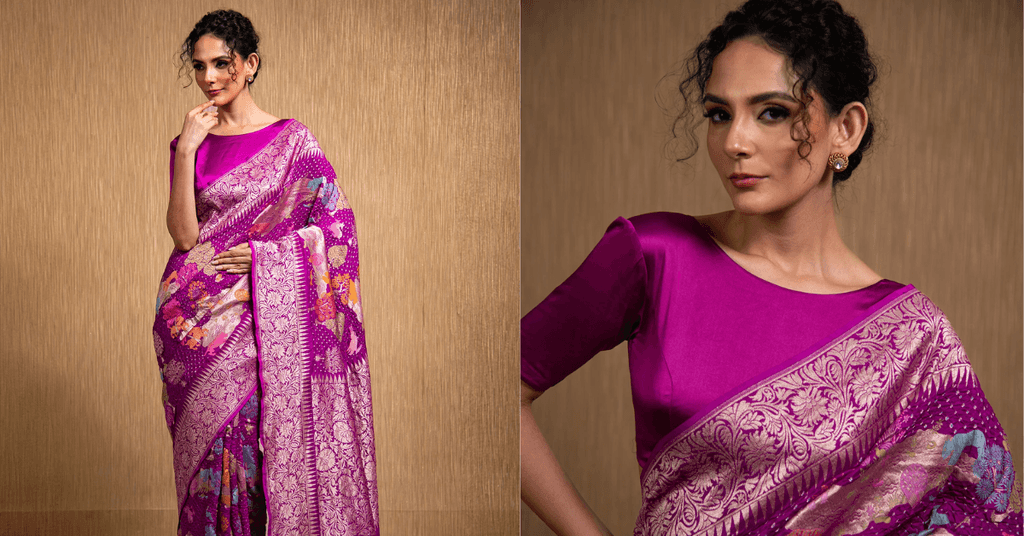
A Banarasi saree is not considered auspicious only because it is expensive, heavily embroidered or made from silk. Its cultural connection, colour, motifs, craftsmanship and role in family traditions can all contribute to its significance.
Traditional wedding sarees often have several qualities in common:
- Rich silk or another heritage textile associated with ceremonial dressing
- Traditional zari or woven decorative work
- Motifs connected with regional art and culture
- Colours traditionally associated with weddings and celebrations
- A connection with the bride’s regional or family customs
- Craftsmanship that allows the saree to become an heirloom
- A ceremonial purpose, such as being gifted by a family member or worn during an important ritual
This is why a simple traditional saree with genuine craftsmanship can sometimes hold more emotional value than a highly embellished designer garment.
How to Choose the Right Traditional Banarasi Saree for Different Wedding Functions
An Indian wedding usually involves several functions, so you do not necessarily need to wear the same type of saree for every event.
Main Wedding Ceremony
For the main wedding ceremony, traditional silk sarees such as Banarasi sarees are excellent choices. Heavy zari, rich colours and traditional motifs create the formal appearance associated with important wedding rituals.
Reception
The reception gives you more flexibility. You can choose a rich Banarasi, Patola, Paithani or a contemporary silk saree depending on the venue and styling. Jewel tones work particularly well for evening celebrations.
Mehendi and Sangeet
These functions allow more freedom with colour and design. Bandhani, Patola, Ikat and lighter silk sarees can create a lively appearance without the weight of a heavily woven bridal saree.
Engagement and Daytime Functions
For daytime events, Chanderi, Tussar, soft silk and lighter traditional sarees can provide a graceful appearance while remaining comfortable. Delicate zari borders and small motifs can make these sarees look festive without appearing too heavy.
Temple or Religious Ceremony
A traditional Banarasi saree, temple-border silk or Banarasi with appropriate motifs can work beautifully for religious ceremonies. In these settings, the cultural character of the saree can be more important than following current fashion trends.
Related guide – What Type of Silk Is Used in Banarasi Sarees? A Weaver Explains
How to Choose a Traditional Wedding Banarasi Saree That You Can Wear Comfortably
A wedding Banarasi saree may need to be worn for several hours, sometimes while sitting, standing and moving through multiple rituals. Beauty should therefore not be the only consideration.
Start by considering the weight of the saree. Heavy silk and zari can create a magnificent bridal look, but if you are uncomfortable carrying substantial weight for many hours, a lighter silk or moderately woven saree may be more practical.
The wedding season also matters. A heavy silk saree can be wonderful for a winter wedding, while a lighter weave may feel more comfortable during a summer or outdoor ceremony.
The drape should also be considered. A classic Nivi drape works beautifully with many traditional sarees, while regional draping styles can strengthen the cultural character of the outfit.
Finally, think about the blouse and jewellery before buying the saree. A heavily patterned saree may need a relatively balanced blouse, while a simpler saree can allow more attention to statement jewellery.
Why Authenticity Matters When Buying a Traditional Wedding Banarasi Saree
A wedding Banarasi saree is often a significant purchase, so understanding what you are buying is important. Terms such as silk, zari, handloom and Banarasi can refer to different qualities and constructions, and appearance alone may not tell you everything about the saree.
When buying a premium saree, ask the seller about:
- The actual fabric used
- Whether the saree is handwoven or powerloom
- The type and quality of zari
- The weaving technique
- The origin of the saree
- The motifs and traditional design
- Care and storage requirements
- Any authenticity or handloom documentation available
This is particularly important for Banarasi sarees because the material and zari quality can differ considerably between sarees that may look similar in photographs.
For a wedding purchase, choosing a trusted seller who can clearly explain the saree’s construction is often more useful than simply choosing the saree with the heaviest zari.
Can Traditional Banarasi Sarees Be Styled in a Modern Way?
Absolutely. Traditional does not mean old-fashioned.
A Banarasi saree can be styled with a contemporary blouse, statement earrings and a clean hairstyle. A Kanjivaram can be paired with traditional temple jewellery for a classic appearance or styled more simply for a modern ceremony.
Similarly, a Paithani or Patola can be worn with a minimalist blouse and fewer accessories when the saree itself has enough visual detail.
The key is balance. If the saree has heavy zari and elaborate motifs, you do not necessarily need equally heavy jewellery, embroidery and accessories.
What Jewellery Looks Best with Traditional Banarasi Wedding Sarees?
Gold jewellery remains one of the most natural choices for rich silk sarees. Kundan, temple jewellery, pearls and antique-finish gold jewellery can also complement traditional wedding weaves.
For a heavily woven Banarasi, traditional gold or antique jewellery can strengthen its royal appearance. With a Kanjivaram, temple jewellery is an especially natural pairing. Paithani and Patola can also be styled beautifully with traditional gold jewellery.
If the saree itself is detailed, consider keeping at least one element of the jewellery look relatively simple. This allows the weave and motifs of the saree to remain visible.
Which Banarasi Saree Should You Choose for Your Wedding?
The answer depends primarily on your region, family traditions, wedding ceremony and personal style.
If you want a classic North Indian bridal look, a rich Banarasi silk saree is one of the strongest traditional choices. If you are having a South Indian wedding, Kanjivaram silk has deep cultural importance. A Maharashtrian bride may find a Paithani especially meaningful, while Patola, Bandhani, Panetar and Gharchola hold special importance in Gujarati and western Indian traditions.
For women who want something traditional but lighter, Chanderi, Tussar or soft silk can be excellent alternatives for daytime and pre-wedding events.
Ultimately, the most auspicious saree is not necessarily the one with the highest price or heaviest zari. It is the saree that connects with your ceremony, family traditions and personal story while giving you the confidence to enjoy your wedding day.
Final Thoughts
Indian wedding sarees are beautiful because they bring together fashion, family traditions and textile craftsmanship. A Banarasi silk saree can represent the heritage of Varanasi, a Kanjivaram can reflect South Indian wedding traditions, a Paithani can celebrate Maharashtrian culture, while Patola, Bandhani, Panetar and Gharchola carry their own regional stories.
When choosing your wedding saree, look beyond what is currently trending. Consider the ceremony, your family’s traditions, the fabric, the weave, the colour, the comfort and the craftsmanship. Most importantly, choose a saree that you will be happy to see in your wedding photographs years from now.
A beautifully made traditional saree does more than complete a bridal outfit. It can become a piece of family history—something that reminds you of your wedding day and can eventually be treasured by another generation.
Frequently Asked Questions About Auspicious Wedding Sarees
There is no single saree that is universally considered the most auspicious across India. Wedding customs vary by region, community and family. Banarasi silk is a traditional bridal favourite in North India, Kanjivaram is deeply associated with South Indian weddings, Paithani has strong importance in Maharashtra, and Panetar and Gharchola have specific ceremonial roles in Gujarati weddings. The most auspicious choice is usually the one that fits the bride’s family and regional traditions.
Yes, a Banarasi silk saree is an excellent choice for the main wedding ceremony, especially for brides who want a traditional North Indian bridal appearance. Rich silk, zari work, brocade patterns and elaborate pallus give the saree the grandeur expected from an important wedding outfit. A traditional Banarasi can also become an heirloom that is preserved and worn again for important family occasions.
The best Banarasi saree depends on the bride’s preference, ceremony, season and desired level of richness. For a traditional bridal look, a silk Banarasi with detailed zari, a rich pallu and classic motifs can be an excellent option. Before buying, pay attention to the silk quality, weaving technique, zari and finishing rather than selecting a saree only because it appears heavy or shiny.
No. Red is a traditional and widely preferred bridal colour, but it is not compulsory for every Indian bride. Different regions and communities have their own colour traditions, and modern brides also choose shades such as green, pink, magenta, purple, maroon, blue and other rich colours. The important consideration is whether the colour works with the bride’s personal style and family customs.
Gujarati wedding traditions include sarees such as Panetar and Gharchola, both of which have specific ceremonial associations. Panetar is traditionally connected with gifting from the bride’s maternal uncle, while Gharchola is traditionally associated with the bride’s in-laws. Bandhani and Patola can also be meaningful choices for Gujarati wedding celebrations and the bridal trousseau.
Yes. Paithani is a beautiful choice for a bride who wants to celebrate Maharashtrian heritage or simply appreciates traditional Indian handloom craftsmanship. Its peacock and other traditional motifs, vibrant colours and distinctive pallu can create a striking bridal appearance. A good Paithani can also become a valuable family heirloom rather than a saree used only for the wedding day.
For a grand traditional daytime wedding, Banarasi or Kanjivaram silk can create a beautiful ceremonial look. If comfort and lighter weight are priorities, Chanderi, Tussar or soft silk can be better suited to long daytime functions. The climate should also influence the choice, particularly for outdoor weddings or ceremonies held during warmer months.
Mehendi and sangeet functions usually allow more freedom in colour, pattern and fabric. Bandhani, Patola, Ikat and lighter silk sarees can work particularly well because they bring colour and traditional character without the formality of a heavily woven bridal saree. You can also choose brighter shades and contemporary blouse designs for a more youthful appearance.
Start by purchasing from a seller with knowledge of the specific weave and ask clear questions about the fabric, weaving method, zari and place of production. For a Banarasi saree, ask whether it is handwoven, what silk has been used and what type of zari is present. Do not judge authenticity only by weight, shine or price. A trustworthy seller should be comfortable explaining the construction and characteristics of the saree and should provide relevant documentation or information when applicable.