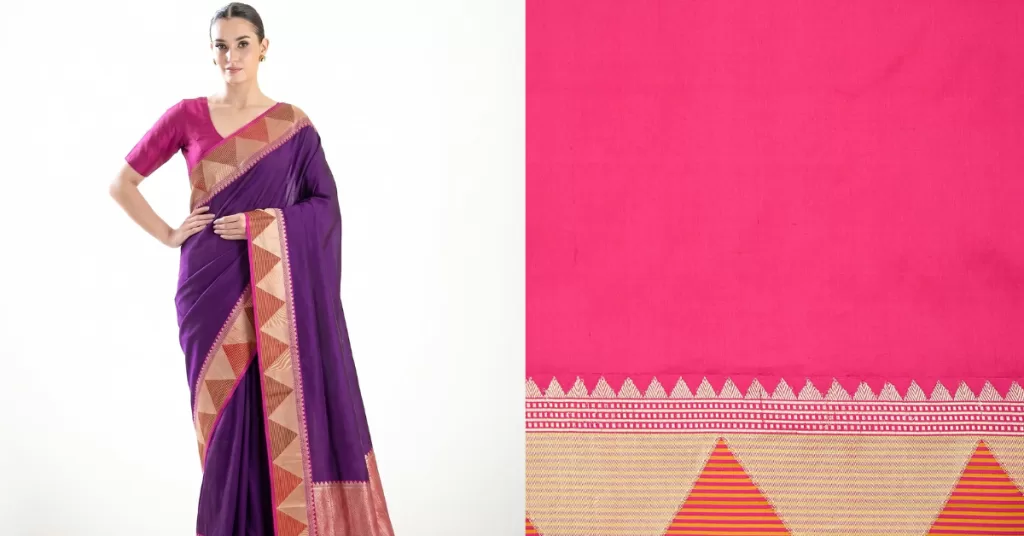
Here’s the honest answer, straight from a weaver’s family: there is no separate silk called “Banarasi silk.” Banarasi is not a type of silk at all — it’s a place, a tradition, a style of weaving that belongs to Varanasi (once called Banaras). The actual silk used in Banarasi sarees is almost always pure Mulberry silk, sometimes Tussar silk for certain pieces. What we call Katan, Georgette, Tissue, and Organza aren’t different silks either — they’re different ways of preparing and twisting that same Mulberry silk thread before it’s woven. “Banarasi” simply tells you where and how the saree was made, the way “Paithani” tells you a saree comes from Paithan in Maharashtra. Once you understand this one idea, shopping for a Banarasi saree becomes much easier.
Let Me Clear Up the Biggest Confusion First
I’ve been selling and weaving Banarasi sarees my whole life, and this is the question I get asked more than almost anything else: “What exactly is Banarasi silk made of?”
People assume there must be a special silkworm somewhere near Varanasi, or a special plant, that gives “Banarasi silk” its name. There isn’t. I want to say this clearly and simply, because I think a lot of shopping guides make this more confusing than it needs to be.
Banarasi is not a silk. It’s a heritage. It refers to sarees woven in and around Varanasi, using weaving skills and design traditions that have been passed down in this city for hundreds of years. The silk thread itself — the actual raw material — is the same pure Mulberry silk used in many parts of India. What makes a saree “Banarasi” is not the silk. It’s the place, the weaver’s hands, and the specific techniques used here.
Think of it like this: a Paithani saree comes from the town of Paithan in Maharashtra. It also uses fine silk with real zari, worked by skilled hands into gorgeous motifs. Nobody thinks Paithani is a special type of silk plant — everybody understands it’s a place and a tradition. Banarasi works exactly the same way. It’s Varanasi’s name for its own silk-weaving heritage, not the name of a fabric ingredient.
So What Silk Is Actually Used in Banarasi Sarees?
Now that we’ve cleared that up, let’s talk about the real answer — the actual silk fibre itself.
Mulberry Silk — The Main Silk Used
The vast majority of Banarasi sarees are woven from pure Mulberry silk. This is the finest, smoothest, most lustrous silk available, produced by silkworms that feed only on mulberry leaves. It’s the same base silk used in most of India’s premium handloom sarees, not something unique to Varanasi. What Varanasi’s weavers do differently is what happens after the silk is spun — how tightly it’s twisted, and what design is woven into it.
Tussar Silk — Used for Certain Pieces
Some Banarasi-style sarees are also made using Tussar silk, sometimes called wild silk. Tussar comes from silkworms that feed on forest trees rather than cultivated mulberry leaves, which gives it a more natural, slightly textured, golden appearance compared to the smoother finish of Mulberry silk. It’s less common in traditional Banarasi weaving than Mulberry, but you’ll still find genuine Tussar Banarasi pieces in the market.
Expert Insight
When a customer asks me “what silk is this saree made of,” I always answer in two parts, because one word isn’t enough. First, I tell them the fibre — usually Mulberry silk. Then I tell them the weave — Katan, or Georgette, or whichever one it is. Both pieces of information matter. The fibre tells you what the thread is made from. The weave tells you how that thread was prepared and turned into fabric.
If It’s All the Same Silk, Why Do Katan, Georgette, and Tissue Feel So Different?
This is the part that trips up most first-time buyers, so let me walk you through it slowly.
Katan, Georgette, Tissue, and Organza are not different silks. They are different weave forms — different ways of twisting and preparing the same Mulberry silk thread before it goes onto the loom. The twist is what changes everything you feel with your hands.
| Fabric Name | Silk Used | What Makes It Different | How It Feels |
| Katan | Mulberry silk | Thread tightly twisted in both directions | Firm, structured, holds pleats well |
| Georgette | Mulberry silk | Thread twisted in alternating directions | Soft, crinkled, very flowy |
| Tissue | Mulberry silk + metallic zari weft | Zari thread forms a large part of the fabric itself | Light, shimmering, glowing finish |
| Organza | Mulberry silk | Thread twisted very tightly for transparency | Crisp, sheer, lightweight |
| Crepe | Mulberry silk | Thread twisted extra tightly in one direction | Soft, pebbly texture, flows close to the body |
Do you see the pattern? The silk column barely changes. It’s almost always Mulberry silk. The real difference sits in the “what makes it different” column — the twist, the preparation, the technique. This is exactly why I tell customers: don’t ask “which silk is this?” — ask “which weave is this, and what silk is it made from?” That’s the question that actually tells you what you’re buying.
To go deeper into any single one of these, I’ve written full guides on each: What Is Katan Silk and Is It Pure?, What Is Tissue Silk Saree?,
Weaving Pattern: How the Loom Turns Silk Thread Into a Banarasi Saree
Now let’s talk about the actual weaving, because this is where the “Banarasi” heritage really comes to life.
Every woven fabric is built from two sets of thread. One set runs the length of the saree and is set onto the loom first — we call this the warp. The other set runs across, thrown by hand through the warp using a small wooden shuttle — this is the weft. Where the warp and weft cross each other, again and again, thousands of times, the fabric is built, thread by thread.
In Varanasi, this weaving still largely happens on a traditional pit loom — a wooden handloom set partly into a small pit in the floor, so the weaver can use foot pedals to control the warp threads while both hands manage the shuttle and the design work. A skilled weaver can sit at this loom for hours, sometimes for months on a single saree, depending on how detailed the design is.
This weaving process — the loom, the hand-thrown shuttle, the specific rhythm passed down through weaver families for generations — is the real heart of what makes a saree “Banarasi.” Not the silk. The weaving.
Designs and Techniques: Where Banarasi’s Real Identity Lives
If the silk fibre is basically the same everywhere, and the weave form (Katan, Georgette, and so on) is about the thread’s twist, then where does Banarasi’s actual artistic identity come from? This is the third and most important layer — the design technique woven on top of the fabric.
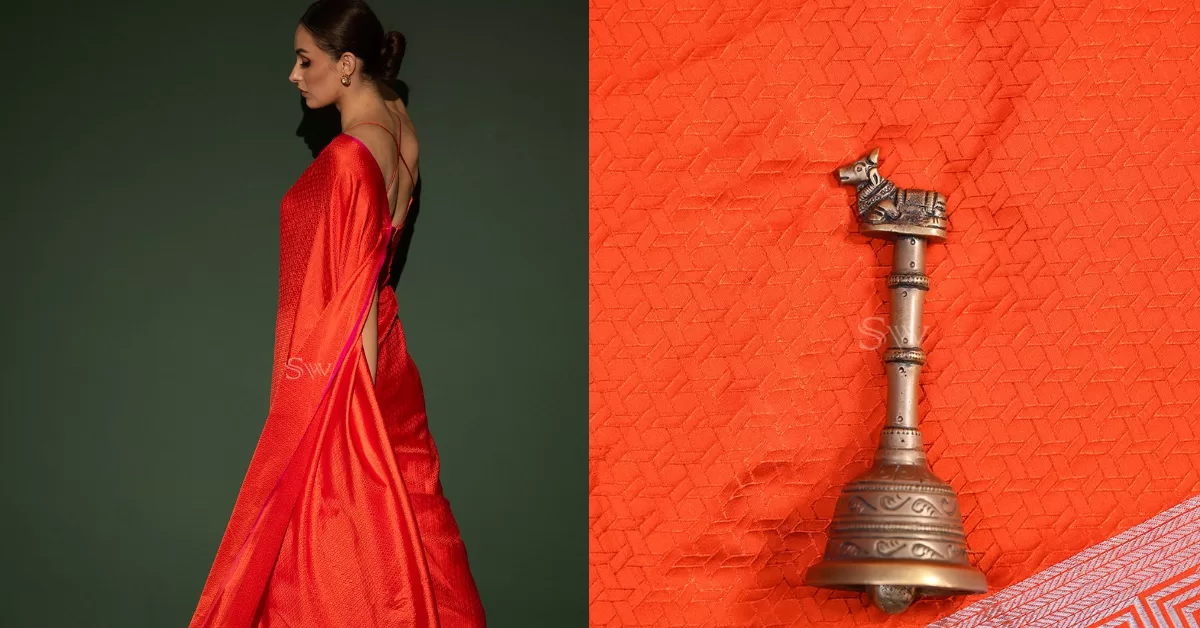
Tanchoi
Tanchoi is a beautiful technique where colourful silk threads — not zari — are used to weave detailed patterns directly into a smooth, satin-like base. Instead of gold and silver doing all the talking, Tanchoi lets colour and fine silk-thread artistry take centre stage. It has a subtle, jewel-toned richness that’s quite different from a heavily zari-worked piece.
Brocade
Brocade is probably the technique most people picture when they hear “Banarasi saree.” Here, an extra thread — usually zari, sometimes coloured silk — is woven directly into the fabric to build a motif, rather than being printed or stitched on afterward. The design becomes part of the cloth itself. I’ve written a full guide to this technique here: Banarasi Brocade Sarees: The Complete Guide.
Jangla
Jangla is a dense, all-over brocade style where floral and vine motifs cover almost the entire body of the saree, leaving very little plain fabric showing. It’s one of the oldest and richest Banarasi design styles.
Kadwa
Kadwa is a slower, more painstaking version of brocade weaving, where each individual motif is woven separately by hand instead of the thread being thrown continuously across the fabric. It takes far longer, but it produces an especially clean, structured finish, with almost no loose thread on the back of the fabric.
Cutwork
Cutwork is a faster cousin of brocade. The extra thread floats behind the fabric between motifs and is trimmed away after weaving, rather than being woven closed at each motif like in Kadwa. It gives a similar look at a more accessible price.
Shikargah
Shikargah means “hunting ground,” and this design style weaves entire storytelling scenes into the fabric — elephants, deer, tigers, and hunters, inspired by royal hunting scenes from centuries ago. It’s one of the most artistic and ambitious Banarasi motifs you’ll come across.
Meenakari
Meenakari banarasi saree adds small touches of coloured silk within the gold or silver zari work, creating tiny jewel-like flashes of colour inside the metallic pattern. It’s a detail that turns a good motif into something truly special.
Rangkat
Among the many weaving traditions that originated in Banaras, few are as visually captivating and technically demanding as the Rangkat Banarasi Saree. Celebrated for its vibrant colour transitions, intricate craftsmanship, and artistic excellence, Rangkat is regarded as one of the finest expressions of Banarasi handloom weaving.
Expert Insight
Here’s how I’d put it simply for anyone shopping: the silk tells you the raw material. The weave form (Katan, Georgette, Tissue) tells you how that thread was twisted. And the design technique (Tanchoi, Brocade, Jangla, Kadwa, Shikargah) tells you the artistic style woven on top. Three separate questions, three separate answers — and once you know to ask them separately, you’ll never feel confused in a saree shop again.
Is Banarasi Just a Place Name, Like Paithani?
Yes, exactly — and I think this comparison is the fastest way to really understand it.
A Paithani saree is named after Paithan, a town in Maharashtra, where a particular weaving tradition — using fine silk and real gold zari in a very specific border-and-pallu style — has been practised for centuries. Nobody buying a Paithani saree thinks they’re buying a unique “Paithani silk species.” They understand they’re buying a saree woven in the Paithani tradition, from that particular town, using that community’s specific skill.
Banarasi works in exactly the same way. It’s named after Banaras (Varanasi), where weaver communities have developed their own specific techniques — the brocade work, the Kadwa weaving, the Mughal-inspired motifs — over hundreds of years. The silk itself is largely the same Mulberry silk used elsewhere in India. What makes it “Banarasi” is the place, the people, and the technique, not the raw thread.
This is also exactly why Banarasi silk carries a Geographical Indication (GI) tag from the Government of India — a legal protection that restricts the name “Banarasi” to sarees genuinely woven within Varanasi’s traditional production zone. The GI tag protects the heritage and the place, because that’s what “Banarasi” actually means — not a specific fibre that could theoretically be grown anywhere.
A Few Honest Myths we Hear All the Time
Myth 1: “Banarasi Silk” Is a Special Type of Silk Fibre
Truth: It isn’t. Banarasi refers to the place and weaving tradition. The fibre is almost always Mulberry silk, sometimes Tussar.
Myth 2: Katan and Banarasi Silk Are Two Different Things
Truth: Katan is simply one form of the Banarasi silk — the classic, tightly twisted version. It’s not a separate category from Banarasi; it’s one type of Banarasi silk.
Myth 3: If It’s Not Made From “Banarasi Silk,” It’s Not Genuine
Truth: Since there’s no separate silk called “Banarasi silk” to begin with, this test doesn’t really apply. What actually matters is whether the saree was genuinely handwoven in Varanasi, using pure silk, by real artisans — not whether some unique thread type was used.
How to Check What You’re Really Buying
Once you understand these three layers — silk fibre, weave form, design technique — shopping becomes much simpler. Here’s what I’d ask any seller:
- “What silk fibre is this made from?” The honest answer should almost always be Mulberry silk, Tussar, Katan, Georgette, Tissue, Organza, or Crepe.
- “What is the weave form?” Rangkat, Tanchoi, Brocade. , kadhua, cutwork.
- “What design technique was used?” Jangla, jaal, Shikargah , meenakari, this tells you the artistic style.
- “Is it Silk Mark certified?” This is the official Government of India confirmation that the silk itself is genuinely pure.
For the complete step-by-step way to verify pure silk yourself — including the simple burn test you can do at home — read our detailed guide: Real Silk Versus the Fake: How to Identify.
Visit JDS Banaras — Ask Us Anything About Our Silk
I know this is a lot of information, and honestly, the easiest way to really understand it is to come and ask us directly. At JDS Banaras, we’ll happily show you the same silk thread in different weave forms, side by side, so you can feel the difference between Katan, Georgette, and Tissue with your own hands.
JDS Banaras — Jagdish Das & Company
D-58/1, Rathyatra Kamachha Road, Rathyatra Crossing, Varanasi 221010
Phone: +91 7269 055 695
Hours: Monday to Saturday, 10:30am to 8:30pm
Reach us through our contact page.
Frequently Asked Questions