
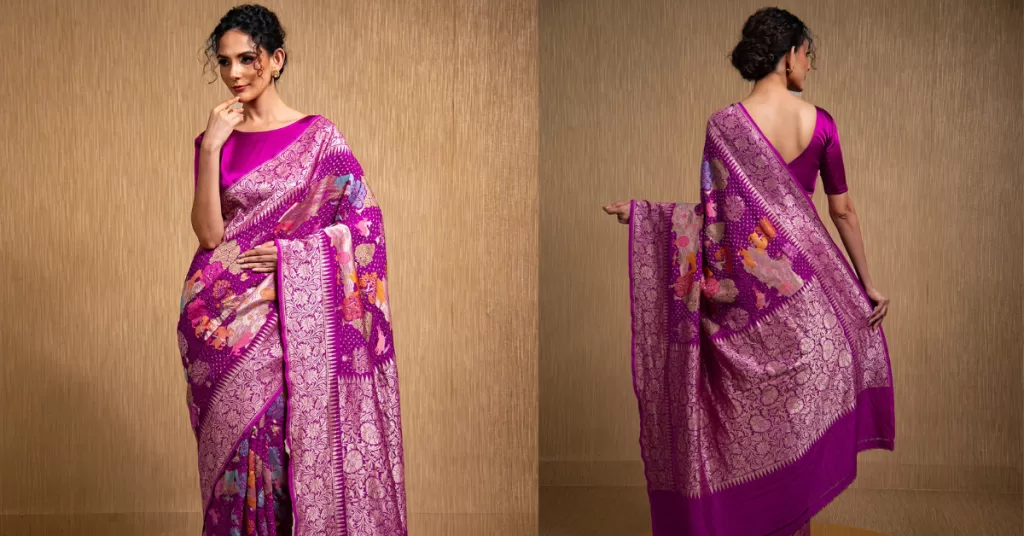
A Bandhani Banarasi saree — also called Bandhej Banarasi saree — is a beautiful fusion of two different Indian heritages in one six-yard drape. The base fabric is almost always Georgette, chosen for its light weight and soft flow. Onto that Georgette, artisans from Rajasthan and Gujarat apply Bandhani — an ancient tie-and-dye art where thousands of tiny knots are tied by hand, the fabric is dyed, and the knots are later opened to reveal small dot and wave patterns. Then, Varanasi’s own weavers add a Banarasi touch — usually a rich brocade border and zari pallu — bringing in the weaving heritage the city is famous for. So really, a Bandhani Banarasi saree isn’t one tradition. It’s two great Indian textile heritages meeting on a single piece of Georgette.
Let’s Start With the Simple Question: What Is Bandhani?
Before we talk about how Bandhani meets Banarasi, let’s talk about Bandhani on its own, because it has a beautiful story of its own.
Bandhani — also called Bandhej, both words mean exactly the same thing — is one of India’s oldest textile arts, going back thousands of years, with its home in Gujarat and Rajasthan. The Khatri community is widely credited as the original masters of this craft. The technique itself is wonderfully simple to describe, even though doing it well takes real skill: an artisan uses their fingernail and a length of thread to tie tiny sections of fabric into thousands of small, tight knots. The tied fabric is then dipped into dye. Wherever a knot was tied, the dye can’t reach the fabric underneath — so once the threads are untied, you’re left with a beautiful pattern of small undyed dots against a rich, coloured background.
Some of the most loved Bandhani patterns include Boond (simple dots), Leheriya (flowing wave-like stripes), Mothra (a crisscross diamond pattern), and Shikari (figures like animals or birds worked into the design). Each pattern has its own character, and skilled Bandhani artisans in towns like Jaipur, Sikar, Bhilwara, Udaipur, Bikaner, and Ajmer have been perfecting these patterns for generations.
Expert Insight
I find it beautiful that Bandhani, just like Banarasi, is named after where it comes from and how it’s made, not after some special material. It’s the same idea I talk about often with customers — a craft’s name usually tells you its heritage, not its ingredients. Bandhani tells you a story about Rajasthan and Gujarat’s tie-dye masters. Banarasi tells you a story about Varanasi’s weavers. When the two come together, you’re really wearing two regions’ worth of skill in one saree.
So What Happens When Bandhani Meets Banarasi?
This is where it gets really special. A Bandhani Banarasi saree brings together artisans from two completely different parts of India, each contributing their own centuries-old skill to the same piece of fabric.
The base fabric — almost always Georgette — starts its journey with the Bandhani tie-and-dye artists, who apply the traditional dot and wave patterns using their tying and dyeing technique. Once that stage is complete, the fabric often travels to Varanasi, where Banarasi weavers add their own signature touch — typically a rich, woven brocade border along the edges and a decorated zari pallu. Sometimes, the entire base itself is Banarasi-woven Georgette before the Bandhani work is applied on top.
The result is a saree that genuinely offers the best of both worlds — the playful, colourful, dot-and-wave beauty of Rajasthani Bandhani art, paired with the rich, formal elegance of a Banarasi zari border. It’s light enough to wear comfortably for hours, thanks to the Georgette base, yet still festive and eye-catching enough for a wedding function or a big celebration.
Why Is Georgette the Fabric of Choice for Bandhani Banarasi Sarees?
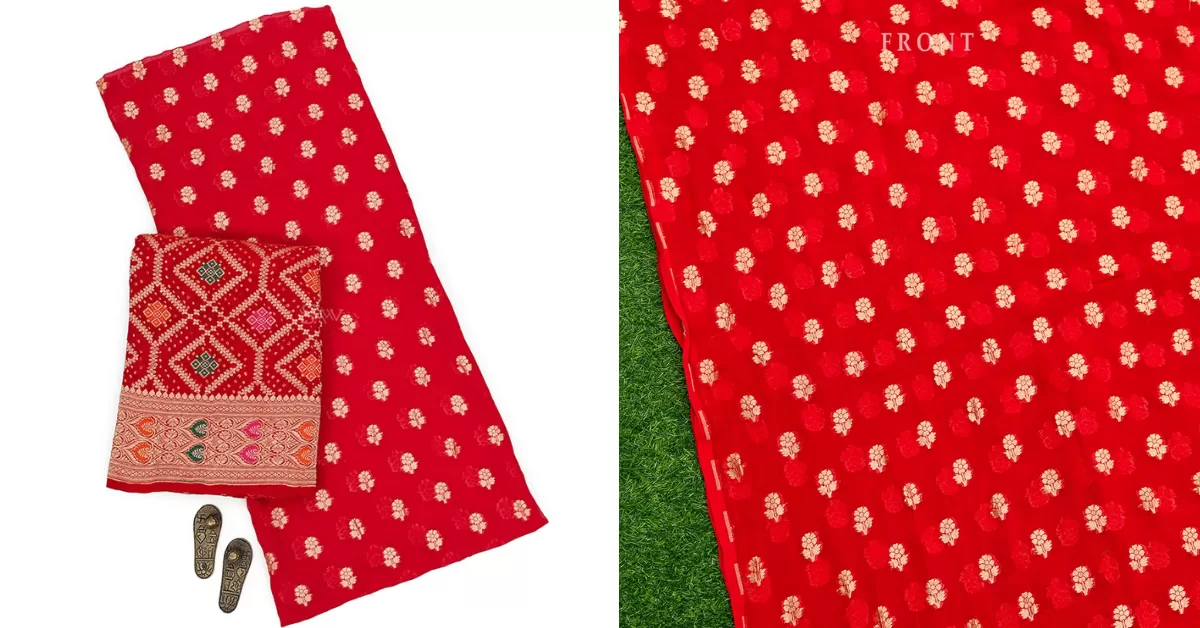
You might wonder — with so many silk types available in Varanasi, why does Bandhani Banarasi almost always land on Georgette specifically?
The answer comes down to how each fabric behaves during the tie-dye process itself, and how it feels once worn. Georgette is made from silk thread twisted in alternating directions, which gives it a naturally soft, slightly crinkled surface and a very fluid, gentle drape. This softness actually makes it easier for Bandhani artisans to tie those thousands of tiny knots by hand — a stiffer, heavier fabric like Katan silk simply doesn’t tie and untie as easily, and the dots don’t form as cleanly.
On top of that, Georgette’s naturally lightweight feel pairs beautifully with Bandhani’s often bright, joyful colour palette. A heavy fabric with dense Bandhani work all over could quickly feel like too much — but Georgette keeps the whole saree wearable, comfortable, and easy to carry through a full day of festivities.
If you’d like to understand Georgette and its Banarasi cousins in more depth — how it compares to Katan, Tissue, and Crepe — I’ve written a complete explanation here: What Type of Silk Is Used in Banarasi Sarees? The Weaver’s Answer.
How Is a Bandhani Banarasi Saree Actually Made?
This is a genuinely long, multi-artisan journey, and I think it’s worth walking through step by step, because it’s part of what makes a real handmade piece so special.
- The Georgette base is prepared. Pure silk Georgette fabric, ready for the tying process, is selected — often already woven with a Banarasi border design in mind.
- The tying begins. Skilled Bandhani artisans, working by hand and eye, mark out the pattern and begin tying thousands of tiny knots across the fabric — a single saree can take days just for this stage, depending on how dense the pattern is.
- Dyeing. The tied fabric is dipped into dye. Where a knot sits, the fabric resists the colour, protecting a tiny dot of the original fabric underneath.
- Untying and revealing the pattern. Once the dye has set and the fabric dries, the knots are carefully undone one by one, revealing the beautiful dot and wave patterns underneath.
- Finishing with Banarasi weaving. The zari border and pallu — the Banarasi signature — are either woven directly into the fabric beforehand, or the finished Bandhani fabric is paired with a separately woven Banarasi brocade border.
Every single stage in this process is done by hand by a specialist artisan. This is exactly why a genuine Bandhani Banarasi saree takes real time and real skill to create — it isn’t something that can be rushed or shortcut without losing the very thing that makes it special.
Bandhani vs Bandhej: Is There Really Any Difference?
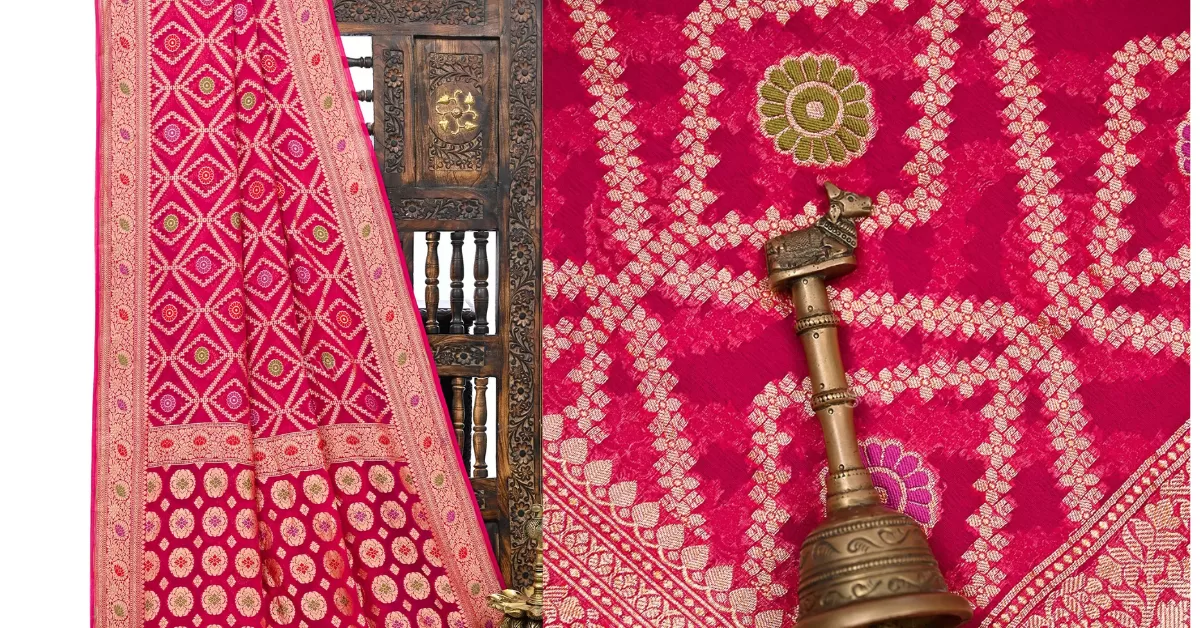
Short answer: no, there isn’t. “Bandhani” and “Bandhej” are simply two names for the exact same tie-and-dye tradition. The word comes from a Sanskrit root meaning “to tie,” and different regions and communities across Gujarat and Rajasthan have used slightly different versions of the same word over time. If a seller shows you a “Bandhej saree” and another shows you a “Bandhani saree,” they’re describing the identical craft — just with a different regional word for it.
When Should You Wear a Bandhani Banarasi Saree?
I get asked this often, so let me give you a simple, honest answer based on what I see our customers choosing.
Weddings and receptions: The combination of playful Bandhani colour and formal Banarasi zari makes this saree feel festive without being overly heavy — perfect for a reception, a sangeet, or a wedding guest look.
Festivals: Diwali, Navratri, and similar celebrations are a natural fit — Bandhani’s joyful patterns and bright colours suit festive dressing beautifully.
Family functions and celebrations: Because the Georgette base is so comfortable to wear for hours, it works wonderfully for long family events where you’ll be on your feet, greeting guests, and celebrating well into the evening.
Gifting: A Bandhani Banarasi saree also makes a genuinely thoughtful gift — it carries the warmth of Rajasthan’s colour and craft alongside the prestige of Varanasi’s weaving heritage, which makes it feel personal and meaningful.
How to Identify a Genuine Handmade Bandhani Banarasi Saree
Because Bandhani’s popularity has grown so much, the market now has plenty of printed imitations sold as “Bandhani” — patterns printed onto fabric to mimic the look, without any actual tying or dyeing involved. Here’s what I’d check.
- Look closely at the dots. Genuine hand-tied Bandhani dots are slightly irregular — no two are perfectly identical in size or shape, because they were tied by hand. Printed imitations often have suspiciously perfect, uniform dots.
- Feel the fabric where the dots are. On genuine Bandhani, you can sometimes feel a very slight raised texture or a tiny pucker at the centre of each dot, left behind from the tying process. Printed dots feel completely flat.
- Check the reverse side. On authentic tie-dyed fabric, the dye penetrates in a way that shows some softness of colour on the back. A printed pattern usually looks flat and one-dimensional from behind, with far less depth on the reverse.
- Ask about the artisans. A seller who genuinely works with real Bandhani craftspeople will be able to talk about the tying and dyeing process specifically. Vague answers are a sign to ask more questions.
- Check the Banarasi portion separately. If there’s a zari border, the same rules apply as any Banarasi purchase — ask whether the zari is real or synthetic, and look for Silk Mark certification if it’s claimed to be pure silk. Our detailed guide explains exactly how: Real Silk Versus the Fake: How to Identify.
A Few Honest Myths About Bandhani Banarasi Sarees
Myth 1: “Bandhani” and “Bandhej” Are Different Types of Sarees
Truth: They’re the same tradition, just two regional names for it. There is no technical difference between a saree called Bandhani and one called Bandhej.
Myth 2: Bandhani Is a Banarasi Weaving Technique
Truth: Not originally. Bandhani is a Rajasthani and Gujarati tie-dye art, completely separate from Banarasi weaving. A “Bandhani Banarasi saree” is a fusion piece — Bandhani’s tie-dye artistry combined with Banarasi’s weaving heritage, not a technique that originated in Varanasi.
Myth 3: All Georgette Sarees With Dots Are Genuine Bandhani
Truth: Not necessarily. Printed dot patterns are common in the market and are sold at a much lower price than genuine hand-tied Bandhani. Always check for the small signs of genuine hand-tying described above.
Visit JDS Banaras — See a Genuine Bandhani Banarasi Saree Up Close
The tiny, slightly imperfect beauty of hand-tied Bandhani dots is something you really have to see in person to fully appreciate. At JDS Banaras, we’re happy to show you exactly what genuine hand-tied work looks like next to a printed imitation, so you always know what you’re buying.
JDS Banaras — Jagdish Das & Company
D-58/1, Rathyatra Kamachha Road, Rathyatra Crossing, Varanasi 221010
Phone: +91 7269 055 695
Hours: Monday to Saturday, 10:30am to 8:30pm
Reach us through our contact page.
Frequently Asked Questions


Pingback: What Types of Banarasi Sarees Are Considered Most Auspicious and Traditional for Indian Wedding Ceremonies? - Jagdish Das and Company - JDS Varanasi