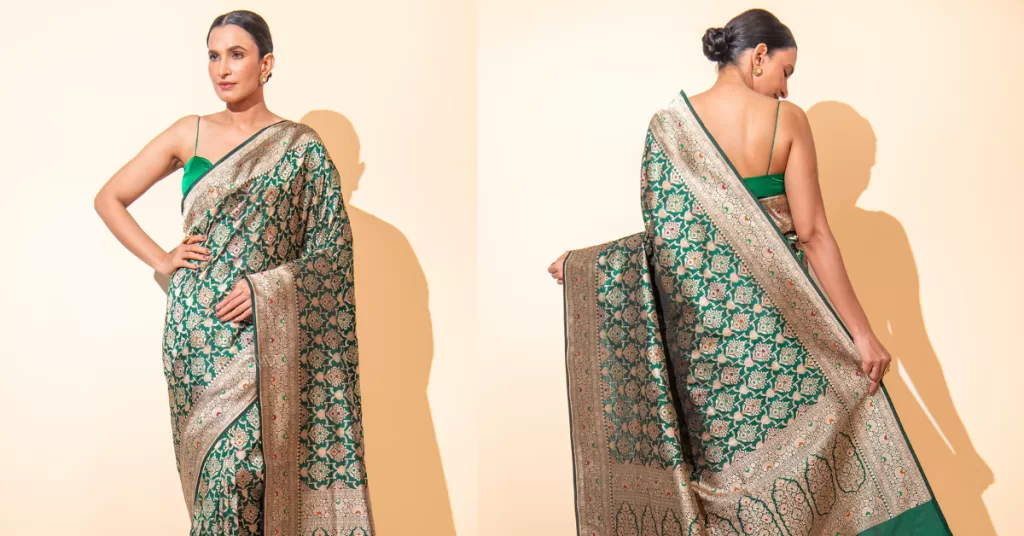
There is no single “best” bridal saree that’s right for every bride — the honest answer depends on your region’s tradition, how many hours you’ll be wearing it, and what feeling you want the fabric to give you. India’s biggest bridal sarees each excel at something different: Banarasi silk (from Varanasi) is prized for its intricate brocade motifs and relatively comfortable weight for long ceremonies; Kanjivaram silk (from Tamil Nadu) is prized for its structural strength and bold temple-inspired borders; Paithani (from Maharashtra) is loved for its vivid colour and peacock motifs; and Patan Patola (from Gujarat) is treasured for its extreme rarity and double-ikat precision. In this guide, I’ll walk you through each one honestly — including the real weight, price, and comfort differences — so you can decide which one is genuinely best for your wedding, not just which one is most hyped.
Why “Which Is Best” Doesn’t Have One Answer
I’ll be honest with you from the very first line of this article: any guide that tells you there’s a single “best” bridal saree is oversimplifying something that genuinely depends on your specific situation.
At JDS Banaras, we’ve been weaving and selling Banarasi bridal sarees since 1913 — so naturally, we believe deeply in what we make. But I’d be doing you a disservice if I pretended other regional traditions weren’t equally extraordinary in their own right. A Kanjivaram from Kanchipuram and a Banarasi from Varanasi are both centuries-old crafts, both worn by generations of Indian brides, and both entirely capable of being “the best” — for the right bride, in the right circumstance.
So instead of ranking these sarees against each other artificially, let me walk you through what actually makes each one special, mechanically and honestly, so you can make the decision that’s right for you.
Banarasi Silk Saree — Best for Intricate Brocade and Long Wearability
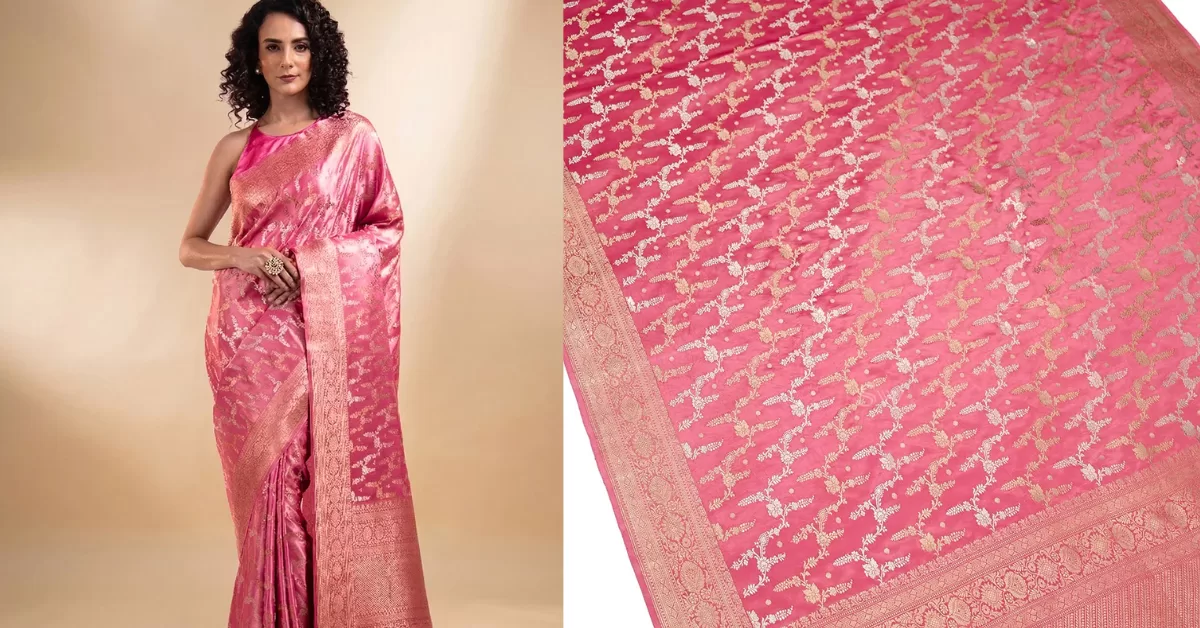
Banarasi sarees come from Varanasi, Uttar Pradesh, and are woven using a technique called brocade — where gold or silver zari thread is worked directly into the fabric to build motifs, rather than printed or embroidered afterward. The finest version of this, called Kadwa, involves weaving each individual motif separately by hand, which can take anywhere from 20 days to several months for a single saree.
Weight: Roughly 550g to 1,000g+ depending on zari density — generally lighter than a heavily worked Kanjivaram.
Feel: A new Katan silk Banarasi feels structured and firm; it softens beautifully with wear over the years.
Best for: Brides who want intricate, detailed motifs across the entire body of the saree, and who need a saree comfortable enough to wear through a long ceremony, a reception, and the walking and greeting that comes with it.
Real-world proof point: In 2026, Nita Ambani wore a handwoven Kadwa Banarasi saree — woven over five months by two master artisans — to the Venice Biennale, one of the most closely watched cultural events in the world. That five-month timeline is a genuine illustration of what this craft demands. Read the full story here: Nita Ambani’s Banarasi Saree Splendor.
To understand Banarasi weaving and silk types in full depth, I’ve written detailed guides here: What Type of Silk Is Used in Banarasi Sarees? and Banarasi Brocade Sarees: The Complete Guide.
Paithani Silk Saree — Best for Vivid Colour and Peacock Motifs
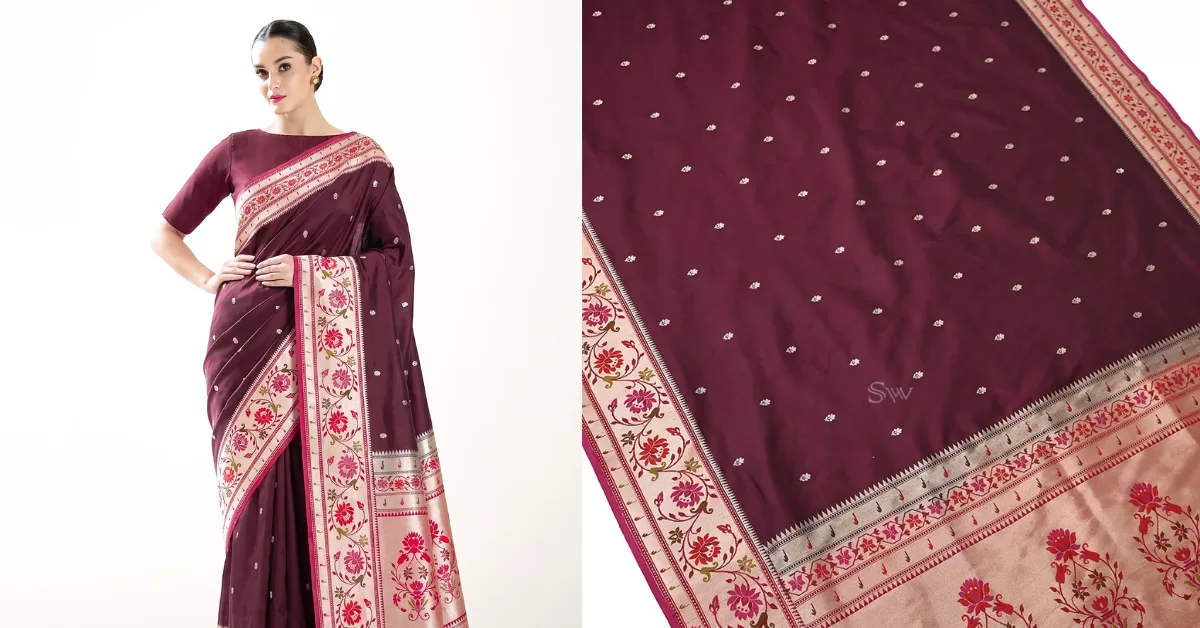
Paithani comes from Paithan, a town in Maharashtra, and — just like Banarasi is named for Varanasi — Paithani is simply the name for this region’s own weaving heritage, not a separate silk species. Paithani is known for its richly coloured, tapestry-woven pallu, where each colour section of a motif is woven separately and interlocked, producing vivid, jewel-toned peacock and lotus designs with real gold Zari borders.
Best for: Brides who want a saree with strong, vibrant colour contrast and a distinctive regional identity, especially those following Maharashtrian wedding traditions.
Patan Patola — Best for Rarity and Investment Value
Patola comes from Patan, Gujarat, and uses the double ikat technique — where both the warp and weft threads are individually tie-dyed with the pattern before weaving even begins, so the design appears identical on both sides of the fabric with no distinct “front” or “back.” This is one of the rarest weaving techniques in the world, currently practised by only a handful of families.
Best for: Brides who want an extremely rare, investment-grade heirloom piece and don’t mind the premium price that comes with a craft this scarce — genuine Patola pieces can range from ₹1.5 lakh well into several lakh rupees.
Bandhani (Bandhej) Banarasi Saree — Best for a Lighter, More Playful Bridal Look
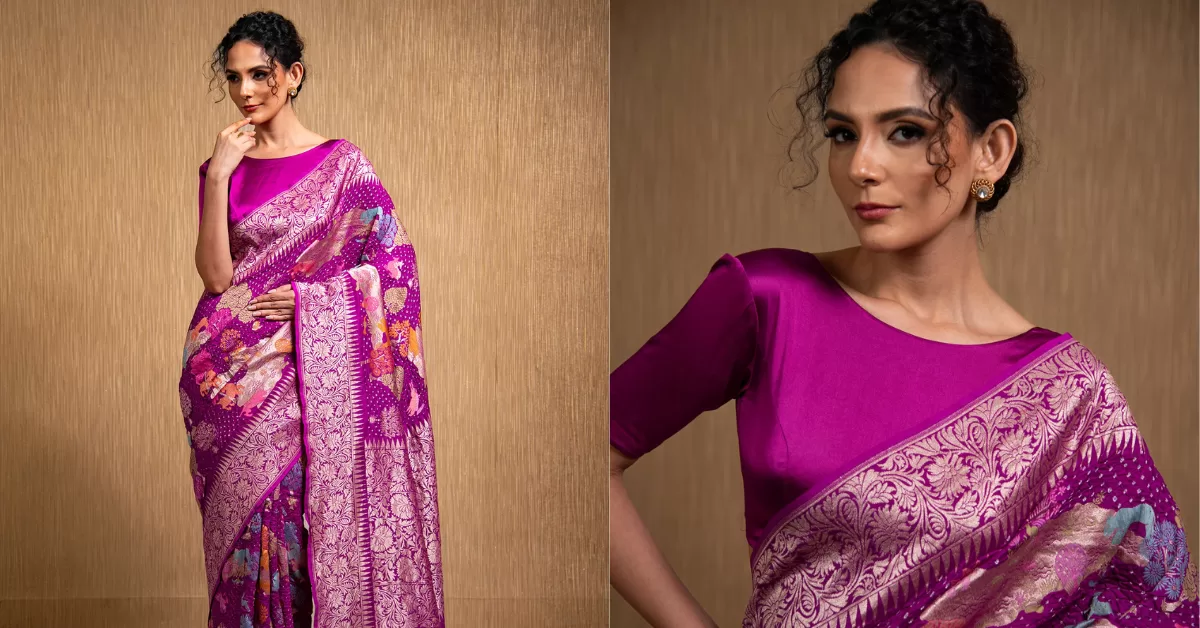
For brides who want something a little different from a full heavy silk saree, a Bandhani Banarasi saree combines Rajasthan and Gujarat’s tie-dye artistry with Varanasi’s Banarasi weaving — typically on a soft, lightweight Georgette base. It’s a wonderful choice for reception functions, sangeet, or any bride who wants festive colour without heavy weight.
I’ve written a complete guide to this fusion tradition here: Bandhani (Bandhej) Banarasi Sarees: A Simple Complete Guide.
Kanjivaram Silk Saree — Best for Structural Strength and Bold Borders
Kanjivaram (also called Kanchipuram) sarees come from Kanchipuram, Tamil Nadu, and are built using a completely different construction method called korvai — where the body and border are woven as separate pieces, often in contrasting colours, and then interlocked together with a join strong enough to last decades without weakening.
Weight: Roughly 600g to 1,200g+ — generally heavier than Banarasi, due to thicker, three-ply silk thread.
Feel: Firm and structured throughout its life; holds sharp, dramatic pleats.
Best for: Brides from South Indian and temple wedding traditions, or anyone who wants a bold, high-contrast border and a saree built for maximum structural durability across generations.
Real-world proof point: The single most expensive silk saree ever documented — a Guinness World Record holder at ₹39,31,627 — is a Kanjivaram called the Vivaah Pattu, woven by 36 artisans over 4,760 hours. It’s genuine proof of just how far Kanjivaram craftsmanship can be pushed.
Related guide – Banarasi vs Kanjivaram Saree — The Complete Difference Guide
Quick Comparison: Which Bridal Saree Fits You Best?
| Saree | Origin | Typical Weight | Best Known For | Ideal For |
| Banarasi (Katan/Kadwa) | Varanasi, UP | 550g–1,000g+ | Intricate all-over brocade | Long ceremonies, North Indian weddings, detailed photography |
| Kanjivaram | Kanchipuram, TN | 600g–1,200g+ | Structural strength, bold borders | South Indian/temple weddings, heirloom durability |
| Paithani | Paithan, MH | 500g–900g | Vivid colour, peacock motifs | Maharashtrian tradition, bold colour lovers |
| Patan Patola | Patan, Gujarat | 400g–700g | Extreme rarity, double ikat | Investment pieces, collectors |
| Bandhani Banarasi | Rajasthan/Gujarat + Varanasi | 400g–600g | Colour, light weight | Reception, sangeet, lighter bridal looks |
Expert Insight
When a bride asks me directly, “just tell me which one is best,” I always ask her one question back: “How many hours will you actually be wearing it, and what does your family tradition expect?” Those two answers usually make the decision for her far better than any ranking I could give. A saree that photographs beautifully but leaves you exhausted by evening isn’t the “best” saree for your wedding day — it’s the wrong saree for your specific day.
How to Actually Decide: A Simple Framework
Rather than chasing a single “best” answer, here’s the honest framework I’d walk any bride through in our showroom.
Step 1: Start With Your Family’s Tradition
If your family follows a North Indian wedding tradition, Banarasi is very likely already the expected, meaningful choice. If you’re marrying into a South Indian or temple tradition, Kanjivaram carries that same cultural weight. Respecting this starting point usually narrows the decision significantly before you even get to fabric comparisons.
Step 2: Be Honest About How Long You’ll Wear It
A 2-3 hour ceremony can comfortably carry a heavier saree — a dense Kadwa Banarasi or a full Kanjivaram. An 8+ hour wedding day, from morning rituals through evening reception, is genuinely more comfortable in a lighter Banarasi Georgette, a Bandhani Banarasi, or a lighter Paithani.
Step 3: Decide What You Want to Pass Down
If you want a saree that will be preserved and worn by your daughter decades from now, prioritise genuine, well-documented handloom craftsmanship — regardless of which regional tradition you choose. All of these traditions produce genuine heirloom-quality pieces when bought from a real manufacturer.
Step 4: Set Your Budget Honestly
Every one of these traditions ranges from accessible to extremely premium, depending on silk quality, zari authenticity, and weaving complexity — not the regional tradition itself. A well-made Banarasi and a well-made Kanjivaram at the same price point are simply reflecting the same underlying value logic: real silk, real zari, real hours of skilled labour.
For understanding how to verify that value logic — whether the silk and zari you’re paying for are genuine — read our detailed guide: Real Silk Versus the Fake: How to Identify.
A Few Honest Myths About “Best” Bridal Sarees
Myth 1: The Most Expensive Saree Is Automatically the Best Choice
Truth: The best saree is the one that fits your tradition, your comfort, and your occasion — not necessarily the highest price tag. A well-chosen mid-range Banarasi that fits your day perfectly is a better choice than an overly heavy, expensive piece that exhausts you by evening.
Myth 2: You Can Only Wear One Regional Tradition at Your Wedding
Truth: Many modern brides mix traditions across their wedding events — a Kanjivaram or heavy Kadwa Banarasi for the main ceremony, and a lighter Bandhani Banarasi or Georgette for the reception. There’s no rule against combining regional heritages across your celebrations.
Myth 3: Heavier Always Means More Prestigious
Truth: Weight reflects silk thickness and zari density, not craftsmanship level. A lightweight, intricately woven Banarasi Organza can represent just as much skilled labour as a heavy bridal Kanjivaram — they’re simply built differently.
The JDS Banaras Perspective
As a family that has spent four generations specifically mastering Banarasi weaving, our honest advice will always lean toward what we know best — but a good advisor tells you the truth even when it doesn’t point straight at their own shelf. If your family tradition calls for Kanjivaram or Paithani, I’d encourage you to seek out a specialist in that craft with the same seriousness we bring to Banarasi. What we can promise, without any hesitation, is complete honesty about every Banarasi saree we sell — the fabric, the technique, the zari, all documented in writing.
Every pure silk saree at JDS Banaras comes with a certificate of authenticity. Learn more about us as a Banarasi saree manufacturer in Varanasi.
Visit JDS Banaras — Let’s Find Your Right Bridal Saree Together
If a Banarasi bridal saree is the right choice for your wedding, we would be honoured to help you find the one that’s truly right — not just beautiful in a photograph, but comfortable and meaningful on your actual wedding day.
JDS Banaras — Jagdish Das & Company
D-58/1, Rathyatra Kamachha Road, Rathyatra Crossing, Varanasi 221010
Phone: +91 7269 055 695
Hours: Monday to Saturday, 10:30am to 8:30pm
Reach us through our contact page.
Frequently Asked Questions


Pingback: Best Bridal Lehenga Store in Varanasi: A Simple Guide - Jagdish Das and Company - JDS Varanasi
Pingback: Top Trending Lehengas for Wedding: A Bride's Simple Guide - Jagdish Das and Company - JDS Varanasi
Pingback: Best Tips for Styling a Heavy Banarasi Bridal Saree - Jagdish Das and Company - JDS Varanasi