
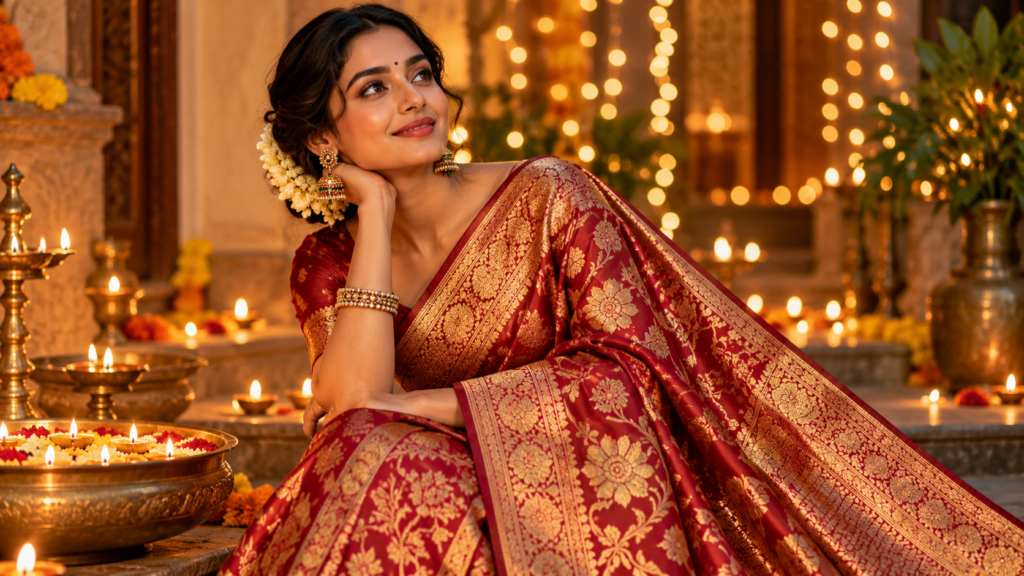
Diwali is one of those occasions when Indian wardrobes naturally turn toward richer colours, traditional textiles and clothing that feels special without necessarily being as elaborate as bridal wear. A Banarasi saree fits beautifully into this setting.
Its silk, zari, woven motifs and unmistakable Banaras character can create the festive richness associated with Diwali while still allowing plenty of choice—from a grand Katan silk saree for Lakshmi Puja to a lighter tissue, organza or georgette Banarasi saree for family gatherings and evening celebrations.
For women who already own Banarasi sarees, Diwali is also an ideal occasion to bring them back into the wardrobe rather than saving them only for weddings.
Why Banarasi Sarees Feel Naturally Suited to Diwali
A traditional Banarasi saree already carries many of the visual elements we associate with festive Indian dressing.
Rich silk gives the saree depth and elegance, while zari catches the light beautifully. Woven butis, floral jaal, bel patterns and elaborate pallus add detail without requiring heavy surface embroidery.
That becomes particularly effective during Diwali, when homes are illuminated with diyas and warm decorative lighting.
A Banarasi saree does not need to be extremely heavy to look festive. Even a relatively simple saree with a well-defined zari border and scattered butis can create an elegant Diwali look.
This versatility is one of the reasons Banarasi sarees continue to remain relevant across generations.
Related guide – What Makes a Banarasi Saree Special for Karwa Chauth? Colours, Traditions & Styling Explained
Which Banarasi Saree Colours Work Best for Diwali?
There is no compulsory colour for Diwali dressing.
The right shade depends on personal preference, family traditions, the time of the celebration and how traditional or contemporary you want the look to feel.
Some colours, however, naturally work particularly well with Banarasi weaving.
Red Banarasi Saree
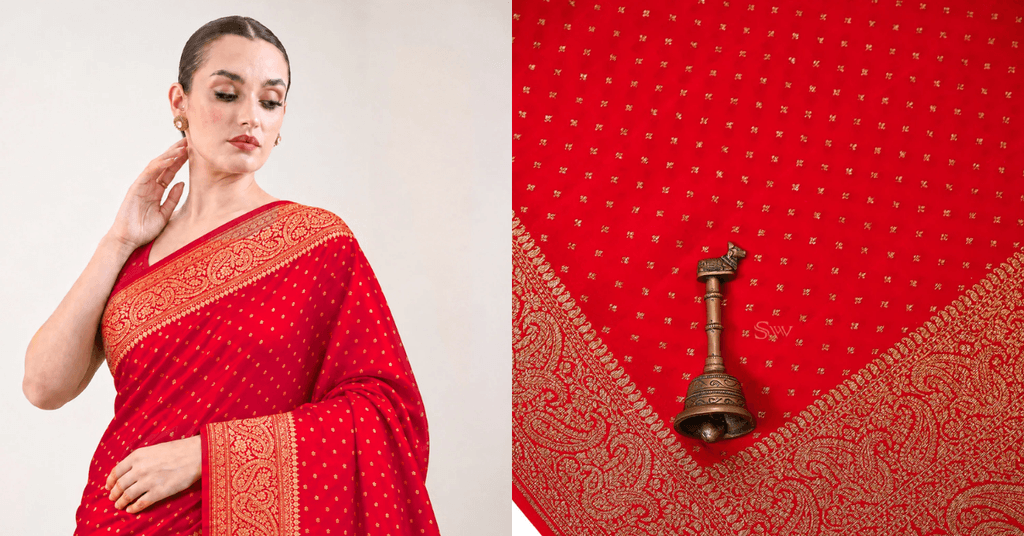
Red remains one of the most classic choices for Indian festive occasions.
A red Banarasi saree with gold zari creates a rich traditional appearance and works especially well for Lakshmi Puja, family celebrations and evening gatherings.
Women who do not want a bridal-looking outfit can choose a saree with smaller butis, a restrained border or less dense zari work.
Rani Pink and Magenta
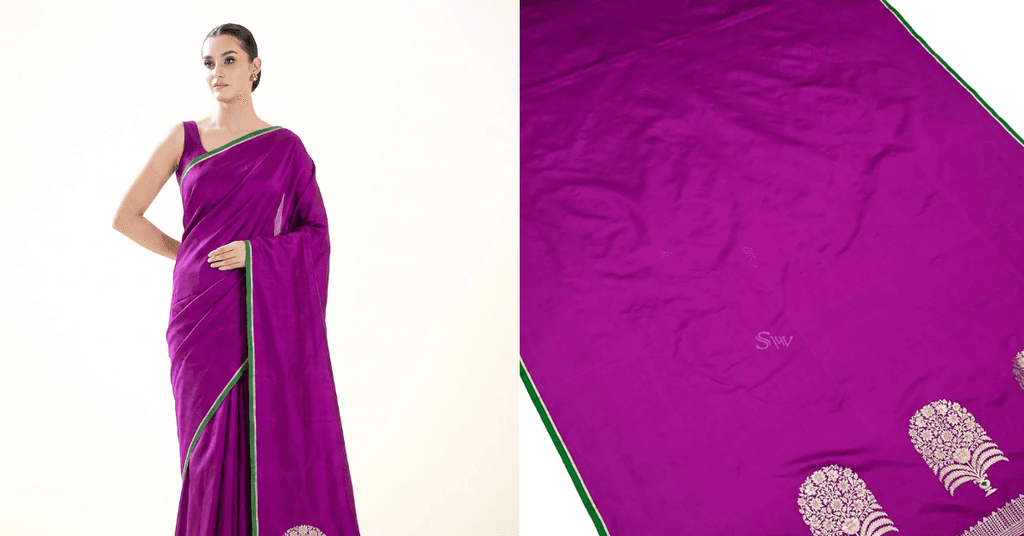
Rani pink and magenta bring brightness without feeling quite as bridal as traditional red.
These shades combine especially well with gold zari and colourful meenakari work.
For women who want an energetic festive look that photographs beautifully under Diwali lights, these colours are excellent options.
Green Banarasi Saree
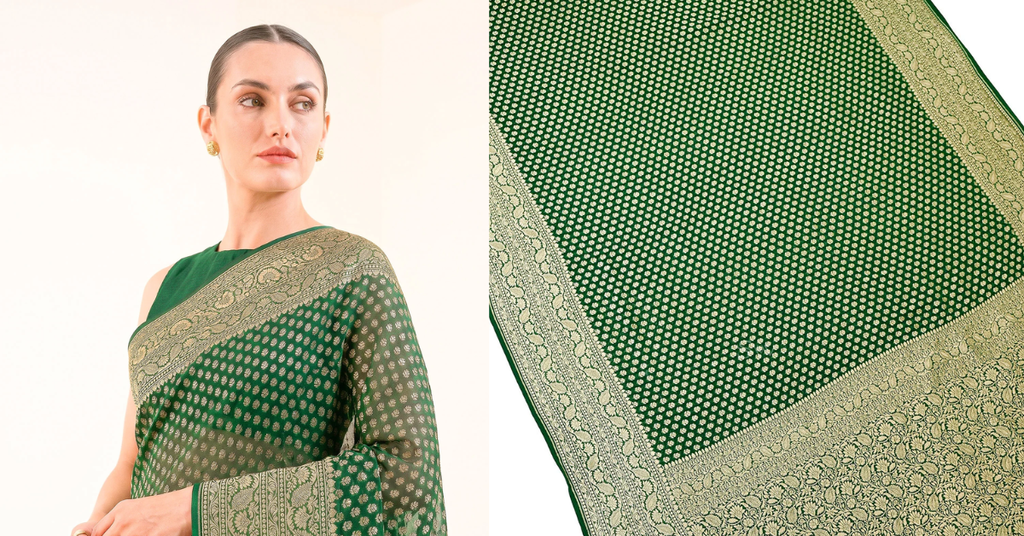
Emerald, bottle green and deeper jewel-toned greens work beautifully for Diwali.
Gold zari stands out strongly against green, making even relatively simple Banarasi designs appear rich.
Green also pairs easily with contrasting blouses in red, maroon, gold or pink.
Purple and Wine
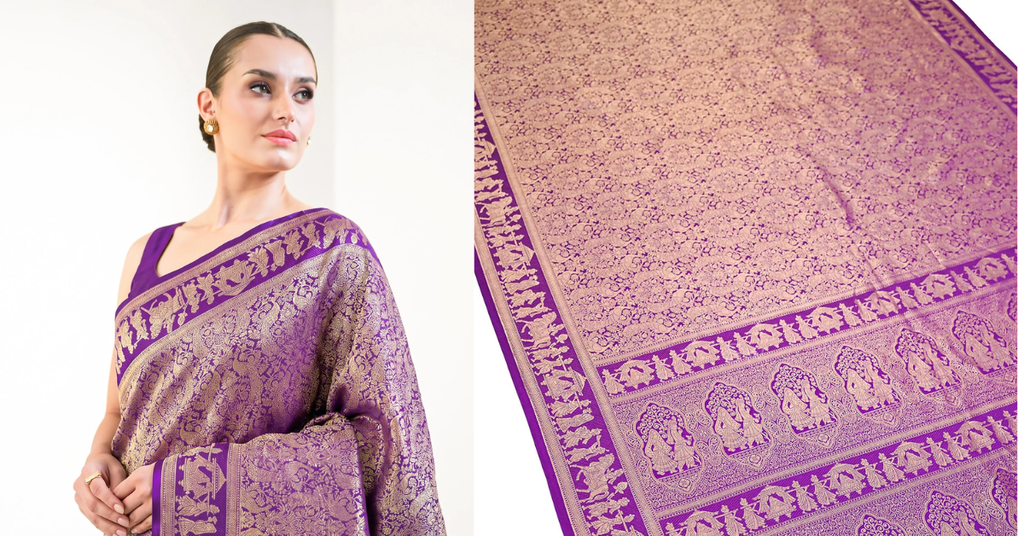
Deep purple, plum and wine shades offer a more contemporary festive look.
They retain the richness expected from traditional occasion wear while creating something different from the more common reds and pinks.
These colours work particularly well with antique-finish zari or intricate woven borders.
Gold and Tissue Tones
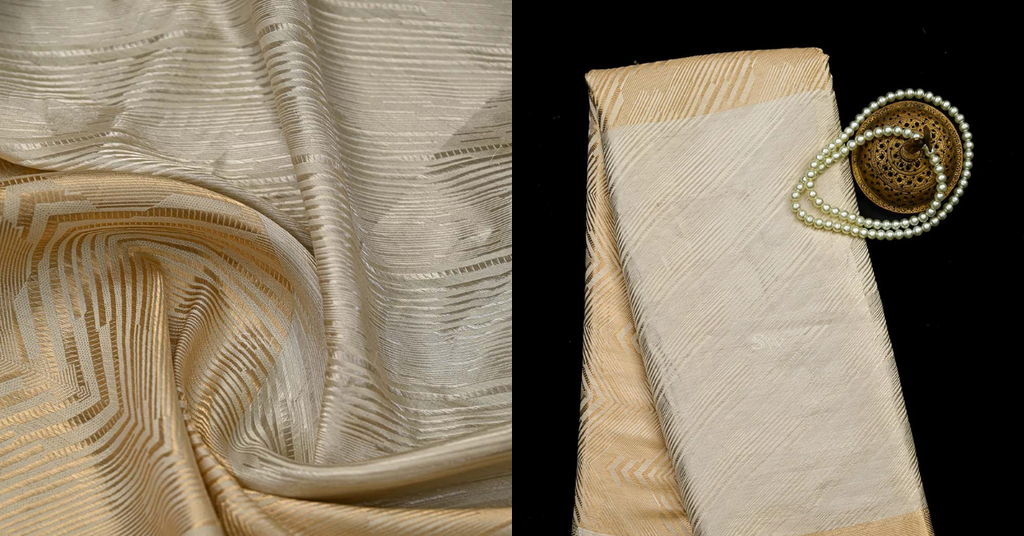
Gold-toned tissue Banarasi sarees can look especially striking for Diwali because the fabric naturally reflects light.
Rather than relying on heavy ornamentation, the surface itself creates luminosity.
For women looking for something festive but refined, tissue can be an excellent choice.
Related guide – Banarasi Saree Trends for Navratri 2026: Colours, Weaves & Festive Styles
Katan Silk for a Classic Diwali Look
For someone seeking a traditionally rich Banarasi saree, Katan silk remains one of the strongest options.
Its smooth silk structure works beautifully with intricate zari weaving and traditional Banarasi motifs.
A Katan Banarasi saree is particularly suitable when Diwali celebrations include a formal family gathering, Lakshmi Puja or hosting guests at home.
You do not necessarily need a densely woven bridal piece.
A Katan saree with small zari butis, a traditional border and an elaborate pallu can provide enough richness for Diwali while remaining reusable for weddings and other celebrations.
Tissue Banarasi Sarees for Festive Shine
Tissue has a distinctive luminous appearance that works particularly well during evening celebrations.
The fabric interacts beautifully with warm lighting, making it visually appealing without needing excessive accessories.
A gold, champagne, rose-gold or jewel-toned Banarasi tissue saree can therefore create a more contemporary Diwali look.
Pairing it with a relatively simple blouse and restrained jewellery often works better than adding too many decorative elements.
When the saree itself has shine, allowing the textile to remain the focal point usually creates a more balanced appearance.
Organza for a Lighter Contemporary Look
Banarasi organza is a good option for women who prefer something lighter and more structured.
Its crisp texture gives the saree a distinctive silhouette, while woven motifs and zari can still retain the Banarasi character.
Organza works particularly well for daytime Diwali gatherings, card parties, family lunches or celebrations where a very heavy silk saree may feel unnecessary.
Pastel shades can create a softer look, while jewel tones give the saree a more traditional festive feel.
Banarasi Georgette for Comfort and Easy Draping
If comfort and movement are important, Banarasi georgette offers another option.
Its softer fall can make the saree easier to manage during longer celebrations while still providing the decorative richness expected from festive wear.
Georgette Banarasi sarees can be especially useful when Diwali involves several activities throughout the day—from puja preparations and family visits to evening celebrations.
The lighter drape also makes them easier to style with contemporary blouses.
Related guide – Dussehra Saree Guide: Best Banarasi Styles and Colours to Wear This Festival
How Much Zari Should You Choose for Diwali?
More zari does not automatically mean a better festive saree.
The right amount depends on where and how you plan to wear it.
For a traditional Lakshmi Puja or a more formal family celebration, a richer zari border, woven pallu or jaal can look appropriate.
For smaller gatherings or daytime celebrations, scattered zari butis and a defined border may be enough.
When choosing a Banarasi saree, think about its future use as well.
A saree that can later be worn to weddings, family functions, anniversaries or other festivals often provides more value than a highly specific one-time outfit.
Banarasi Motifs That Work Beautifully for Diwali
Traditional Banarasi weaving includes a wide variety of motifs and design layouts.
Some of the most visually effective choices for festive wear include:
Butidar designs – Small repeated motifs create richness without making the saree overly heavy.
Floral jaal – A more elaborate option where woven floral patterns spread across the saree.
Bel patterns – Decorative vine-like designs often used in borders and larger compositions.
Kalga motifs – Traditional ornamental forms that give the saree a recognisably classical Banarasi character.
Meenakari details – Additional colour within the woven design can make a saree particularly vibrant for festive occasions.
It is important, however, not to assume that every traditional motif has a fixed religious meaning. Many Banarasi motifs are part of a long decorative and artistic vocabulary and should be understood in their proper textile context.
Can You Wear Your Wedding Banarasi Saree for Diwali?
Yes—and Diwali can actually be one of the best occasions to rewear it.
A wedding Banarasi saree is often one of the most carefully chosen pieces in a woman’s wardrobe, yet many remain stored away after the wedding.
Instead of reproducing the bridal styling, change the accessories.
For example:
- wear a contrasting blouse,
- use lighter jewellery,
- change the hairstyle,
- reduce the number of bangles,
- use a simpler makeup look,
- experiment with a different draping style.
The saree remains the same, but the overall appearance can feel completely different.
Our guide on Banarasi sarees considered traditional for Indian wedding ceremonies explains how different Banarasi sarees fit into ceremonial dressing.
How to Style a Banarasi Saree for Diwali
A Banarasi saree already provides a strong visual foundation, so the rest of the styling should complement rather than compete with it.
For a traditional appearance, combine a red, maroon or green Banarasi saree with gold jewellery, a classic blouse and a small bindi.
For a more contemporary look, try jewel-toned sarees with contrasting blouses or cleaner jewellery.
A heavily woven saree may need only statement earrings and bangles.
A simpler saree can comfortably support a stronger necklace or more elaborate blouse.
The key is balance between:
saree + jewellery + blouse + occasion.
When each element is competing for attention, even an expensive saree can lose its elegance.
What Should Younger Women Choose for Diwali?
Younger women do not necessarily need to move away from traditional Banarasi textiles to create a modern look.
The difference can come from fabric, colour and styling.
A lightweight tissue or organza saree paired with a sleeveless, high-neck or contrasting blouse can feel contemporary while preserving the textile’s traditional identity.
Colours such as rani pink, emerald green, purple, rust, copper and gold also work beautifully for younger festive wardrobes.
Traditional textile does not have to mean outdated styling.
Related guide – What Types of Banarasi Sarees Are Considered Most Auspicious and Traditional for Indian Wedding Ceremonies?
What Makes a Good Diwali Saree Beyond Appearance?
When buying a saree specifically for Diwali, it can be tempting to focus entirely on how it will look in photographs.
A better purchase considers:
- quality of weaving,
- fabric,
- zari,
- comfort,
- authenticity,
- finishing,
- future usability,
- and how naturally the saree fits your wardrobe.
A well-made Banarasi saree can continue to be worn long after the festival is over.
That is one of the key differences between buying simply for a trend and investing in a traditional textile.
Why Banarasi Sarees Continue to Work Across Generations
Fashion changes every festive season.
Colours trend, blouse designs change and styling preferences evolve.
But a traditional Banarasi saree does not depend entirely on these trends.
Its appeal comes from its textile character—the silk, zari, weaving and design vocabulary developed through the Banaras weaving tradition.
That makes it possible for the same saree to be styled differently by different generations.
A saree purchased today for Diwali might later be worn for a wedding, anniversary or another family celebration, and eventually even become part of an heirloom wardrobe.
Choosing a Banarasi Saree With Confidence
At JDS Banaras, our experience with Banarasi textiles goes back through generations, with the business established in 1913.
Working closely with Banarasi sarees over many decades also teaches an important lesson: the best saree is not always the heaviest or most expensive one.
It is the saree that correctly matches the wearer, occasion and intended use.
For Diwali, that could mean a rich red Katan silk saree, an elegant gold tissue, a lightweight organza or a comfortable Banarasi georgette.
You can also explore the heritage of JDS Banaras to understand the family’s continuing relationship with Banarasi textiles and the weaving tradition.
A Timeless Diwali Choice
Diwali celebrates light, family and tradition, and clothing naturally becomes part of that atmosphere.
A Banarasi saree works particularly well because it can feel festive without being restricted to a single festival.
Whether you choose traditional red, luminous gold, emerald green, rani pink or deep wine, focus on the fabric, weaving and design rather than simply following one season’s trend.
A thoughtfully chosen Banarasi saree can make Diwali special today and continue to remain relevant for many celebrations to come.
Frequently Asked Questions
Red, rani pink, maroon, emerald green, purple, wine and gold are all strong festive options. There is no compulsory Diwali colour, so the choice should depend on personal preference and styling.
Yes. Banarasi sarees work beautifully for Lakshmi Puja and family Diwali celebrations because of their traditional silk, zari and woven designs.
Katan silk is ideal for a classic traditional look. Tissue and organza work well for lighter contemporary styling, while georgette is a comfortable option for longer celebrations.
Yes. Changing the blouse, jewellery and styling can transform a wedding Banarasi saree into an elegant festive outfit.
No. Even a Banarasi saree with small zari butis, an elegant border and woven pallu can look sufficiently festive.
Banarasi tissue, organza and lighter georgette sarees in jewel tones or metallic shades work particularly well for contemporary festive styling.