
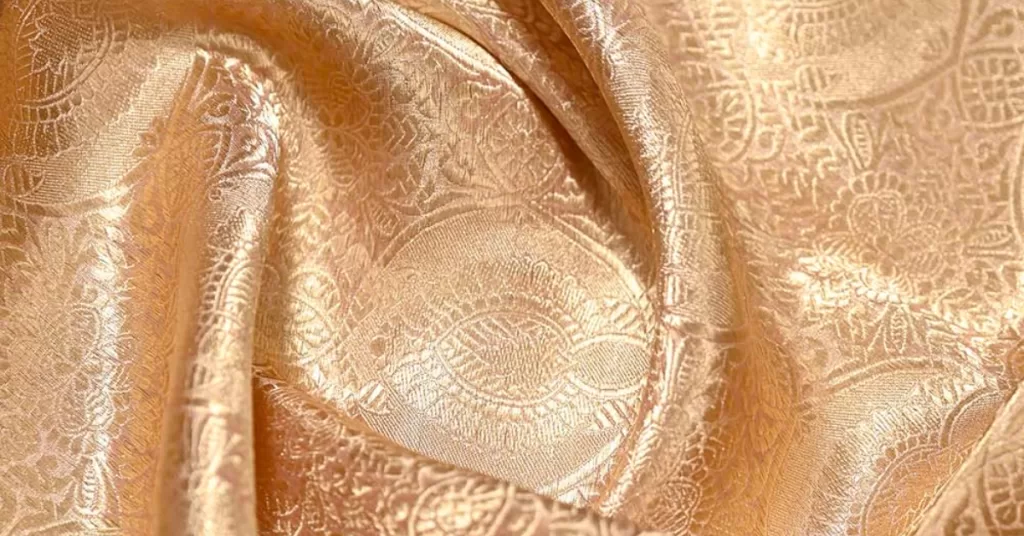
The prominence of tissue silk saree has been increasing every year. The lightweight and shimmering nature of the tissue silk saree means that more women have been opting to wear the traditional attire on occasions like weddings, anniversaries, and other celebrations. Being said that, many women are worried if they are investing in a real tissue silk saree or machine-made when making the buying decision.
In this article, we will discuss how to identify real tissue silk saree, while also addressing other questions such as where to buy real tissue silk sarees from.
Why Identifying Authentic Tissue Silk Matters?
Real tissue silk sarees are a piece of heritage and often passed down from one generation to another. However, with the rising demand of tissue silk, there has been a substantial increase in the production of machine-made and synthetic tissue silk sarees. These are later sold as genuine silk sarees.
Notably, these machine-made and synthetic tissue silk sarees resemble a lot like real tissue silk sarees. There are, however, a lot of differences. For instance, these fake silk sarees lack handloom characteristics. Moreover, they also lack durability and heritage value offered by real silk sarees.
How to Identify a Real Tissue Silk Saree?
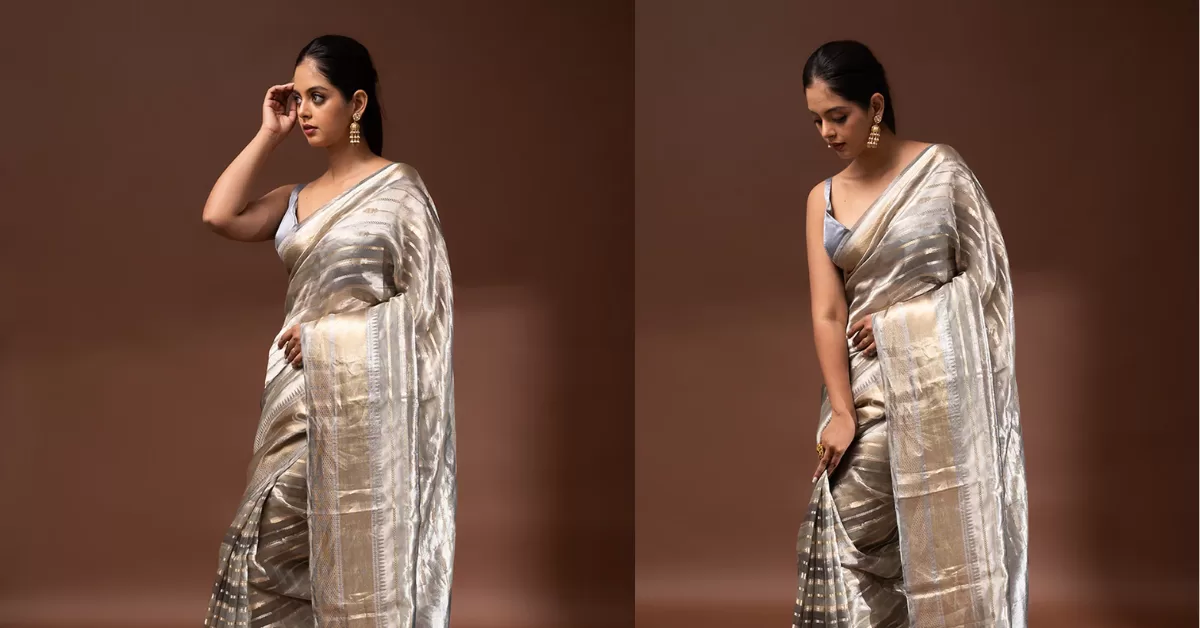
There are several ways in which you can check for the authenticity of the tissue silk saree. For instance, one can check for silk quality, zari work, fabric texture, and handloom characteristics. Moreover, you can also ask the seller for silk mark certification. Being said that, a real tissue silk saree will have a natural sheen and fine weaving details. Here are some of the ways in which you can identify a real tissue silk saree.
- Check the Fabric Texture Carefully
The simplest way to get a real tissue silk saree is to check the fabric texture. Those that are authentic tissue silk will have a smooth yet rich fabric. Furthermore, the fabric will not be slippery. Other characteristics of the tissue silk fabric include being lightweight and elegant. Real tissue silk also has the ability to adjust to body temperature quickly. Fake tissue silk sarees, on the other hand, give a plastic-like feel and are very slippery. Moreover, they are excessively glossy.
- Examine the Zari Work
The most important thing to check out is the zari work on the saree. If it is an authentic piece then the zari will be woven into the fabric. This will give the Banarasi tissue silk saree a subtle sheen and metallic effect that looks natural. Moreover, the motifs are integrated into the weave. The fake versions will have printed motifs and they will be excessively shimmery. The fake ones look decorated on the surface rather than having weaving qualities.
- Look for Silk Mark Certification
Silk mark certification is another way to know whether the tissue silk saree is real or fake. The certification issued by the Silk Mark Organisation of India (SMOI) under the Central Silk Board. Asking a few questions to the sellers will help you know about the certification. For instance, you can ask the seller whether or not they will provide the certification if the purchase is made.
- Understand Handloom vs Powerloom Weaving
Differentiating between a handloom and powerloom saree is one of the most challenging activities today. But to make things simpler for you, know that handloom Banarasi tissue silk sarees will have fine weaving variations. Moreover, there will be slight weaving irregularities as they are handmade. The motifs will also have rich depth. Machine-made sarees, on the other hand, will be overly perfect showing extreme uniformity. They will also be less detailed in weaving and flat in texture.
- Check the Reverse Side of the Saree
Checking the backside of the saree is another way to know if what you are buying is real or fake. Traditional, authentic Banarasi sarees will have thread floats at the back side. Moreover, you will be able to see the weaving details and motif construction. To say, the back side will let you understand the handloom characteristics of the saree. There is a clear distinction available on the reverse side which reveals whether the design is woven or artificially produced.
- Lookout for Seller’s Credibility
While all of these things are important in their own way, it will be of no use if you are not buying from a credible seller. Therefore, before visiting the store and making the purchase, always check out seller reviews on google. Furthermore, also review their social media presence and website credibility. One can also ask questions about silk authenticity and the weaving process to the seller.
If the seller is selling the real product they will not hesitate to answer questions about fabric composition, weaving techniques, silk quality, craftsmanship, and certification.
Common Signs of Fake Tissue Silk Sarees
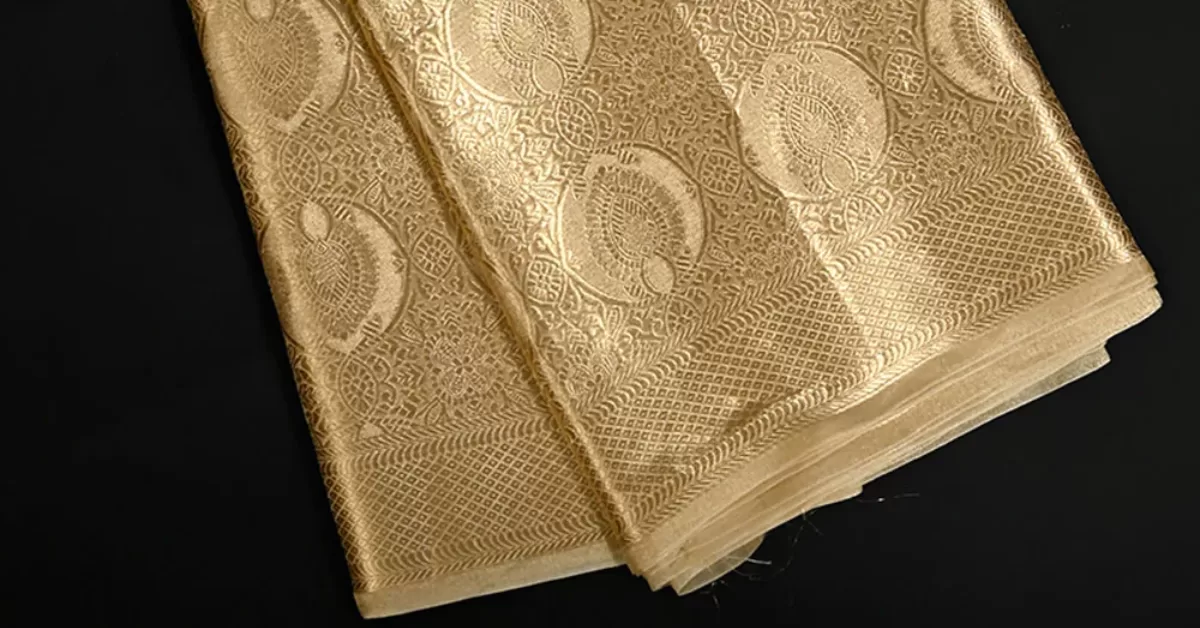
In addition to the above things, some of the other signs of fake tissue silk sarees include low prices, artificial fabric sheen, lack of product information, and no availability of certification. Take all of these things as a warning sign.
What Is Tissue Silk? Understanding the Fabric First
Before you make the purchase, it is always better to get to know the fabric first. So, if you are wondering what is tissue silk, well – tissue silk is a piece of art which is crafted by weaving silk yarn and metallic zari threads. This creates a shining texture. Being said that, tissue silk has a lighter appearance. However, it still maintains the richness that is associated with traditional silk sarees.
Here is a detailed guide on What is a Tissue Silk Saree to understand the weaving, fabric composition, and characteristics.
Why Banarasi Tissue Silk Sarees Require Careful Verification
Everyone loves Banarasi sarees. It has been the go-to choice among wedding goers and even brides. The rise in demand means that the number of imitation products has also increased substantially over the last few years.
As Banarasi tissue silk saree is a piece of Indian tradition, history, and heritage, it requires careful verification. You are not just investing in a fabric but you are making an investment in history and future. You will also, like many have, pass it down to your children and grandchildren.
Why Trust JDS Banaras?
JDS, for generations, has been offering handloom Banarasi sarees to customers all over India and overseas. The expertise it possesses in weaving techniques and Banarasi textile is unmatched. Being said that, JDS Banaras has been at the center of customer education about real silk Banarasi sarees.
JDS Banaras offers a wide range of Banarasi sarees that are best suited for various occasions as well as daily wear.