
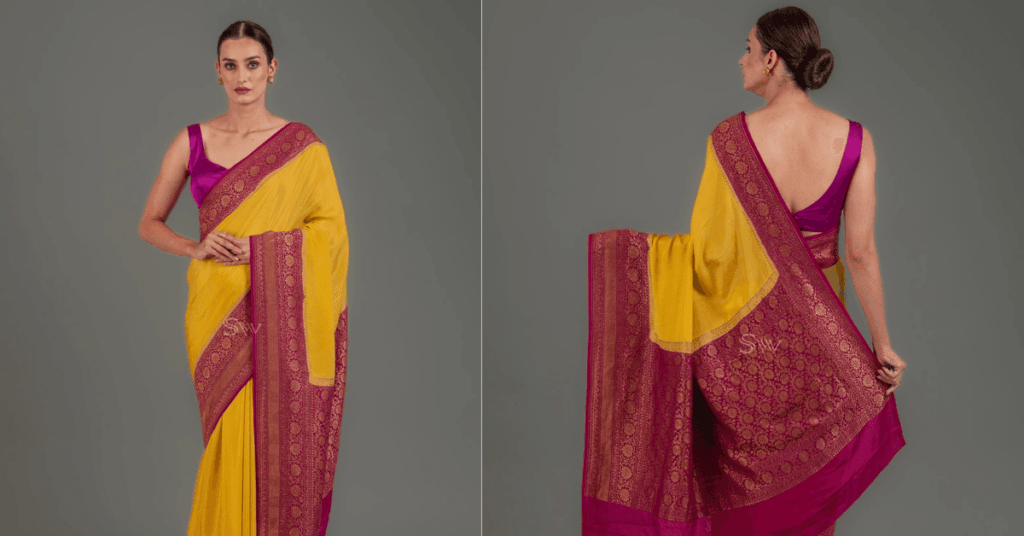
Sharad Navratri 2026 runs from Sunday, 11 October to Monday, 19 October, followed by Dussehra on 20 October, with a different colour traditionally associated with each of the nine days: orange, white, red, royal blue, yellow, green, grey, purple, and peacock green. You don’t need nine brand-new sarees to follow this. A handful of genuine Banarasi pieces, styled a little differently each day with a change of blouse or jewellery, can easily carry you through the whole festival. In this guide, I’ll walk you through each day’s colour, which Banarasi weave suits which kind of celebration, and how to build a festive wardrobe that doesn’t disappear into the cupboard once Navratri ends.
Navratri 2026: Dates and the Nine-Day Colour Calendar
Sharad Navratri 2026 begins with Ghatasthapana on Sunday, 11 October, and continues through Monday, 19 October, with Dussehra (Vijayadashami) following on Tuesday, 20 October. Because the festival begins on a Sunday this year, the colour sequence opens with orange.
| Day | Date | Colour | Devi Form |
| Day 1 | 11 October | Orange | Shailputri |
| Day 2 | 12 October | White | Brahmacharini |
| Day 3 | 13 October | Red | Chandraghanta |
| Day 4 | 14 October | Royal Blue | Kushmanda |
| Day 5 | 15 October | Yellow | Skandamata |
| Day 6 | 16 October | Green | Katyayani |
| Day 7 | 17 October | Grey | Kalaratri |
| Day 8 | 18 October | Purple | Mahagauri |
| Day 9 | 19 October | Peacock Green | Siddhidatri |
Worth knowing: this exact colour-to-day mapping can vary a little depending on regional tradition and the calendar your family follows, since the sequence is tied to which weekday the festival begins on. If your family or community follows a slightly different order, that’s completely normal — treat this table as a helpful guide, not a strict rule.
You Don’t Need Nine New Sarees for Nine Days
Before we go colour by colour, I want to say this clearly, because I think it’s genuinely the most useful piece of advice in this whole guide: you almost certainly don’t need to buy nine new sarees.
Look through what you already own first. There’s a good chance you have a red saree, a yellow one, maybe something in green already sitting in your wardrobe. A different blouse, a change of jewellery, or a new way of draping the pallu can make a familiar saree feel fresh again for a new day of the festival. At JDS Banaras, we’d always rather see a genuine handwoven saree get worn again and again than sit unused after a single festival.
Choosing Between a Rich Banarasi Weave and a Lighter One
The nine days of Navratri usually bring a real mix of occasions — a quiet morning puja, an evening aarti with the whole family, maybe a Garba or Dandiya night if that’s part of your tradition. The saree that suits a two-hour evening celebration isn’t always the one you want for a long day involving a lot of standing or movement.
For evening aartis, family pujas, and occasions where you’ll mostly be seated or standing in one place, a Banarasi Katan silk saree is a beautiful choice. Its zari work and traditional motifs carry real festive richness on their own, and the fabric holds its pleats beautifully through a few hours of celebration.
For days that involve more movement — visiting a pandal, attending Garba, or simply a long day with several family visits — a lighter Banarasi Georgette or Organza saree is far more comfortable, while still feeling genuinely festive. To understand how these different Banarasi weaves actually differ in weight and feel, this guide explains it simply: Is Banarasi Silk Saree Soft or Hard?
Expert Insight
Every Navratri, I see the same thing happen at our showroom. A woman falls in love with a heavily worked Katan silk saree, imagines wearing it for all nine days, and then realises by day three that she needs something lighter for the days she’s actually out and about. My honest advice is always the same: pick one or two rich pieces for the evenings that matter most to you, and build the rest of the week around lighter, easier Banarasi weaves.
A Day-by-Day Look at the Nine Colours
Day 1 — Orange
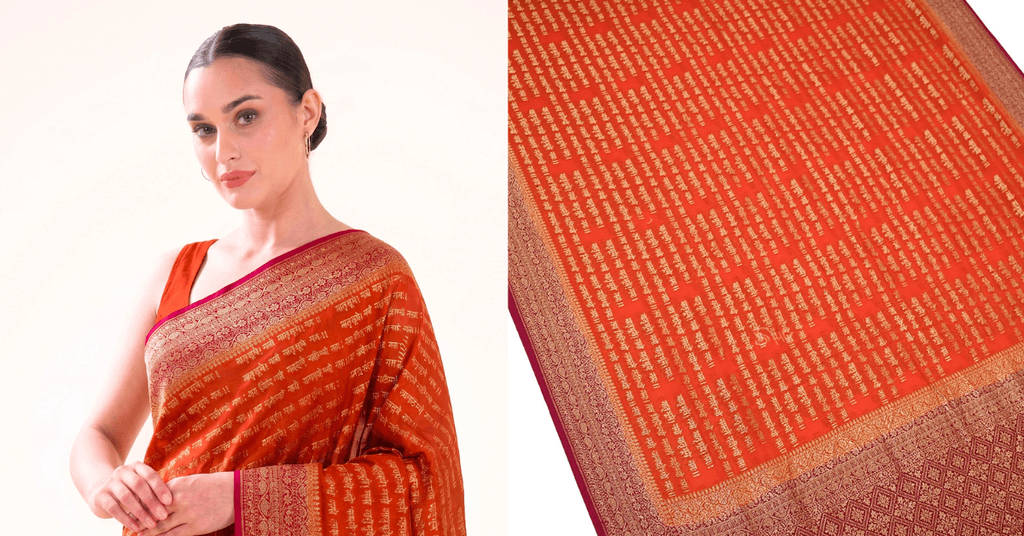
Orange brings genuine energy to the start of the festival. In a Banarasi weave, it looks especially rich paired with gold zari and a traditional woven border. If your first day involves Ghatasthapana at home followed by visiting family, a mid-weight Banarasi Georgette in orange gives you festive colour without heaviness.
Day 2 — White
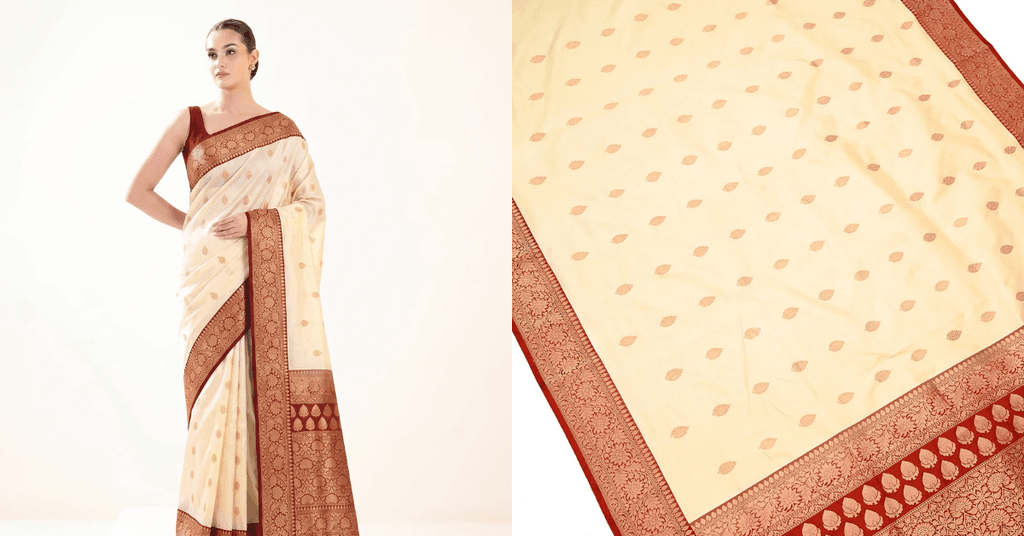
White lets the weave and border do all the talking instead of relying on a bold colour. An ivory Banarasi saree with a gold zari border looks elegant without feeling plain, and it’s a shade that’s genuinely easy to wear again well beyond Navratri.
Day 3 — Red
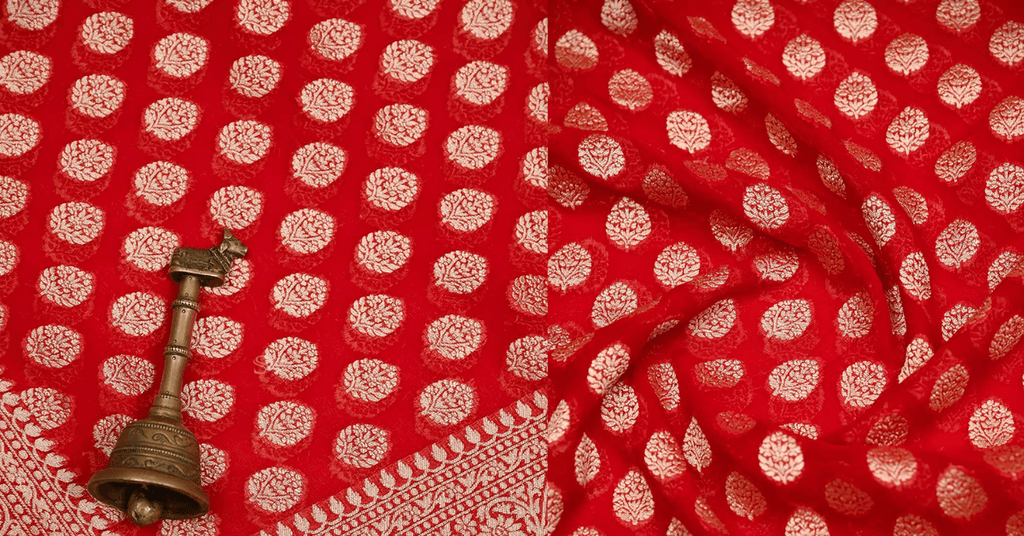
Red is one of the most naturally festive colours in any Indian wardrobe, and it’s where Banarasi silk truly shines. A red Katan silk saree with gold zari feels rich and traditional, ideal if your third day includes a proper family puja or gathering.
Day 4 — Royal Blue
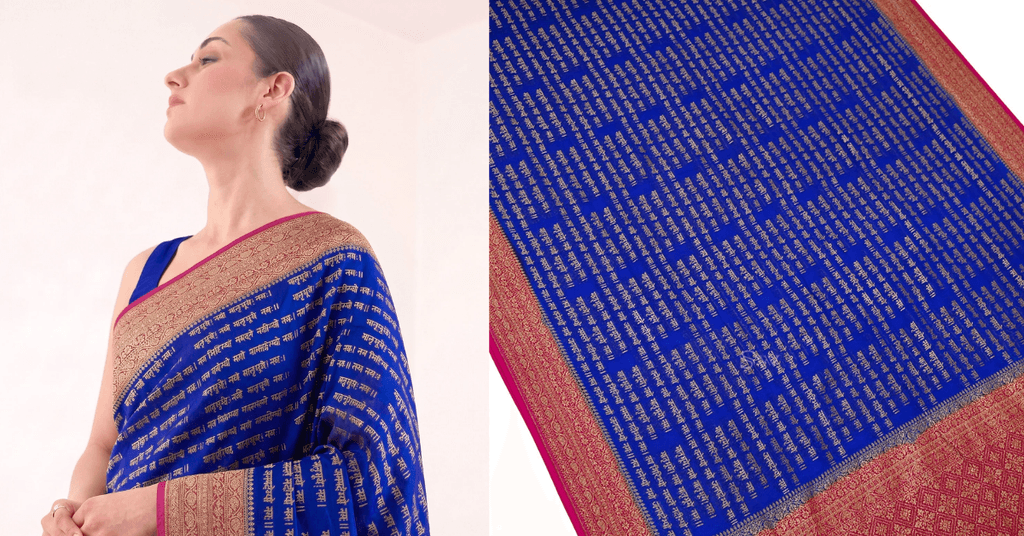
Royal blue adds real drama without needing much else around it. A Banarasi saree in this shade, paired with silver or antique gold zari, works beautifully for an evening celebration, while a lighter Georgette in the same colour suits a longer, more active day.
Day 5 — Yellow
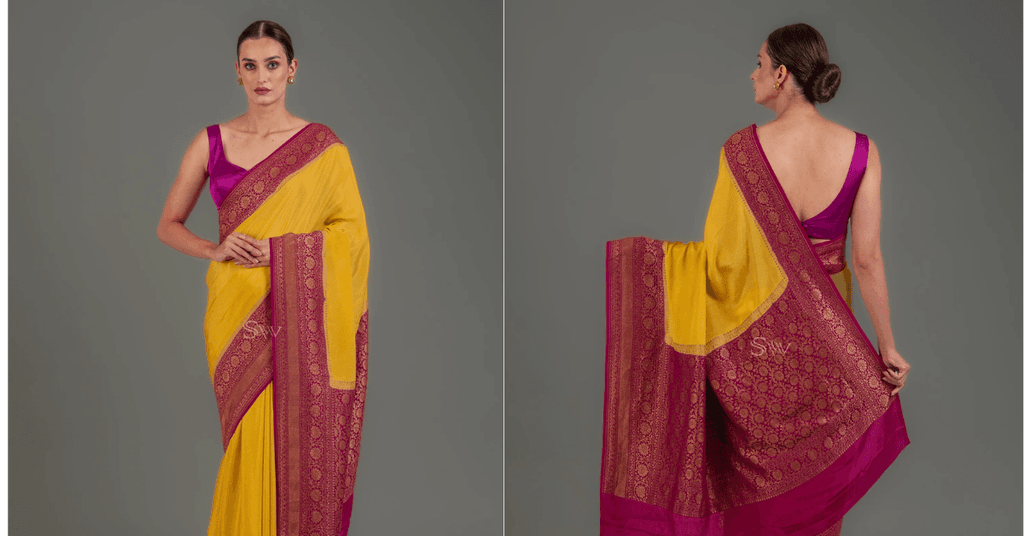
Yellow is cheerful and easy to style, especially for daytime pujas. If bright yellow feels like too much, a softer mustard Banarasi Georgette offers the same festive warmth in a gentler shade.
Day 6 — Green
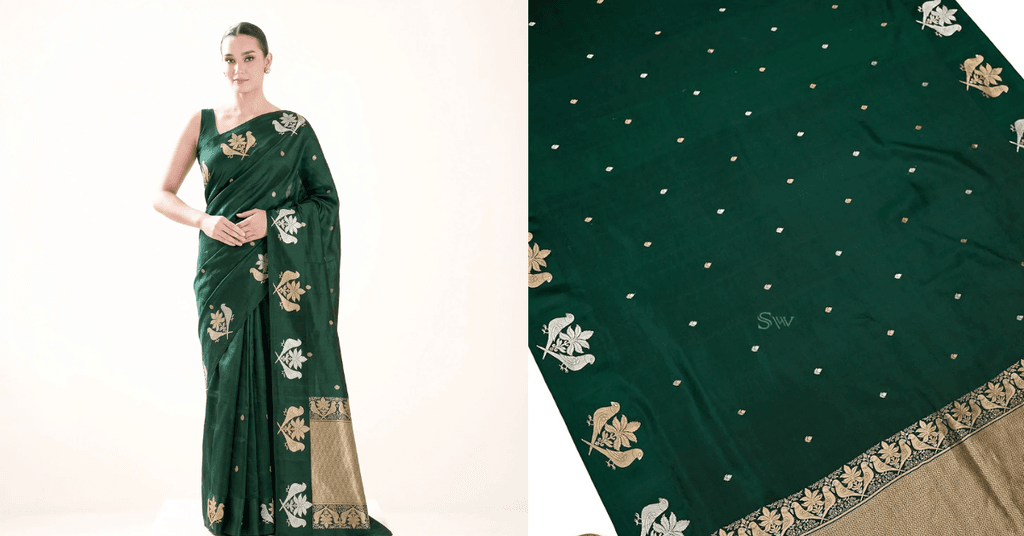
Green has always had a natural place in festive dressing. Deep emerald and bottle green look wonderfully rich in a Banarasi Katan silk with gold zari for an evening event, while a lighter green Organza works well for daytime wear.
Day 7 — Grey
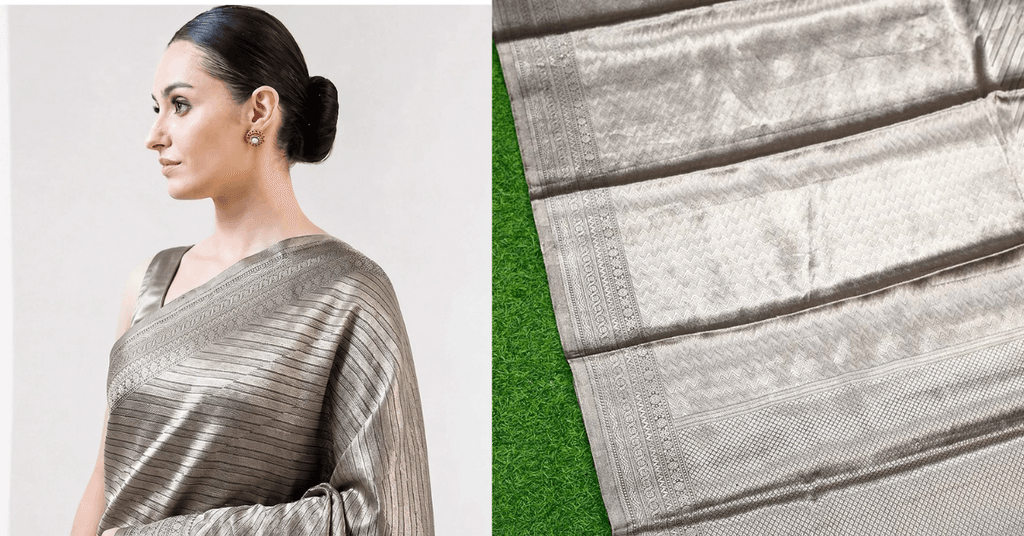
Grey might not be the first colour that comes to mind for a festival, but it can be genuinely elegant in the right weave. A grey Banarasi saree with a detailed zari border and silver jewellery creates an understated, sophisticated look for anyone who prefers to skip the brighter shades.
Day 8 — Purple
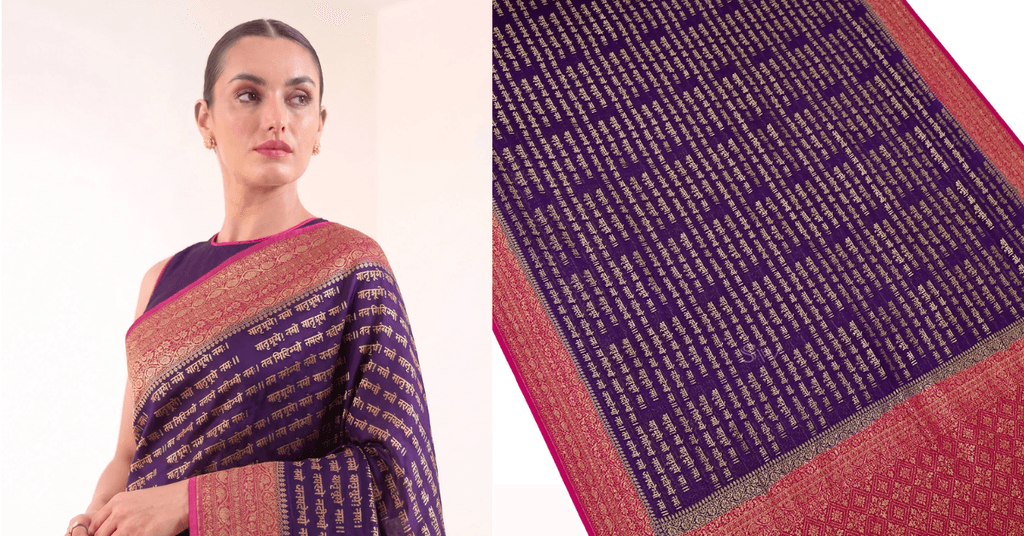
Purple brings real richness to the final stretch of the festival. Deeper shades look luxurious in Katan silk with gold zari, while a softer lavender works beautifully in a lighter Banarasi weave for daytime celebrations.
Day 9 — Peacock Green
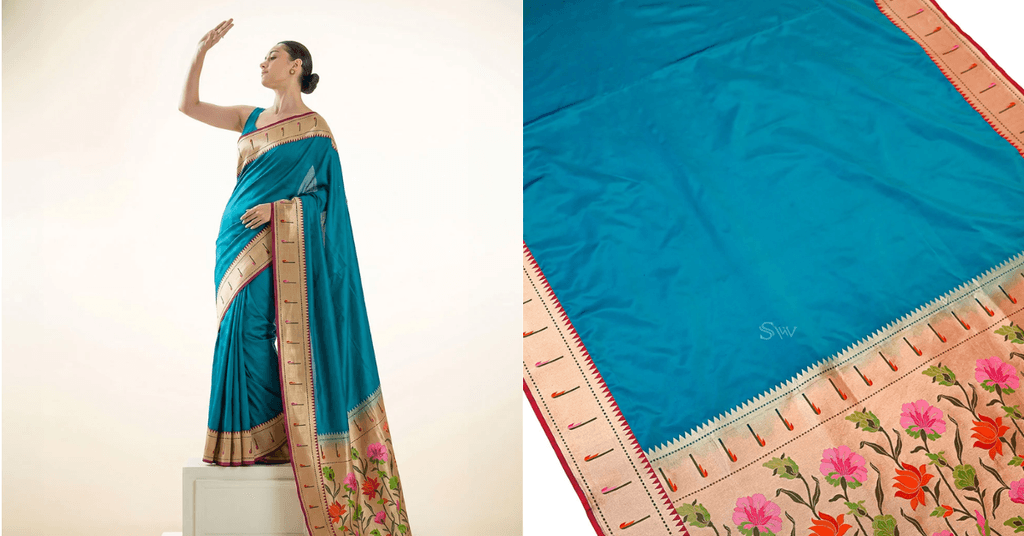
Peacock green closes the nine days with something genuinely distinctive — a shade that blends the richness of blue and green together. It looks especially striking in a Banarasi saree with a traditional zari border, making it a lovely choice for Maha Navami celebrations.
Styling Your Navratri Saree Simply
A genuine Banarasi saree, with its zari work and woven motifs, already carries plenty of character — you really don’t need to build an elaborate outfit around it. Gold jewellery pairs naturally with most festive shades, while a contrasting blouse can give a simpler saree a completely different personality from one day to the next. Fresh flowers in the hair add a lovely traditional touch for an aarti or puja evening, and comfortable footwear matters far more than it seems to when you’re on your feet for a few hours.
A Colour You Can Wear Again Is Worth More Than a Trend
It’s tempting to chase whatever shade is trending this particular Navratri, but I’d gently suggest thinking beyond the nine days. A red or green Banarasi Katan silk saree bought this festival can just as easily reappear at a wedding reception, another family celebration, or even next year’s Diwali. That kind of rewearability is worth considering before you buy, not after — and it’s exactly why genuine handwoven Banarasi pieces tend to earn a permanent place in a festive wardrobe rather than being worn once and forgotten.
If you’re also thinking ahead to Dussehra at the end of the festival, this guide might help too: Dussehra Saree Guide: Best Banarasi Styles and Colours.
Making Sure Your Festive Saree Is Genuinely Handwoven
Since a Navratri saree so often becomes part of your festive wardrobe for years, it’s worth checking what you’re actually buying. Ask whether the zari is real — a gentle scratch test reveals silver beneath the gold coating on genuine zari, while synthetic versions usually flake. Look for Silk Mark certification confirming real silk content. Our detailed guide explains exactly how to check this yourself: Real Silk Versus the Fake: How to Identify. And if you’d like to understand the different Banarasi fabric types before you shop, this guide is a helpful starting point: What Type of Silk Is Used in Banarasi Sarees?
Visit JDS Banaras This Navratri
Whether you need one rich Katan silk saree for the evenings that matter most, or a few lighter Banarasi pieces to carry you comfortably through all nine days, we’d love to help you build a festive wardrobe that lasts well beyond this Navratri.
JDS Banaras — Jagdish Das & Company
D-58/1, Rathyatra Kamachha Road, Rathyatra Crossing, Varanasi 221010
Phone: +91 7269 055 695
Hours: Monday to Saturday, 10:30am to 8:30pm
Reach us through our contact page.
Frequently Asked Questions
The nine colours for Sharad Navratri 2026, from 11 to 19 October, are orange, white, red, royal blue, yellow, green, grey, purple, and peacock green, in that order. The exact sequence can vary slightly by regional tradition, so it’s worth checking what your family or community follows.
No. Most women already own several of the nine colours. Changing the blouse, jewellery, or draping style can give an existing saree a fresh look for a different day, so you may only need one or two new pieces to complete your festive wardrobe.
A rich Banarasi Katan silk saree with zari work suits evening aartis and family pujas beautifully, while a lighter Banarasi Georgette or Organza saree is more comfortable for days involving travel, Garba, or a lot of standing and movement.
Sharad Navratri 2026 begins with Ghatasthapana on Sunday, 11 October, and continues through Monday, 19 October, followed by Dussehra (Vijayadashami) on Tuesday, 20 October.
Yes. Repeating a saree with a different blouse, jewellery, or hairstyle is a completely normal and practical way to approach a nine-day festival. There’s no requirement for every day to have a brand-new outfit.