Whether you’re opening a boutique, expanding your ethnic wear collection, selling online, or sourcing Banarasi sarees for export, choosing the right wholesale supplier is one of the most important decisions you’ll make.
The Banarasi textile industry is home to numerous manufacturers, wholesalers, and traders, each serving different business needs. While this offers buyers plenty of choices, it also raises an important question—how do you know if a Banarasi saree wholesaler is genuine?
Verifying your supplier is about much more than avoiding counterfeit products. It helps ensure consistent quality, authentic craftsmanship, transparent business practices, and a reliable long-term sourcing relationship. A few simple checks before placing your first wholesale order can save your business from unnecessary risks and help you build customer trust.
In this guide, we’ll walk you through the key factors every retailer, boutique owner, reseller, and wholesale buyer should consider before choosing a Banarasi saree wholesaler.
Related guide – Where to Find Trusted Banarasi Saree Wholesalers in Varanasi? A Complete Buyer’s Guide
Why Verifying a Banarasi Saree Wholesaler Matters
Wholesale purchasing is an investment. Whether you’re placing a small order for your boutique or sourcing inventory on a larger scale, your supplier directly impacts your business.
An authentic wholesale partner provides more than just products. They offer transparency, consistency, product knowledge, and the confidence that you’re investing in genuine Banarasi craftsmanship.
Working with the wrong supplier, however, can lead to several challenges, including:
- Inconsistent quality across different orders.
- Unclear information about fabrics and weaving techniques.
- Delays in production or delivery.
- Difficulty sourcing the same designs again.
- Limited support for custom orders or business growth.
Taking time to verify your supplier before placing an order helps establish a stronger and more reliable business relationship from the beginning.
Buyer’s Checklist: 8 Things to Verify Before Choosing a Banarasi Saree Wholesaler
Finding a supplier is relatively easy. Finding a supplier you can confidently work with for years requires a little more research.
Before placing your first wholesale order, use the following checklist to evaluate whether a Banarasi saree wholesaler is the right fit for your business.
1. Understand Whether They Are a Manufacturer or a Trader
One of the first questions you should ask is whether the business manufactures Banarasi sarees or sources them from multiple weaving units.
Manufacturers are directly involved in the production process, allowing them to offer better consistency, customisation, and deeper knowledge of fabrics and weaving techniques. Wholesale traders, on the other hand, usually procure sarees from different manufacturers and may offer a broader range of ready-stock designs.
Neither model is inherently better—the choice depends on your business goals. However, understanding the supplier’s role helps set realistic expectations regarding pricing, lead times, repeat orders, and customisation.
2. Evaluate Their Knowledge of Banarasi Weaving
An experienced wholesaler should be able to explain the products they sell—not just quote prices.
Ask questions about:
- Fabrics like Katan Silk, Organza, Tissue, or Georgette.
- Traditional weaving techniques such as Kadwa and Cutwork.
- Decorative styles like Meenakari and Rangkat.
- Types of zari used.
- Differences between handloom and powerloom sarees.
A supplier who confidently explains these aspects demonstrates genuine expertise rather than simply acting as a reseller.
Related guide – Banarasi Saree Wholesaler in Varanasi Since 1913
3. Verify Business Experience and Credibility
Experience often reflects consistency.
Look for businesses with an established presence in the Banarasi textile industry. Factors such as years in operation, a physical showroom, GST registration, transparent business information, and a professional online presence all contribute to credibility.
Heritage businesses that have served retailers and wholesalers over generations often bring valuable manufacturing knowledge and long-term stability to business relationships.
4. Ask About Silk Mark Certification and GI-Tagged Banarasi Sarees
When sourcing Banarasi sarees, you’ll often come across terms like Silk Mark and GI Tag. While both relate to authenticity, they serve different purposes.
Silk Mark certifies the purity of silk used in eligible products, while the GI Tag identifies authentic Banarasi products originating from the recognised geographical region and traditional weaving practices.
A trustworthy wholesaler should clearly explain whether their collections include Silk Mark-certified or GI-tagged Banarasi sarees and help buyers understand the difference.
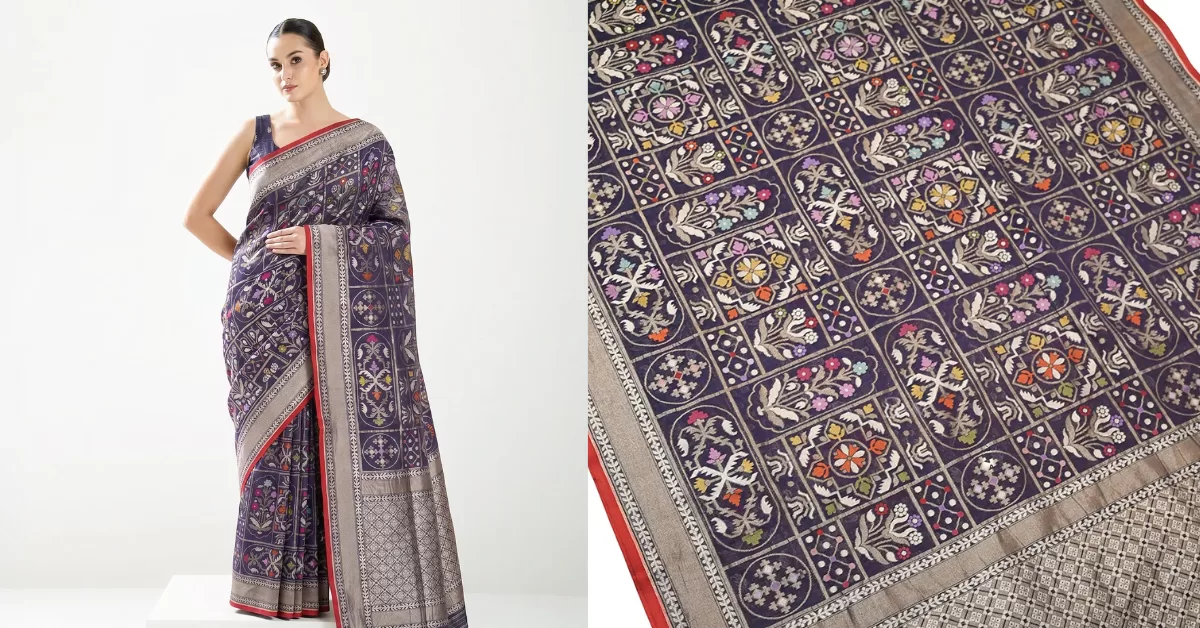
5. Request Samples Before Placing Large Orders
If you’re working with a supplier for the first time, avoid placing a large order immediately.
Instead, request a few sample sarees to evaluate:
- Fabric quality
- Weaving consistency
- Finishing
- Colour combinations
- Packaging
- Overall craftsmanship
A supplier who is confident in their products will generally be comfortable providing samples before establishing a long-term wholesale relationship.
Related guide – Banarasi Khaddi Georgette Saree Manufacturers and Wholesalers in Varanasi
6. Understand Their Wholesale Process
Every wholesaler follows a different business model.
Before confirming your order, discuss:
- Minimum Order Quantity (MOQ)
- Ready stock vs made-to-order collections
- Customisation options
- Production timelines
- Delivery schedules
- Repeat availability of successful designs
Clear communication at this stage helps avoid misunderstandings and makes future business smoother.
7. Evaluate Their Communication and Business Support
Professional communication is often a reflection of a professional business.
Observe how the supplier responds to your enquiries. Are they transparent about pricing, production timelines, fabrics, and weaving techniques? Do they understand your business requirements?
A dependable wholesale partner focuses on building long-term relationships rather than simply completing one transaction.
8. Choose a Long-Term Business Partner, Not Just a Supplier
Wholesale buying is rarely a one-time purchase.
As your business grows, you’ll need consistent quality, reliable inventory, and a supplier who understands your requirements.
Many successful boutiques continue working with the same wholesale partner for years because trust, product consistency, and professional support become valuable business assets.
This is where established heritage manufacturers often stand apart, combining traditional craftsmanship with decades of manufacturing experience.
Common Mistakes Buyers Should Avoid
Even experienced retailers can make costly sourcing mistakes if they focus only on price.
Avoid these common errors:
- Choosing a supplier solely because they offer the lowest price.
- Assuming every wholesaler is also a manufacturer.
- Not understanding the difference between handloom and powerloom collections.
- Ignoring product consistency for future repeat orders.
- Skipping questions about Silk Mark, GI products, fabrics, or weaving techniques.
- Placing large first orders without evaluating samples.
Remember, wholesale success depends on consistency, transparency, and trust—not simply lower pricing.
Related guide – Banarasi Katan Silk Saree Manufacturers and Wholesalers in Varanasi
Conclusion
Finding an authentic Banarasi saree wholesaler requires more than comparing prices. The right supplier should provide product knowledge, transparent business practices, consistent quality, and the ability to support your business as it grows.
Whether you’re sourcing from Godowlia, Chowk, Thatheri Bazaar, Rathyatra, or directly from a manufacturer, taking time to verify the supplier’s credibility will help you make a better long-term investment.
For businesses seeking authentic Banarasi craftsmanship, working with an experienced heritage manufacturer often offers greater confidence and consistency. Established in 1913, JDS Banaras has spent more than a century preserving the tradition of Banarasi weaving while serving retailers, boutiques, designers, exporters, and wholesale buyers across India and internationally.
To learn more, you can explore our Banarasi Saree Wholesaler, Banarasi Saree Manufacturer, Best Banarasi Saree Shop in Varanasi, and Heritage of JDS Banaras pages to better understand our manufacturing expertise, wholesale services, and legacy.
Frequently Asked Questions